
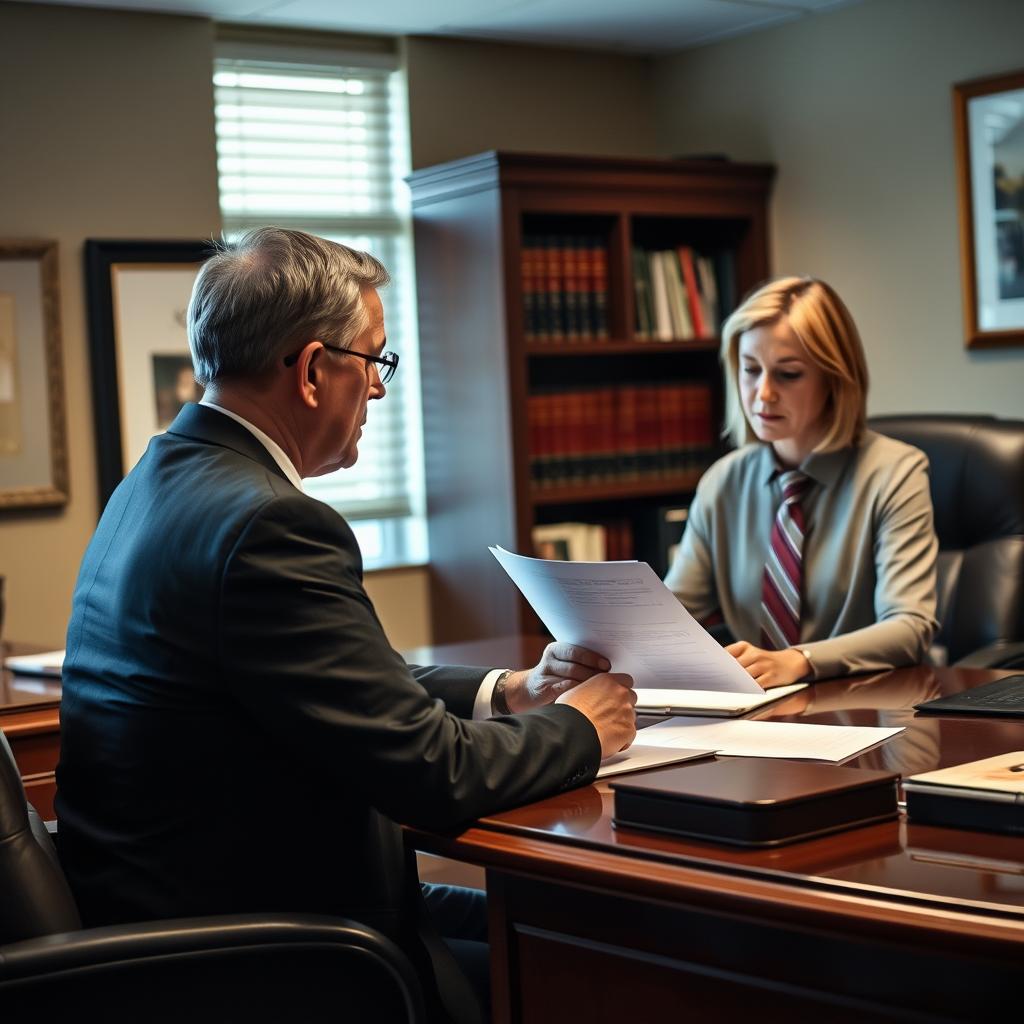
Subornation of Perjury lawyer Calvert County, MD
Subornation of perjury is a serious federal offense that strikes at the integrity of the judicial system. In Calvert County, Maryland, a person accused of procuring or inducing another to commit perjury in a federal proceeding faces investigation by federal agencies and prosecution by the U.S. Attorney’s Office for the District of Maryland. The matter proceeds in the U.S. District Court for the District of Maryland, where experienced defense counsel is critical from the earliest stage. Law Offices Of SRIS, P.C. represents clients in Calvert County and throughout Maryland who are under investigation or charged with subornation of perjury and related obstruction offenses. To discuss your specific situation, reach our location at (888) 437-7747. Law Offices Of SRIS, P.C. – Advocacy Without Borders.
What Subornation of Perjury Means in Calvert County, Maryland
Subornation of perjury occurs when a person persuades, incites, or causes another to give false testimony under oath in an official proceeding. The federal statutory framework for these offenses includes the obstruction-of-justice provisions under 18 U.S.C. §§ 1503–1520 and the perjury statutes under 18 U.S.C. §§ 1621–1623. Because federal jurisdiction attaches to any proceeding before a federal court, grand jury, or agency, a Calvert County resident who is alleged to have influenced a witness’s testimony in a federal matter faces federal charges, not state charges.
In Calvert County, federal subornation of perjury cases are investigated by agencies such as the FBI, DEA, IRS‑CI, HSI, ATF, and the U.S. Secret Service. The case is typically presented to a federal grand jury, which may return an indictment. Arraignment and all subsequent proceedings take place in the U.S. District Court for the District of Maryland, which has divisions in Baltimore and Greenbelt. The prosecution is handled by the U.S. Attorney’s Office for the District of Maryland. Penalties for subornation of perjury can be substantial; depending on the specific obstruction or perjury charge, a person may face a range of five to twenty years of imprisonment under the advisory federal sentencing guidelines. Additionally, federal law does not provide for parole, so any term of imprisonment is served in full, minus good‑time credits. Supervised release, fines, and restitution may also be imposed.
How Mr. Sris and His Of Counsel Handle Subornation of Perjury Cases
When a person contacts Law Offices Of SRIS, P.C., Mr. Sris and his Of Counsel begin by evaluating the government’s theory of the case and the strength of the evidence. Subornation of perjury charges often rest on witness statements, recorded communications, and the testimony of the person alleged to have committed perjury. Mr. Sris and his Of Counsel scrutinize every piece of evidence for procedural missteps and factual weaknesses. They examine whether the government can prove that the defendant knew the testimony was false and that the defendant specifically intended to cause the witness to give that false testimony.
Early engagement allows Mr. Sris and his Of Counsel to advise the client before any statement is made to investigators. They may negotiate with prosecutors to seek a declination of charges, a reduced charge, or a plea agreement that minimizes exposure. If the case proceeds to trial, Mr. Sris and his Of Counsel prepare a comprehensive defense that may include challenging the credibility of the alleged perjurer, presenting evidence of good faith, or demonstrating that the statement at issue was not material to the proceeding. Throughout the matter, the team works to protect the client’s rights and to achieve the most favorable resolution possible under the facts and the law.
About Mr. Sris and His Of Counsel Team
Mr. Sris is the Owner and Founder of Law Offices Of SRIS, P.C., which he established in 1997. A former prosecutor, Mr. Sris understands federal investigation and prosecution from the inside. He testified before the Virginia House Courts of Justice Committee in support of 2019 HB 635 (chief patron Del. David Bulova). Mr. Sris is admitted to practice in Virginia, Maryland, the District of Columbia, New Jersey, and New York, giving him a multi‑state perspective that informs his defense strategy in federal matters.
Mr. Sris is joined by Of Counsel attorneys who bring substantial experience in federal criminal defense. This team includes lawyers with backgrounds in prior prosecution and federal litigation. Collectively, Mr. Sris and his Of Counsel have handled cases across the spectrum of federal crimes, from obstruction of justice to complex fraud. They appear regularly in the U.S. District Court for the District of Maryland and are familiar with the procedures and personnel of the Baltimore and Greenbelt divisions.
Frequently Asked Questions
What is subornation of perjury under federal law?
Subornation of perjury is the act of procuring, inducing, or persuading another person to commit perjury—that is, to testify falsely under oath in a federal proceeding. The offense is prosecuted under the federal obstruction-of‑justice and perjury statutes, primarily 18 U.S.C. §§ 1503–1520 and 18 U.S.C. §§ 1621–1623. To obtain a conviction, the government must prove that the defendant knew the testimony was false and specifically intended to cause the witness to give that false testimony. Materiality—whether the false statement could affect the outcome—is also an element. Because subornation of perjury is a federal felony, it carries serious consequences, and early legal intervention is essential.
What are the penalties for subornation of perjury in Maryland?
Subornation of perjury in a federal case can carry a sentence of five to twenty years of imprisonment, depending on the specific statute charged and the advisory sentencing guidelines. The charge may be brought under obstruction statutes (up to 10 or 20 years, depending on whether bodily harm resulted) or the general perjury and subornation statutes (up to 5 years per count). Additionally, the court may impose supervised release, fines, and restitution. There is no parole in the federal system. Because each case is fact‑specific, the actual sentence depends on the offense level, criminal history, and any mandatory minimums that may apply. Results may vary.
How does a federal defense attorney defend against subornation of perjury charges?
A defense against subornation of perjury often focuses on challenging the government’s proof that the defendant knew the testimony was false and intended to induce the false testimony. An experienced attorney examines whether the alleged perjurer’s testimony was in fact false, whether the statement was material to the proceeding, and whether any inducement rose to the level required by statute. Other strategies include attacking the credibility of the cooperating witness, demonstrating that the defendant acted in good faith, and raising procedural or constitutional violations in the investigation. If a trial is not the trusted option, defense counsel may negotiate with the U.S. Attorney’s Office to reduce the charge or to secure a favorable plea agreement.
What should I do if I am facing subornation of perjury charges in Calvert County?
If you learn that you are under investigation or have been charged with subornation of perjury in Calvert County, contact a federal criminal defense attorney immediately and do not discuss the matter with anyone else. Do not speak to federal agents or prosecutors without counsel present. Preserve any documents, emails, or recordings that may relate to the case, but do not take any action that could be seen as destruction of evidence. An experienced attorney can review the charges, explain the potential penalties, and begin building a defense strategy tailored to the facts of your case. For a consultation, reach Mr. Sris and his Of Counsel at (888) 437-7747.
Do I need a lawyer for subornation of perjury?
Yes; any person facing a federal felony charge such as subornation of perjury should have skilled legal representation from the earliest stage. Federal prosecutions are resource‑intensive and the government has broad investigative powers. Without counsel, a defendant may unknowingly make incriminating statements or miss opportunities to present mitigating evidence. An attorney familiar with the U.S. District Court for the District of Maryland can assess the strength of the government’s case, negotiate with the U.S. Attorney’s Office, and, if necessary, try the case before a jury. The stakes—including the possibility of a lengthy prison sentence—make professional legal guidance essential. To discuss the details of your matter, contact Law Offices Of SRIS, P.C. at (888) 437-7747.
How does subornation of perjury differ from perjury?
Perjury is the act of making a false material statement under oath oneself; subornation of perjury is the act of causing or persuading another person to commit perjury. While a person who commits perjury can be charged under 18 U.S.C. § 1621, the person who induced that false testimony can be charged with subornation of perjury under the same statute or with obstruction of justice under § 1503. Subornation of perjury requires proof that the defendant knew the testimony would be false and that the defendant procured or induced the witness to give it. Both offenses are felonies and carry substantial federal penalties. A single course of conduct can lead to charges for both perjury and subornation of perjury.
Additional Federal Criminal Defense Resources:
- Federal Criminal Lawyer in Montgomery County, MD
- Federal Criminal Lawyer in Prince George’s County, MD
- Federal Criminal Lawyer in Howard County, MD
Official Maryland Federal Court Resources:
Attorney advertising. Prior results do not guarantee a similar outcome. Results may vary.
Case results depend on a variety of factors unique to each case.