
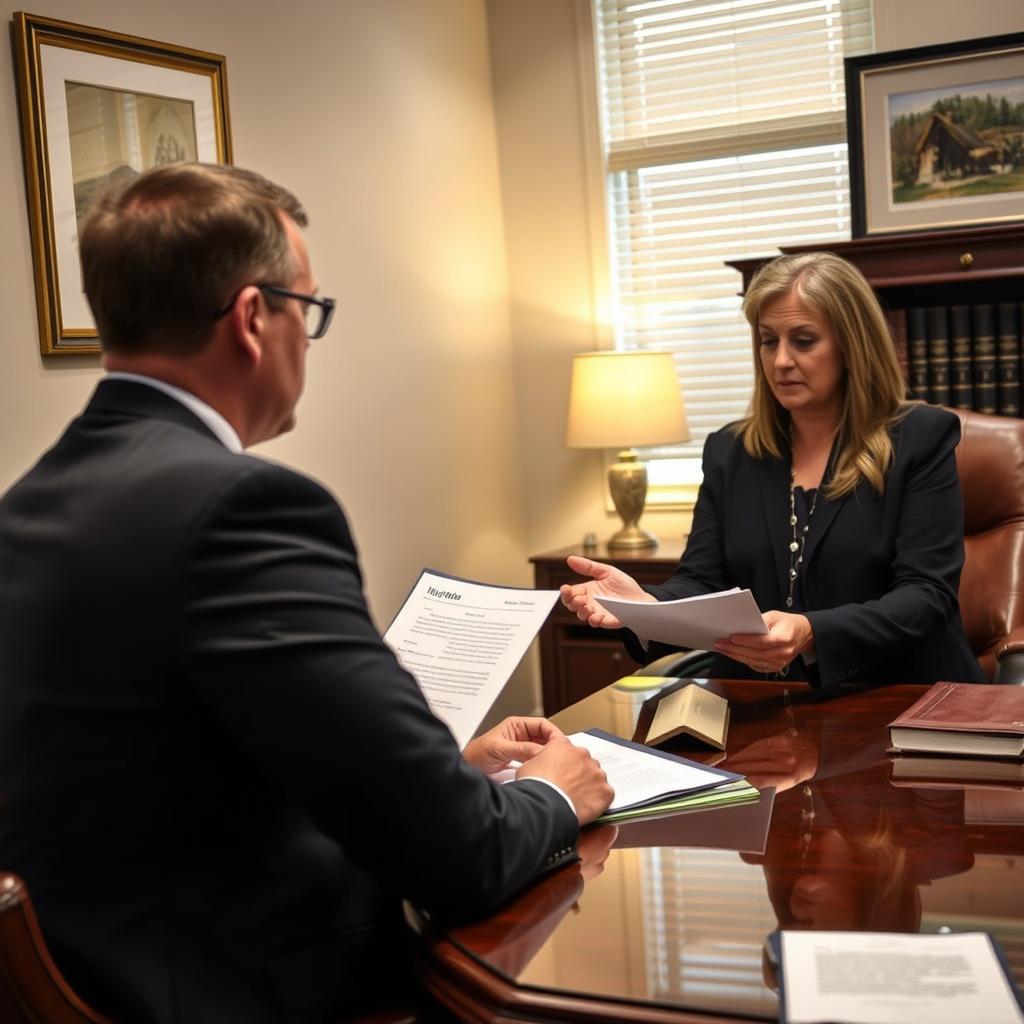
Structuring Transactions to Evade Reporting Requirements lawyer Queen Anne’s County, MD
Federal prosecutors actively enforce anti‑money‑laundering statutes, and a charge of structuring transactions to evade reporting requirements carries serious consequences. If you are a resident of Queen Anne’s County and are under investigation or have been accused of structuring currency transactions to avoid bank reporting obligations, the stakes are high. These cases are typically handled in the U.S. District Court for the District of Maryland, where the U.S. Attorney’s Office and federal agencies like IRS‑Criminal Investigation and the FBI pursue convictions vigorously. Mr. Sris and his Of Counsel appear in federal court on behalf of clients from Centreville, Queenstown, Grasonville, Stevensville, Chester, Church Hill, and throughout Queen Anne’s County, working to protect their rights at every stage. Reach Law Offices Of SRIS, P.C. at (888) 437‑7747 to request a consultation about your federal matter. Law Offices Of SRIS, P.C. – Advocacy Without Borders.
What Is Structuring Transactions to Evade Reporting Requirements?
Structuring, sometimes called “smurfing,” occurs when a person breaks a large cash transaction into multiple smaller transactions for the purpose of evading the currency‑reporting requirements imposed on financial institutions. Under 31 U.S.C. § 5324, it is unlawful to structure, or attempt to structure, any transaction with one or more domestic financial institutions for the purpose of evading the reporting requirements of the Bank Secrecy Act. Even if the underlying funds are entirely lawful, the act of structuring itself is a federal felony.
A conviction can lead to a term of imprisonment, substantial fines, forfeiture of assets connected to the structuring, and a lasting criminal record. Because the federal system eliminates parole and applies the advisory Federal Sentencing Guidelines, the period of incarceration is often significant. In Queen Anne’s County, a resident accused of structuring will face prosecution in the U.S. District Court for the District of Maryland, with proceedings typically held at the Baltimore or Greenbelt division. The presence of experienced federal criminal counsel at the earliest stage can make a meaningful difference in how the case develops.
Frequently Asked Questions
What is the difference between state and federal charges for structuring transactions?
Structuring to evade reporting requirements is a federal crime prosecuted in U.S. District Court, not in the county circuit or district courts. The U.S. Attorney’s Office brings the case, and the Federal Sentencing Guidelines control the potential sentence. State prosecutors do not bring charges under 31 U.S.C. § 5324, so any investigation involving currency‑structuring allegations will proceed in the federal system, where conviction rates are high and there is no parole. The procedural rules, discovery obligations, and trial practices differ significantly from state court, making federal‑specific defense experience essential.
Do I need a lawyer if I am contacted by federal agents about cash transactions?
You should request an attorney immediately and not answer questions without counsel present. Federal agents investigating structuring often review bank records, interview tellers, and may approach the target of an investigation directly. Any statement you make can become a building block in the government’s case. An experienced federal defense attorney can communicate with investigators on your behalf, assess the scope of the inquiry, and work to protect your interests from the very beginning. Contact Law Offices Of SRIS, P.C. at (888) 437‑7747 to discuss your situation.
How long does a federal structuring case take in Maryland?
The timeline depends on the complexity of the investigation, the number of transactions at issue, and court scheduling. A straightforward case may resolve within several months, while a multi‑year investigation involving voluminous bank records can extend the proceedings considerably. The Speedy Trial Act sets outer limits, but pretrial motion practice, forensic accounting analysis, and plea negotiations all contribute to the overall duration. Mr. Sris and his Of Counsel work to advance the matter efficiently while safeguarding the client’s rights.
What are the potential penalties for structuring transactions to evade reporting requirements?
Conviction under 31 U.S.C. § 5324 can result in a term of imprisonment, a fine, and an order of restitution or forfeiture. The length of incarceration is driven by the Federal Sentencing Guidelines, which consider the amount of money involved, the defendant’s role, and any prior criminal history. In addition, the government often seeks forfeiture of the funds that were the subject of the structuring. A federal conviction also carries long‑term consequences for employment, professional licenses, and immigration status. Each case is unique, and sentences vary; speaking with an attorney about the specific facts is the trusted way to understand the exposure.
Can federal structuring charges be dropped or dismissed?
Charges may be challenged through pretrial motions or resolved favorably through negotiations with the U.S. Attorney’s Office. A defense attorney may seek dismissal if the government cannot prove the required intent to evade reporting, if the evidence was obtained in violation of constitutional protections, or if the charging document is defective. In other instances, a well‑prepared mitigation presentation can lead to a plea to a lesser offense or a more favorable sentence. Every case presents its own opportunities, and a thorough review of the evidence is essential.
What is the statute of limitations for federal structuring offenses?
The federal statute of limitations for most non‑capital offenses is five years. For a structuring charge under 31 U.S.C. § 5324, the government generally must bring an indictment or file a criminal information within that period. Certain actions, such as the defendant’s absence from the district, may toll the limitations period. Because the calculation can be fact‑specific, anyone concerned about potential exposure should consult a federal criminal attorney promptly.
Will I be sent to federal prison in Maryland or out of state?
Incarceration for a federal conviction is typically served at a facility designated by the Bureau of Prisons, which may be located outside Maryland. The sentencing judge recommends a placement, but the BOP makes the final decision based on security classification, medical needs, and bed availability. Proximity to family and re‑entry planning are factors that experienced counsel can raise at sentencing to support a recommendation for a facility reasonably close to the defendant’s home community.
How much does a federal criminal lawyer cost for a structuring case?
Fees vary depending on the complexity of the case, the volume of discovery, and whether the matter proceeds to trial. Federal structuring allegations often involve extensive financial records requiring forensic review, which can increase the cost of representation. Law Offices Of SRIS, P.C. Discusses fee arrangements during the initial consultation and works to provide clarity about the anticipated scope and expense of the representation. Call (888) 437‑7747 to schedule a consultation.
What should I bring to a consultation about a federal structuring investigation?
Bring any documents you have received from law enforcement, copies of bank statements, and a written summary of any conversations with federal agents. The attorney will also need to know the dates and amounts of the transactions in question, the names of any co‑defendants or witnesses, and any prior criminal record. Having this information organized helps the attorney evaluate the case efficiently and offer a realistic assessment. Do not speak with investigators or anyone else before meeting with counsel.
How does Mr. Sris and his Of Counsel approach a federal structuring defense?
The team reviews every piece of evidence, examines the government’s investigation for procedural or constitutional violations, and builds a defense tailored to the client’s objectives. In structuring cases, the analysis often focuses on whether the government can prove intent to evade reporting requirements, given that many individuals split transactions for innocent reasons. If the evidence is strong, the focus shifts to mitigation, sentencing advocacy, and exploring whether a pretrial resolution can reduce the consequences. Throughout the process, the client is kept informed and involved in key decisions.
Why choose a firm with a former prosecutor on the team for federal defense?
A former prosecutor understands how the government builds its case, which evidentiary weaknesses are most likely to matter, and how to negotiate effectively with Assistant U.S. Attorneys. At Law Offices Of SRIS, P.C., Mr. Sris is a former prosecutor, and an Of Counsel attorney is a former Maryland Assistant State’s Attorney. That dual prosecutorial perspective, combined with decades of collective federal defense experience, informs every stage of representation. For guidance on your specific situation, reach the firm at (888) 437‑7747.
Does the firm handle other federal criminal charges in Queen Anne’s County?
Yes, Law Offices Of SRIS, P.C. represents clients in a broad range of federal criminal matters, including mail fraud, wire fraud, money laundering, conspiracy, drug trafficking, and federal firearm offenses. The firm’s federal practice covers the District of Maryland and beyond, and Mr. Sris and his Of Counsel appear regularly in the Baltimore and Greenbelt divisions. If you are facing any federal charge, a consultation can help you understand your options and the next steps.
About Mr. Sris and His Of Counsel Team
Mr. Sris, Owner and Founder of Law Offices Of SRIS, P.C., has practiced law since 1997 and is admitted in Virginia, Maryland, the District of Columbia, New Jersey, and New York. A former prosecutor, he concentrates his practice on complex criminal defense, including federal matters. He works alongside experienced Of Counsel who collectively bring over 120 years of combined legal experience and over 4,739 documented firm-wide results. Results may vary. The team is supported by a former Maryland Assistant State’s Attorney whose prosecutorial background adds a valuable perspective to federal and state defense strategy. Clients from Queen Anne’s County can schedule consultations at the firm’s Rockville location or by phone.
Federal Criminal Defense in Montgomery County |
Federal Criminal Defense in Prince George’s County |
Federal Criminal Defense in Howard County |
Federal Criminal Defense in Anne Arundel County |
Federal Criminal Defense in Frederick County
Attorney advertising. Prior results do not guarantee a similar outcome.
Results may vary.
Case results depend on a variety of factors unique to each case.