
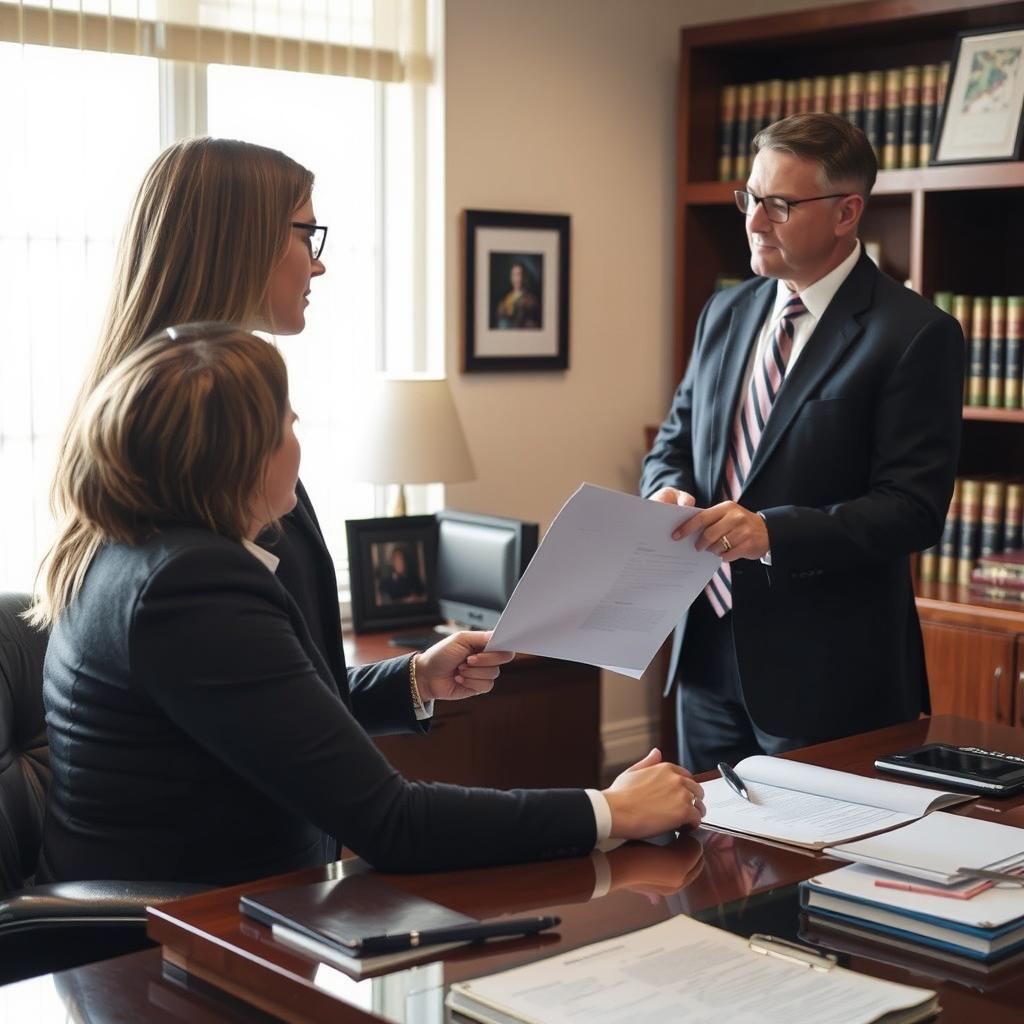
Sex Trafficking of a Minor lawyer Baltimore County, MD
You answered the door to find two FBI agents standing on your porch. They asked to come in and talk about some online messages. Your stomach dropped. You didn’t know what they were talking about—or maybe you did—but you knew this was serious. A charge under 18 U.S.C. § 1591 for sex trafficking of a minor is one of the most actively prosecuted federal felonies, carrying mandatory minimum prison terms and lifetime sex offender registration. At the U.S. District Court for the District of Maryland, the U.S. Attorney’s Office directs substantial resources toward these cases. Mr. Sris, a former prosecutor, and the firm’s Of Counsel attorneys represent clients facing federal sex trafficking charges in Baltimore County and across Maryland. Request a confidential consultation at (888) 437-7747. Law Offices Of SRIS, P.C. – Advocacy Without Borders.
Defense Strategy Options in Federal Sex Trafficking Cases
Every defense strategy is shaped by the specific facts of the government’s evidence. A federal investigation typically involves digital forensics, witness interviews, and sometimes cooperating informants. An experienced federal criminal defense team begins by examining the strength of the indictment and the conduct of the investigation.
One approach is challenging the admissibility of evidence—search warrants, electronic communications, or statements obtained in violation of Miranda rights. Another involves examining whether the alleged conduct meets the statutory elements of 18 U.S.C. § 1591, which requires proof that the defendant knew or recklessly disregarded that the person was under 18 and would be caused to engage in a commercial sex act. In some matters, negotiating with the Assistant U.S. Attorney before indictment may lead to a declination or a charge under a statute with a lower sentencing range. Mr. Sris and the firm’s Of Counsel attorneys work to identify the strategy that fits the case.
What to Expect in a Federal Sex Trafficking Case in Baltimore County
Federal sex trafficking investigations in Maryland are often led by the FBI, Homeland Security Investigations (HSI), or multi-agency task forces that coordinate out of the U.S. Attorney’s Office for the District of Maryland. If charges are filed, the case proceeds in the U.S. District Court for the District of Maryland, with initial appearances and arraignments usually in the Baltimore or Greenbelt divisions, depending on venue.
After an indictment, the pretrial process includes discovery, motion practice, and often a detention hearing where the government may argue that the defendant is a danger to the community and should be held without bond. The Speedy Trial Act sets timelines, but complex cases involving multiple defendants or extensive electronic evidence can take many months before trial. Plea negotiations are common; however, because of statutory mandatory minimums, any negotiated resolution must account for the sentencing floor set by Congress.
If a case goes to trial, the government carries a heavy burden of proof beyond a reasonable doubt. A trial lawyer with federal experience can cross-examine the government’s witnesses, challenge forensic evidence, and present a defense theory that speaks directly to the jury.
Penalties and Consequences
A conviction under 18 U.S.C. § 1591 for sex trafficking of a minor triggers severe consequences. The court must impose a mandatory minimum prison sentence; the length depends on the age of the alleged victim and whether force, fraud, or coercion was involved. In addition to incarceration, a conviction carries a term of supervised release—often five years to life—and mandatory registration as a sex offender under the federal Sex Offender Registration and Notification Act (SORNA). Because there is no parole in the federal system, a person sentenced to a mandatory minimum will serve the entire term less good-time credits.
Collateral consequences extend far beyond the prison term. Registered sex offenders face restrictions on housing, employment, and international travel. A federal felony conviction also affects parental rights, professional licenses, and the right to possess firearms. The U.S. Sentencing Guidelines apply, and the judge will consider factors such as acceptance of responsibility, the defendant’s role in the offense, and the existence of a plea agreement. An attorney can advise on how these factors affect the final sentence.
Experienced Federal Defense Representation
Mr. Sris, Owner and Founder of Law Offices Of SRIS, P.C., is a former prosecutor who founded the firm in 1997. He is admitted to practice in Virginia, Maryland, the District of Columbia, New Jersey, and New York, and has handled federal criminal matters across the District of Maryland. Mr. Sris testified before the Virginia House Courts of Justice Committee in support of 2019 HB 635 (chief patron Del. David Bulova).
The firm’s Of Counsel attorneys bring extensive combined legal experience in federal criminal defense, including pretrial motions, plea negotiations, and jury trials. Together, Mr. Sris and the firm’s Of Counsel attorneys represent clients before the U.S. District Court for the District of Maryland, advocating at every stage from investigation through sentencing. Results may vary.
Frequently Asked Questions
What should I do if federal agents contact me about a sex trafficking investigation?
Do not speak with federal agents without a lawyer present. You have the right to remain silent and the right to counsel. Anything you say to an FBI or HSI agent can later be used against you in court, even if the conversation seems casual. Politely decline to answer questions and state that you wish to speak with an attorney. Then call an experienced federal criminal defense lawyer. Early legal counsel can protect your rights before charges are filed.
How is a federal sex trafficking of a minor charge different from a state charge?
Federal charges carry mandatory minimum prison sentences and no parole, making them far more severe than most state equivalents. A case prosecuted by the U.S. Attorney’s Office in the District of Maryland is governed by the Federal Sentencing Guidelines and often involves federal investigative agencies like the FBI or HSI. Unlike many state systems, the federal system offers no early-release parole; a person convicted serves the full sentence with limited good-time credit.
Can a federal sex trafficking charge be reduced or dismissed before trial?
It may be possible, depending on the facts and the evidence. A defense attorney can challenge the sufficiency of the indictment, file motions to suppress evidence obtained unlawfully, or negotiate with the prosecutor for a charge that carries a lower mandatory minimum or, in some cases, a declination. Early intervention—before an indictment is returned—often provides the strongest opportunities to shape the direction of a case.
What does the government need to prove for a conviction under 18 U.S.C. § 1591?
The government must prove beyond a reasonable doubt that the defendant knowingly recruited, enticed, harbored, transported, provided, or obtained a person, knowing or in reckless disregard of the fact that the person was under 18 and would be caused to engage in a commercial sex act. The statute covers a broad range of conduct, including online solicitation and coercion. Challenging any element—such as lack of knowledge of the victim’s age or absence of a commercial sex act—can be a key defense strategy.
How long does a federal sex trafficking case take in Maryland?
The timeline varies widely depending on case complexity, the number of defendants, and the volume of electronic evidence. A straightforward case may resolve in under a year, while a multi-defendant investigation with extensive forensics can take one to three years or more. The Speedy Trial Act sets outer limits, but many delay periods—such as motions and continuances—are excluded from that calculation. Your attorney can give you a clearer estimate based on the specific circumstances of your case.
Will I be held without bail after a federal arrest?
In many federal sex trafficking cases, the government moves for pretrial detention and argues that the defendant is a flight risk or a danger to the community. The court holds a detention hearing shortly after the initial appearance. A defense attorney can present evidence and arguments for release on conditions, such as electronic monitoring, home confinement, or a third-party custodian. The outcome depends on the strength of the government’s evidence and the defendant’s ties to the community.
Do I need a lawyer if I am only under investigation and not yet charged?
Yes, hiring a lawyer at the investigation stage is one of the most critical decisions you can make. A lawyer can communicate with federal agents on your behalf, work to prevent an indictment, and begin building a defense while evidence is fresh. Do not assume that cooperating without counsel will lead to a better outcome; statements made to investigators can later become the basis for additional charges.
What is sex offender registration, and how long does it last?
Sex offender registration is a federal requirement for anyone convicted of a qualifying sex offense, often lasting for life. Under the Sex Offender Registration and Notification Act (SORNA), registrants must periodically update their information with local authorities. Failure to register is itself a separate federal crime. Registration severely restricts where you can live, work, and travel, and the registry is publicly accessible. There is no parole process to end the registration obligation early.
How does a federal plea bargain work in a sex trafficking case?
A plea bargain involves the defendant agreeing to plead guilty, often to a lesser charge or in exchange for the government’s sentencing recommendation. In federal sex trafficking cases, because of mandatory minimums, the prosecutor may agree to dismiss the count requiring the highest minimum sentence in return for a plea to a statute with a lower mandatory minimum. The judge must approve the plea and impose the sentence, but is guided by the U.S. Sentencing Guidelines and the plea agreement.
Can an attorney help if I believe the evidence was gathered illegally?
Yes, filing a motion to suppress is a primary defense tool when law enforcement violated constitutional rights. If agents searched a device or home without a valid warrant, failed to give Miranda warnings before a custodial interrogation, or exceeded the scope of a warrant, the evidence obtained may be excluded from trial. A successful suppression motion can significantly weaken the government’s case and sometimes lead to dismissal.
What makes Law Offices Of SRIS, P.C. Capable of handling federal sex trafficking cases in Baltimore County?
The firm’s founder, Mr. Sris, is a former prosecutor who understands how federal investigations are built, and the firm’s Of Counsel attorneys have extensive combined experience in federal criminal defense. The firm represents clients in the U.S. District Court for the District of Maryland and has appeared in federal courts across multiple states. To discuss your situation, call (888) 437‑7747 and request a consultation.
Request a Consultation
If you or someone you care about is facing a federal sex trafficking investigation or charge in Baltimore County, Maryland, contact Law Offices Of SRIS, P.C. to speak with an experienced federal criminal defense attorney. Call (888) 437‑7747 to schedule a confidential consultation.
For a detailed statutory analysis of 18 U.S.C. § 1591 and related federal sex crime statutes, visit our comprehensive guide on federal sex trafficking defense.
Authoritative Federal Resources
- U.S. District Court for the District of Maryland
- U.S. Sentencing Commission
- 18 U.S.C. § 1591 at Cornell Legal Information Institute
Attorney advertising. Prior results do not guarantee a similar outcome. Results may vary.
Case results depend on a variety of factors unique to each case.