
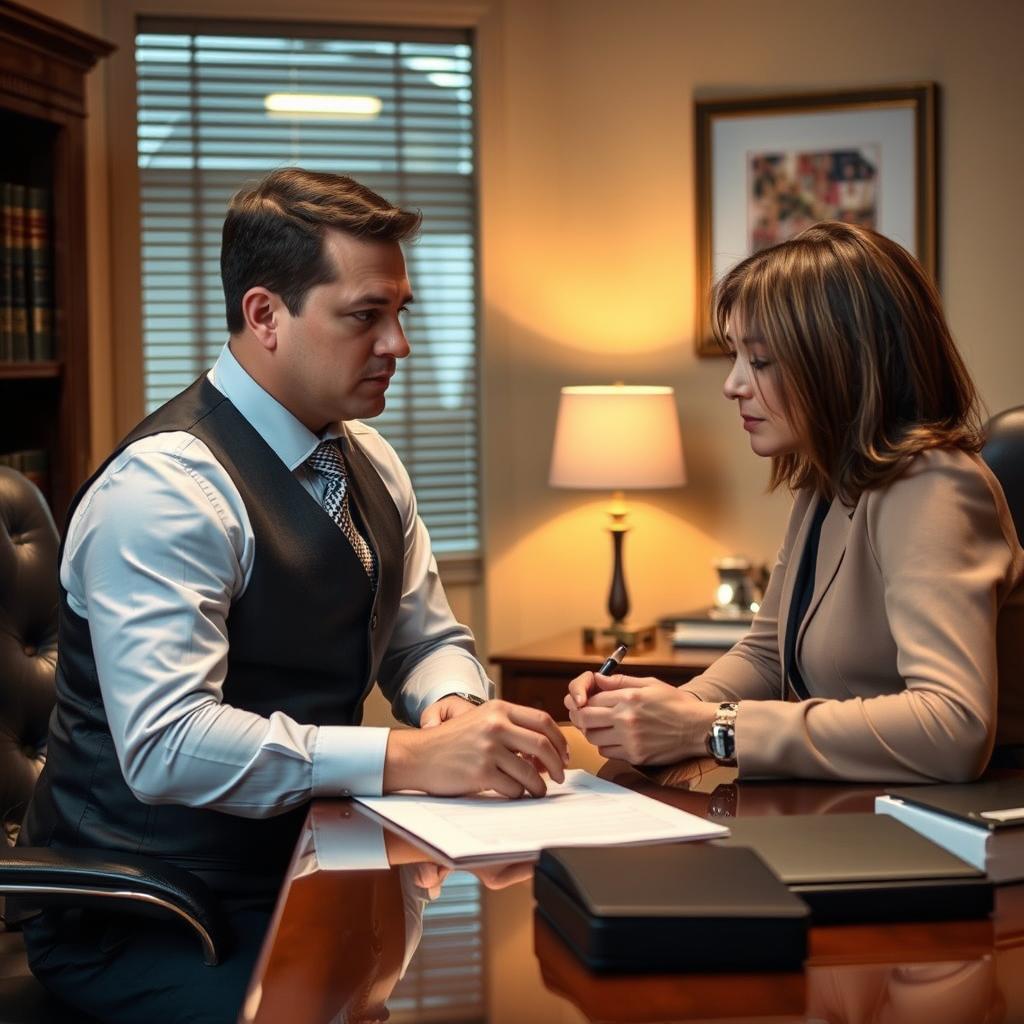
Possession of an Unregistered Firearm lawyer Howard County, MD
Federal firearm charges carry consequences that are fundamentally different from any state-level offense. If you are being investigated for or have been charged with possession of an unregistered firearm in Howard County, Maryland, the case will proceed not in the Howard County District or Circuit Court, but in the U.S. District Court for the District of Maryland—with the full resources of the United States Attorney’s Office behind the prosecution. These matters typically arise from an ATF or FBI investigation and often involve the National Firearms Act, a strict regulatory scheme that requires registration for certain categories of weapons, including short-barreled rifles, short-barreled shotguns, machine guns, and silencers. A conviction under federal law can expose you to substantial incarceration, as the federal system does not provide parole. Mr. Sris, a former prosecutor who founded Law Offices Of SRIS, P.C. in 1997, and the firm’s Of Counsel attorneys represent individuals in Howard County who are confronting federal firearm allegations. To speak with an experienced federal criminal defense attorney about your situation, contact the firm at (888) 437-7747. Law Offices Of SRIS, P.C. – Advocacy Without Borders.
Federal Firearm Charges in Howard County: What You Should Know
Possession of an unregistered firearm is prosecuted as a violation of the National Firearms Act, which imposes a registration requirement on certain weapons that are subject to heightened regulation. Unlike Maryland state firearm statutes, a federal charge of this nature originates from an investigation conducted by a federal agency and is presented to a grand jury for indictment. Once charged, the matter is litigated before a United States District Judge or Magistrate Judge in the Baltimore or Greenbelt division of the U.S. District Court for the District of Maryland.
For a resident of Howard County—whether in Columbia, Ellicott City, Elkridge, Clarksville, or any of the surrounding communities—this means that the case will be handled through federal procedural rules that are substantially different from those in state court. The discovery process, pretrial motion practice, and especially the federal sentencing guidelines operate under a distinct framework. The guidelines calculate an advisory sentencing range based on offense characteristics, the defendant’s criminal history, and adjustments that may apply for acceptance of responsibility or substantial assistance. In many firearm offenses, mandatory minimum penalties are triggered by the type of weapon involved, tying the court’s hands to a statutory floor. Mr. Sris, who practices across five jurisdictions including Maryland, has extensive experience navigating the U.S. District Court for the District of Maryland and works with the firm’s Of Counsel attorneys to develop a defense strategy that accounts for these federal-specific dynamics.
How Mr. Sris and the Firm’s Of Counsel Attorneys Handle Federal Firearm Cases
When a firearm case is in its earliest stages—often before an indictment has been returned—the government is building its case through witness interviews, forensic analysis of the weapon, and review of the chain of custody. Mr. Sris and the firm’s Of Counsel attorneys focus on early intervention to preserve any procedural challenges that may exist, including scrutinizing the legality of the search or seizure that produced the firearm, the sufficiency of the probable cause affidavit, and the reliability of any witness identifications.
Federal prosecutors in the District of Maryland frequently pursue firearm charges actively, and the decision to charge can be influenced by factors such as whether the firearm was functional, whether it was linked to other alleged criminal activity, and the defendant’s prior record. The defense team at Law Offices Of SRIS, P.C., reviews all such circumstances and, where appropriate, engages in pretrial negotiations aimed at charge reduction or dismissal. If the matter proceeds to trial, Mr. Sris and the firm’s Of Counsel attorneys prepare for rigorous courtroom advocacy, including cross-examination of government attorneys and presentation of mitigating evidence. Throughout the process, the client receives guidance on how the advisory guidelines and any mandatory minimum statute interact, so that decisions about proceeding to trial or negotiating a plea are made with a clear understanding of the possible outcomes.
About Mr. Sris and the Firm’s Of Counsel Attorneys
Mr. Sris, Owner and Founder of Law Offices Of SRIS, P.C., has practiced law since 1997 and is admitted in Virginia, Maryland, the District of Columbia, New Jersey, and New York. A former prosecutor, he brings a firsthand understanding of how the government builds criminal cases—a perspective that informs his approach to defending individuals facing federal charges. Mr. Sris testified before the Virginia House Courts of Justice Committee in support of 2019 HB 635 (chief patron Del. David Bulova).
Working alongside Mr. Sris, the firm’s Of Counsel attorneys contribute substantial courtroom experience, including backgrounds that encompass former state prosecutors and dedicated trial lawyers. Together, they represent clients in federal criminal matters throughout Maryland, including Howard County, with a focus on thorough preparation and a measured, client-centered approach. The firm’s multi-state presence—with locations across Virginia, Maryland, the District of Columbia, New Jersey, and New York—allows it to deploy resources and coordinate defense efforts where a client’s legal matters may cross jurisdictional lines.
Frequently Asked Questions
What constitutes possession of an unregistered firearm under federal law?
Under federal law, it is a crime to possess a firearm that the National Firearms Act requires to be registered if that firearm has not been registered in the National Firearms Registration and Transfer Record. The categories of weapons covered include machine guns, short-barreled rifles and shotguns, silencers, and destructive devices. The prosecution must prove the defendant knowingly possessed the item and that it met the statutory definition of a firearm subject to the registration requirement. Constructive possession—the ability and intent to exercise control over the weapon—can form the basis of a charge even if the firearm was not found directly on the defendant’s person.
What penalties could I face for a federal unregistered firearm conviction?
Penalties for possessing an unregistered firearm vary depending on the specific type of weapon, the defendant’s criminal record, and whether mandatory minimums apply, but they can include many years of imprisonment, significant fines, and supervised release. Unlike Maryland state court, the federal system has no parole, meaning that the sentence imposed is generally the time an individual will serve, minus limited good-time credit. Certain firearm violations carry statutory mandatory minimum sentences that constrain a judge’s discretion. A thorough review of the charging documents and the individual’s background is essential to estimate the potential exposure accurately.
How does a federal firearm case differ from a state firearm charge in Maryland?
A federal firearm case proceeds in the U.S. District Court with investigative support from federal agencies, while a state charge is handled in the Maryland District or Circuit Court with local law enforcement. Federal cases follow the Federal Rules of Criminal Procedure, have no parole, and rely on advisory sentencing guidelines that calculate a range based on offense characteristics and criminal history. The government is represented by a United States Attorney, and investigations often involve ATF or FBI agents. The procedural and evidentiary landscape is significantly different, making experience in federal court particularly important.
Can I be released on bond while my federal firearm case is pending?
Pretrial release in a federal firearm case is governed by the Bail Reform Act, which requires a judicial determination of whether any combination of conditions can reasonably assure the defendant’s appearance and the safety of the community. A firearm charge does not automatically require detention, but the government may seek pretrial detention if it can show by clear and convincing evidence that no conditions would be adequate. A prompt and well-prepared presentation at the initial appearance and detention hearing can be critical to securing release. The firm’s attorneys advocate for the least restrictive conditions consistent with the court’s concerns.
What are common defenses to a charge of possessing an unregistered firearm?
Defenses may include challenging the legality of the search that uncovered the firearm, disputing whether the item meets the statutory definition of a firearm requiring registration, or attacking the chain of custody and reliability of the government’s evidence. If law enforcement conducted a warrantless search, the defense may argue that no exception to the warrant requirement applied, experienced to suppression of the seized firearm. In some scenarios, the item may not actually fall within the NFA’s registration requirement. Additionally, the government must prove knowledge of the weapon’s characteristics; a factual dispute over whether the defendant knew the firearm was, for example, a short-barreled rifle can be material. Each case requires a fact-specific analysis.
Internal links:
Federal criminal defense in Montgomery County |
Federal criminal lawyer in Prince George’s County |
Federal criminal defense in Anne Arundel County |
Federal criminal lawyer in Frederick County
Official sources:
U.S. District Court for the District of Maryland |
U.S. Attorney’s Office, District of Maryland |
United States Sentencing Commission
Last reviewed: July 2026
Attorney advertising. Prior results do not guarantee a similar outcome. Results may vary.
Case results depend on a variety of factors unique to each case.