
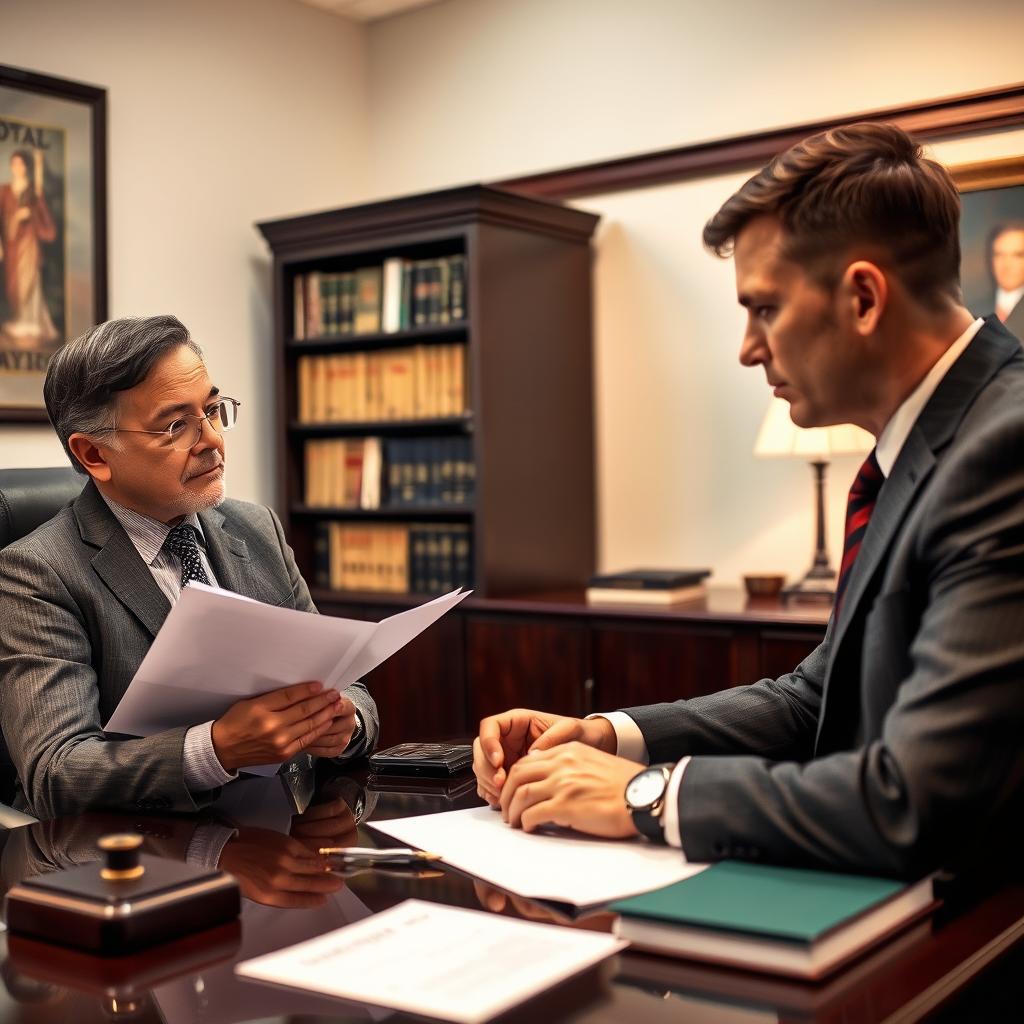
Perjury lawyer Baltimore, MD
Federal perjury charges are serious. Under 18 U.S.C. § 1621, a person who, having taken an oath, willfully makes a materially false statement in a federal proceeding or document faces a maximum penalty of five years imprisonment per count. The U.S. Attorney’s Office for the District of Maryland, based in Baltimore, prosecutes these cases with the full resources of federal law enforcement. If you are under investigation or have been charged, you need counsel who understands how the government builds its case and who can identify weaknesses in the evidence. Mr. Sris, a former prosecutor, and his Of Counsel team at Law Offices Of SRIS, P.C. have extensive experience handling federal criminal matters, including perjury offenses. The firm has practiced since 1997 and represents clients in federal court in Baltimore and throughout Maryland. Reach Law Offices Of SRIS, P.C. at (888) 437-7747 to schedule a consultation. Law Offices Of SRIS, P.C. – Advocacy Without Borders.
What Perjury Means in Baltimore, MD
Perjury is not just any false statement — it requires a willful, material misrepresentation made under oath in an official proceeding. In the federal context, cases are investigated by the FBI and other federal agencies and are prosecuted in the U.S. District Court for the District of Maryland. The Baltimore Division of that court, located at 101 West Lombard Street, handles felony matters including perjury. The materiality element is key: the false statement must have the capacity to influence the decision-making of the tribunal or agency before which it was made. Because Baltimore hosts federal agencies, military installations, and a significant federal contractor presence, perjury charges often arise in grand jury proceedings, civil depositions, bankruptcy hearings, or in sworn statements to federal law enforcement.
Federal sentencing guidelines and the U.S. Sentencing Commission’s policy statements guide punishment. Although statutory maximums exist, the actual sentence depends on the defendant’s criminal history, the nature of the underlying proceeding, and whether the false statement obstructed justice. The U.S. Attorney’s Office in Baltimore often charges perjury alongside other offenses such as obstruction of justice, false statements, or subornation of perjury. A conviction can also trigger collateral consequences, including loss of professional licenses, security clearances, or immigration status. Federal judges in the Maryland district take oath-related offenses seriously, and the government has broad investigatory tools — including surveillance, document subpoenas, and cooperating witnesses — to prove intent and materiality.
How Mr. Sris and His Of Counsel Handle Perjury Cases
When a client faces a perjury allegation, the first step is to understand the precise statement at issue and the context in which it was made. Mr. Sris and his Of Counsel team review the transcript, recording, or written document carefully. They examine the oath or affirmation that was administered, assess whether the statement was actually false, and determine whether the government can prove materiality. Frequently, statements that appear false are the result of misunderstanding, memory lapse, or ambiguous questioning — not willful deception. Experienced counsel can present these alternative explanations to the prosecutor or the court.
The team also evaluates pretrial motions, including challenges to the sufficiency of the indictment and requests to suppress evidence obtained in violation of the defendant’s rights. Because perjury investigations often span weeks or months, early engagement by counsel can help avoid charges altogether by clarifying the facts to the investigating agency before a case is presented to the grand jury. If charges are filed, Mr. Sris and his Of Counsel prepare for trial, cross-examine government witnesses, and present a defense that underscores the lack of criminal intent. The goal is to secure a dismissal, acquittal, or reduction of charges wherever possible.
About Mr. Sris and His Of Counsel Team
Mr. Sris, Owner and Founder of Law Offices Of SRIS, P.C., is a former prosecutor. He founded the firm in 1997 and is admitted to practice in Virginia, Maryland, the District of Columbia, New Jersey, and New York. His background gives him insight into how the government assembles perjury charges. He testified before the Virginia House Courts of Justice Committee in support of 2019 HB 635 (chief patron Del. David Bulova). Mr. Sris and his Of Counsel bring extensive combined legal experience to federal criminal defense. Results may vary.
The firm’s Of Counsel attorneys work alongside Mr. Sris, each contributing distinct perspectives. This team-based approach ensures thorough preparation for every federal proceeding. The firm’s Rockville, Maryland location serves clients throughout the state, including Baltimore.
Frequently Asked Questions
What is federal perjury?
Federal perjury is the willful act of making a materially false statement under oath in a proceeding or document governed by federal law. The false statement must be material — that is, capable of influencing the proceeding. Even a single misleading response during a deposition or grand jury appearance can support a charge under 18 U.S.C. § 1621. The government must prove the statement was false, that the defendant knew it was false, and that it was made with intent to deceive.
Do I need a lawyer if I am under investigation for perjury in Baltimore?
Yes, anyone under federal criminal investigation should consult an attorney immediately. The FBI and other federal agents often conduct lengthy investigations before charges are filed. Speaking to investigators without counsel can inadvertently create additional evidence. An experienced attorney can communicate with prosecutors on your behalf, present exculpatory information, and work to resolve the matter before an indictment is returned.
How does the government prove perjury?
To prove perjury, the government must establish that the defendant was under oath, made a false statement, knew it was false, and that the statement was material to the proceeding. Evidence typically includes the testimony of at least two witnesses or one witness plus corroborating circumstances. The prosecution may use transcripts, recordings, emails, and other records to contradict the defendant’s sworn statement. The materiality element is often contested because it requires showing the statement could have affected the outcome of the proceeding.
What are common defenses to perjury charges?
Common defenses include showing that the statement was literally true, that the defendant lacked the required intent, or that the statement was not material. A statement that is technically accurate — even if misleading — does not constitute perjury. Memory lapses, ambiguous questioning, or honest mistakes also negate the willfulness element. Additionally, if the prosecution cannot prove materiality, the charge fails. An attorney evaluates the specific language of the statement, the context, and the available evidence to develop the strong $1.
Can a perjury charge be dropped in Maryland federal court?
A perjury charge can be dismissed if the prosecution’s evidence is insufficient or if pretrial motions succeed. For example, if the indictment fails to allege each element of the offense or if key evidence is suppressed, the charge may not proceed. In some cases, the U.S. Attorney’s Office may voluntarily dismiss a charge after defense counsel presents exculpatory material. Every case is different, and the outcome depends on the specific facts.
What should I do if I realize I made a false statement under oath?
If you believe you may have made a false statement under oath, do not attempt to correct it without first speaking with a lawyer. Subsequent actions — such as recanting or clarifying the statement — can be used as evidence of consciousness of guilt. An attorney can assess whether the statement was in fact false, whether it was material, and whether a safe correction can be made. Prompt legal advice is essential to avoid compounding the situation.
Related pages:
Montgomery County federal criminal lawyer |
Prince George’s County federal criminal lawyer |
Howard County federal criminal lawyer |
Anne Arundel County federal criminal lawyer |
Frederick County federal criminal lawyer
Additional resources:
18 U.S.C. § 1621 — Perjury |
U.S. District Court for the District of Maryland
Attorney advertising. Prior results do not guarantee a similar outcome. Results may vary.
Case results depend on a variety of factors unique to each case.