
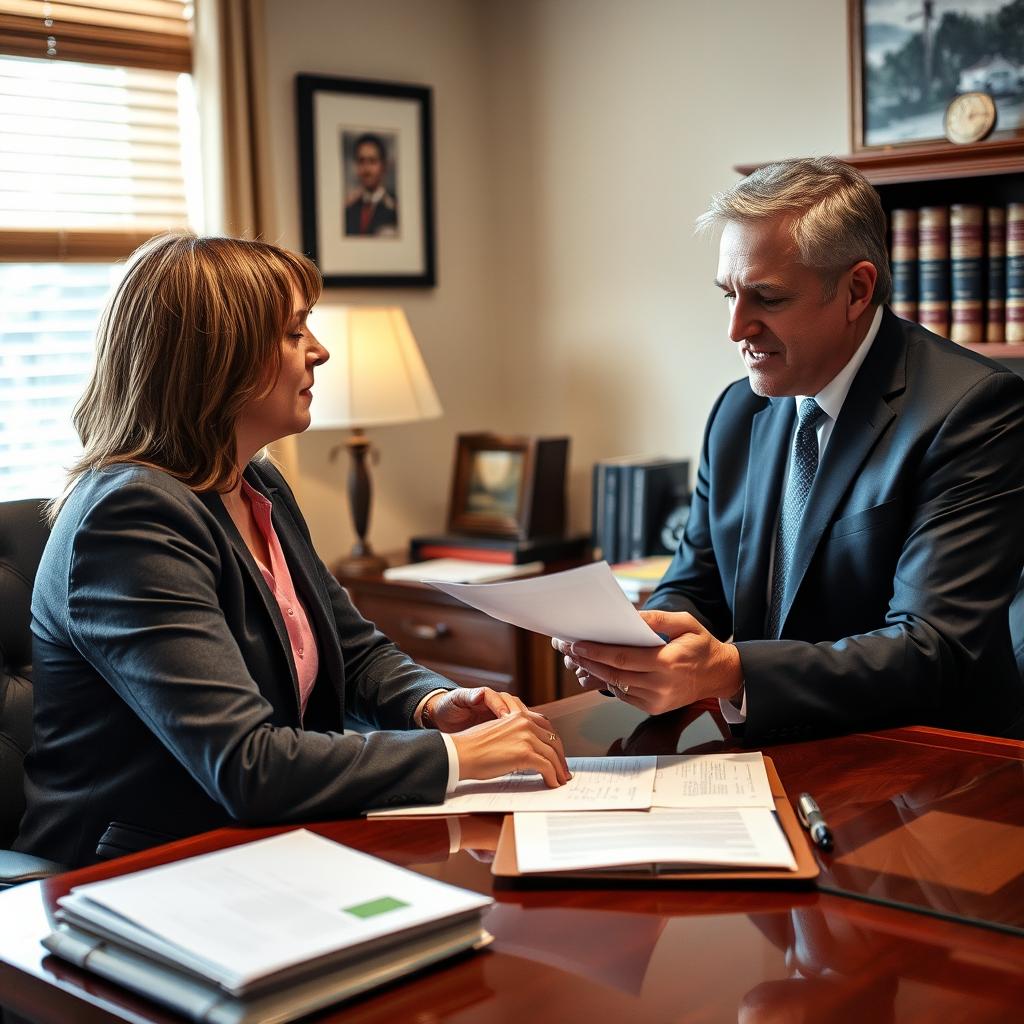
Operating a Drug-Involved Premises lawyer Washington County, VA
Federal charges for operating a drug-involved premises—an offense prosecuted under the Controlled Substances Act, 21 U.S.C. § 856—are serious matters that carry the full weight of the United States Department of Justice. In Washington County, Virginia, these cases are heard in the U.S. District Court for the Western District of Virginia, where the assigned Assistant U.S. Attorney typically prosecutes drug-premises offenses with the investigative support of the DEA or FBI. A person convicted of knowingly opening, leasing, renting, using, or maintaining a place for the purpose of manufacturing, distributing, or using any controlled substance faces a sentencing landscape governed by the Federal Sentencing Guidelines. There is no parole in the federal system, and even a first-time conviction can result in a substantial period of incarceration. Mr. Sris, a former prosecutor, and his Of Counsel bring decades of multi-state criminal trial experience to each federal case, appearing in the Western District of Virginia and working closely with clients to build a thorough defense. For a consultation about an operating-a-drug-involved-premises investigation or charge in Washington County, reach Law Offices Of SRIS, P.C. at (888) 437-7747.
What Federal Operating a Drug-Involved Premises Charges Mean in Washington County
Washington County sits in the southwestern corner of Virginia, bounded by the Tennessee state line and the Blue Ridge escarpment. Its communities—Abingdon, Damascus, Glade Spring, and Meadowview—are served by the Abingdon division of the U.S. District Court for the Western District of Virginia, which maintains a courthouse on West Main Street in Abingdon. Federal drug-enforcement operations in the region frequently involve joint task forces combining the DEA, the Virginia State Police, and local sheriff’s deputies. When those operations lead to an indictment under 21 U.S.C. § 856, the accused is immediately confronted with a proceeding that moves on the federal government’s timeline, not the state’s. Federal prosecutors have broad resources, and the Sentencing Guideline calculations often reflect offense-level enhancements based on drug type and quantity. Because Washington County’s rural character can make an arrest or search feel sudden, retaining counsel familiar with federal procedure early—even during the investigation phase—helps protect the accused’s rights and shapes the trajectory of the case from the start.
The statutory framework for operating a drug-involved premises requires the government to prove that the defendant knowingly maintained or controlled a place for one of the prohibited drug purposes. The prosecution may rely on witness testimony, surveillance evidence, recorded conversations, or the presence of drug paraphernalia and scales. Sentencing exposure is tied to the underlying drug offense—often a violation under 21 U.S.C. § 841—and federal mandatory-minimum penalties can apply when the quantity of a controlled substance exceeds a statutory threshold. Because the U.S. Attorney’s Office for the Western District of Virginia has an experienced white-collar and narcotics unit, the government’s case is typically prepared with care. Mr. Sris and his Of Counsel devote substantial attention to the pretrial phase, challenging the sufficiency of search warrants, moving to suppress evidence obtained in violation of the Fourth Amendment, and engaging in rigorous discovery review. This approach allows the defense to test the government’s evidence at the earliest practical point, often creating opportunities to seek dismissal or a favorable plea resolution.
How Mr. Sris and His Of Counsel Handle Federal Drug Premises Cases
When a federal drug-premises indictment is returned in the Western District of Virginia, Mr. Sris and his Of Counsel first focus on the procedural integrity of the government’s investigation. This includes scrutinizing the affidavit supporting any search warrant, evaluating whether a controlled buy or recorded conversation was lawfully obtained, and assessing whether the premises were actually “maintained” for drug activity within the meaning of § 856. Mr. Sris, as a former prosecutor, understands the charging priorities of the U.S. Attorney’s Office and the strategic considerations that influence a federal prosecutor’s decision-making. His Of Counsel team, which includes attorneys with extensive federal court experience, supports each stage of litigation, from initial appearance before a magistrate judge through trial or sentencing. The defense strategy is built on a foundation of rigorous motion practice, selective use of expert testimony where appropriate, and ongoing communication with the client so that every significant decision is informed.
Federal drug cases unfold at a pace set by the Speedy Trial Act, but the timeline itself is shaped by discovery volume, pretrial motion practice, and the complexity of any co-defendant arrangement. Mr. Sris and his Of Counsel work to secure a thorough discovery record, request favorable evidentiary rulings, and, when warranted, negotiate with the government for a resolution that reduces sentencing exposure. Because the Federal Sentencing Guidelines provide for guideline computations that can differ markedly from the statutory maximum, experienced counsel can make a meaningful difference in the final sentence. Throughout the process, clients are kept informed about the realistic range of potential outcomes. The firm does not guarantee a particular result—federal sentencing depends on numerous factors unique to each case—but it marshals all available resources to protect the client’s liberty and future.
About Mr. Sris and His Of Counsel Team
Mr. Sris founded Law Offices Of SRIS, P.C. in 1997 and has concentrated his practice in criminal defense for more than a quarter-century. He is admitted to practice in Virginia, Maryland, the District of Columbia, New Jersey, and New York, giving him a broad understanding of how federal courts operate across multiple circuits. Before founding the firm, he served as a former prosecutor, an experience that informs his approach to cross-examining government witnesses and anticipating prosecution strategy. Mr. Sris testified before the Virginia House Courts of Justice Committee in support of 2019 HB 635 (chief patron Del. David Bulova). His advocacy in the legislative arena reflects a long-standing commitment to the fair administration of justice. In federal drug cases, he draws on both his courtroom experience and his familiarity with the local culture of the Western District of Virginia.
Alongside Mr. Sris, the firm’s Of Counsel attorneys bring additional layers of trial skill and analytical rigor. Each Of Counsel attorney is an independent practitioner engaged through Excella; none is an associate, partner, or employee of the firm. Collectively, they contribute extensive experience in federal criminal procedure, evidence, and appellate review. For an individual facing an operating-a-drug-involved-premises charge in Washington County, this team approach means that multiple seasoned lawyers review the government’s filings, examine discovery materials, and help craft the defense. The firm’s Shenandoah Location in Woodstock, Virginia, serves clients throughout the region, and all consultations are by appointment. To speak with Mr. Sris or an Of Counsel attorney, call (888) 437-7747.
Frequently Asked Questions
What is operating a drug-involved premises under federal law?
Operating a drug-involved premises is a federal crime under 21 U.S.C. § 856 that makes it unlawful to knowingly open, lease, rent, use, or maintain any place for the purpose of manufacturing, distributing, or using a controlled substance. The offense does not require that a drug transaction actually occur on the premises; it is enough that the defendant managed or controlled a location knowing it would be used for one of the prohibited purposes. Federal prosecutors can bring this charge alongside conspiracy or substantive drug-trafficking counts, and a conviction under § 856 carries sentencing exposure calculated under the same Federal Sentencing Guidelines that apply to the underlying drug offense. Because the statute targets the “maintaining” of a place, broad evidence—from utility records to witness statements—can be introduced at trial.
How does the federal court process work in Washington County?
If you are charged with operating a drug-involved premises in Washington County, your case will be filed in the U.S. District Court for the Western District of Virginia, typically at the Abingdon division courthouse at 180 West Main Street. After an initial appearance before a magistrate judge, a detention hearing may be held to decide whether you will be released pending trial. The government then produces discovery, and your attorney can file pretrial motions challenging evidence. A trial date is set under the Speedy Trial Act, though many federal cases resolve through a plea agreement before trial. Because the Abingdon division handles cases from a wide rural area, court scheduling can depend on the docket’s volume; having counsel who regularly practices in that division helps ensure your case moves forward with proper attention to local procedures.
What are the potential penalties for a conviction under 21 U.S.C. § 856?
A conviction for operating a drug-involved premises is punished according to the penalties prescribed for the underlying drug offense that was being facilitated, which can include substantial prison time, fines, and a term of supervised release. Because the sentence is driven by the drug type and quantity, a person convicted of maintaining a place for a trafficking offense involving a significant amount of a Schedule I or II controlled substance may face a multi-year mandatory minimum. The Federal Sentencing Guidelines also consider factors such as whether a dangerous weapon was present, whether the premises were near a school, and the defendant’s role in the offense. There is no parole in the federal system; good-conduct credit reduces a sentence by only a modest number of days per year. A detailed review of the sentencing calculation is a critical part of any defense.
Do I need a lawyer if I am only being investigated?
Engaging counsel during an investigation can help protect your rights before an indictment is returned. Federal agents may attempt to interview you, seek your consent to search a property, or issue a grand-jury subpoena. Anything you say can become evidence later, and consent to a search often eliminates later challenges to the evidence. An experienced federal criminal defense attorney can communicate with investigators on your behalf, advise you on what disclosures to make, and begin assembling factual information that may dissuade the government from filing charges. Because the U.S. Attorney’s Office often spends months building a case before seeking an indictment, early legal involvement gives the defense a head start.
How can I find a federal drug premises lawyer in Washington County, Virginia?
You can reach Law Offices Of SRIS, P.C. at (888) 437-7747 to discuss your situation with Mr. Sris, a former prosecutor who concentrates his practice in federal criminal defense. The firm’s Shenandoah Location serves clients from Washington County and surrounding communities, and all consultations are by appointment. When you call, you will speak with a staff member who can schedule a time to review the facts of your case. Because federal drug-premises cases require a detailed understanding of both the Controlled Substances Act and the Federal Sentencing Guidelines, it is important to work with counsel who regularly appears in the Western District of Virginia. Mr. Sris and his Of Counsel bring that familiarity to every client matter.
What should I bring to a consultation about an operating-a-drug-involved-premises case?
For a productive consultation, gather any documents you have—such as a copy of the indictment, a search warrant, or an agent’s contact information—and prepare a written timeline of events as you recall them. Do not delete any emails, text messages, or social-media posts related to the case, as doing so could create additional legal exposure. If you have already been interviewed by law enforcement, write down everything you were asked and what you said. During the consultation, your attorney will explain how the federal process works, walk through the potential sentencing exposure, and identify the next steps. All discussions are confidential, so you can be frank about the facts.
Our firm also assists with federal criminal defense matters across Virginia. Learn more about related services:
- Federal criminal defense in Fairfax County
- Federal criminal defense in Prince William County
- Federal criminal defense in Roanoke
- Federal criminal defense in Abingdon
For authoritative resources, visit:
Attorney advertising. Prior results do not guarantee a similar outcome. Case results depend on a variety of factors unique to each case. Results may vary.