
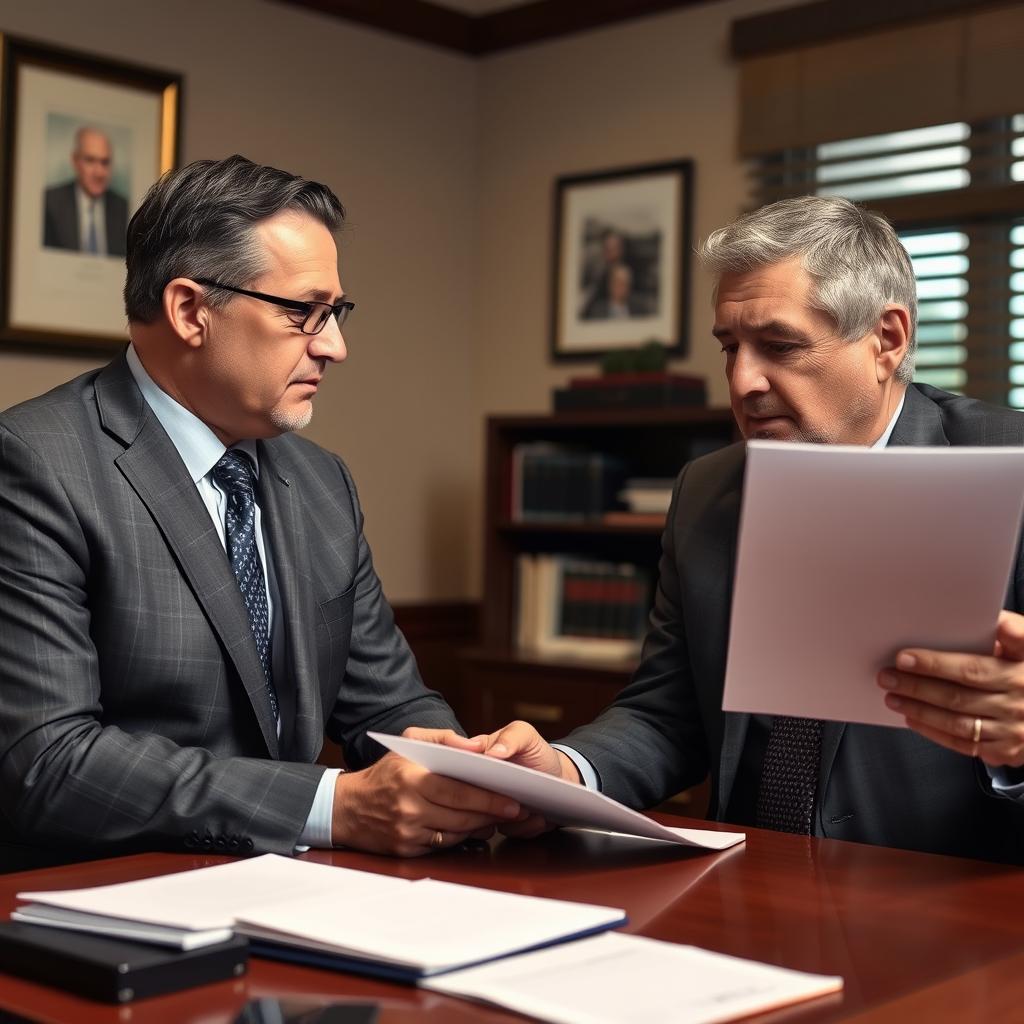
Obstruction of Justice lawyer Prince George’s County, MD
Federal obstruction of justice charges in Prince George’s County, Maryland, are prosecuted by the United States Attorney’s Office for the District of Maryland, typically in the Greenbelt Division of the U.S. District Court. An allegation under 18 U.S.C. § 1503—the omnibus obstruction statute—or related provisions such as 18 U.S.C. § 1512 (witness tampering) carries the possibility of significant federal penalties and no parole. Mr. Sris and his Of Counsel represent individuals facing these charges, drawing on extensive combined legal experience and a thorough understanding of federal criminal procedure. The federal system operates under the United States Sentencing Guidelines, and a conviction can lead to years of imprisonment, supervised release, fines, and substantial collateral consequences. Residents of Upper Marlboro, Bowie, College Park, Laurel, Hyattsville, Greenbelt, Largo, Fort Washington, Lanham, Clinton, Capitol Heights, Oxon Hill, Suitland, and surrounding communities can reach Mr. Sris and his Of Counsel at (888) 437-7747 to request a consultation. Law Offices Of SRIS, P.C. – Advocacy Without Borders.
What Obstruction of Justice Means in Prince George’s County, MD
In the federal legal landscape, obstruction of justice broadly encompasses any act that corruptly influences, impedes, or endeavors to influence or impede the due administration of justice. The most commonly charged statutes are 18 U.S.C. § 1503 and 18 U.S.C. § 1512. Section 1503 prohibits corruptly endeavoring to influence, intimidate, or impede any grand or petit juror, court officer, or the due administration of justice generally. Section 1512 specifically addresses witness tampering, retaliation against a witness, and destruction of evidence. Because Prince George’s County sits immediately adjacent to Washington, D.C., federal investigations often involve multiple agencies—the FBI, DEA, IRS-CI, HSI, ATF, and Secret Service may all be involved. A federal obstruction charge here frequently arises in connection with white-collar investigations, public corruption probes, drug trafficking conspiracies, or national security matters where the government asserts that a person attempted to interfere with the investigation or judicial process.
The U.S. District Court for the District of Maryland hears federal criminal cases in two divisions: the Southern Division in Greenbelt handles matters arising in Prince George’s County, while the Northern Division in Baltimore covers other parts of the state. Individuals charged in Prince George’s County will typically appear for arraignment, detention hearings, motions, and trial in Greenbelt before a federal magistrate judge or district judge. The local procedural environment is shaped by the Speedy Trial Act, the Federal Rules of Criminal Procedure, and the practices of the assigned Assistant United States Attorney. An experienced federal criminal defense attorney familiar with the Greenbelt courthouse and the expectations of the judges who sit there is essential to navigate the process effectively. Because the federal system does not offer parole, any term of imprisonment imposed will be served at a facility designated by the Bureau of Prisons, making the stakes extraordinarily high.
How Mr. Sris and His Of Counsel Handle Federal Obstruction of Justice Cases
When Mr. Sris and his Of Counsel represent an individual facing a federal obstruction allegation in Prince George’s County, they begin by analyzing the indictment, the underlying investigation, and the government’s evidence. Federal obstruction cases are often built on recorded conversations, email chains, testimony from cooperating witnesses, and circumstantial evidence. The defense strategy may involve challenging the sufficiency of the government’s showing of corrupt intent, examining whether the defendant’s conduct actually falls within the scope of the charged statute, or seeking suppression of evidence obtained in violation of constitutional protections. Pretrial motions practice—including motions to dismiss, motions to sever defendants, motions for a bill of particulars, and motions to suppress—is a critical phase. Mr. Sris and his Of Counsel also engage with the U.S. Attorney’s Office to explore the possibility of resolving the matter without trial through a plea agreement that might reduce exposure or result in a charge more accurately reflecting the conduct at issue.
At trial, the government must prove beyond a reasonable doubt that the defendant acted with the requisite corrupt intent and that the conduct materially affected a federal proceeding. Mr. Sris and his Of Counsel, drawing on extensive combined legal experience, prepare each case as if it will go to verdict, pressing the government at every stage. When appropriate, they present a defense that contextualizes the defendant’s actions and counters the prosecution’s narrative. Throughout the process, they advise the client on the potential sentencing consequences under the advisory United States Sentencing Guidelines and the mandatory minimums that may apply. Because obstruction charges frequently carry sentencing enhancements and may affect a defendant’s acceptance-of-responsibility reduction, every tactical decision is made with an eye toward the eventual sentencing hearing before the district judge.
About Mr. Sris and His Of Counsel Team
Mr. Sris, Owner and Founder of Law Offices Of SRIS, P.C., founded the firm in 1997. A former prosecutor, he has practiced in Virginia, Maryland, the District of Columbia, New Jersey, and New York for more than two decades. Mr. Sris testified before the Virginia House Courts of Justice Committee in support of 2019 HB 635 (chief patron Del. David Bulova). He leads the firm’s federal criminal defense practice, maintaining a personal caseload small enough to permit deep involvement in every matter. Mr. Sris’s background as a former prosecutor provides insight into how the government constructs its cases, and his multi-state practice equips him to navigate the interplay of federal and state investigations that frequently arise in the D.C. Metropolitan area.
Mr. Sris and his Of Counsel bring extensive combined legal experience to federal criminal defense. The Of Counsel team includes attorneys with substantial trial and litigation backgrounds. On federal obstruction matters, Mr. Sris serves as lead counsel, with the Of Counsel team providing research, motion drafting, and courtroom support as needed. Together, they work to develop a well-prepared defense tailored to the specific facts and the expectations of the U.S. District Court for the District of Maryland. The firm’s Rockville location provides a convenient base for serving clients throughout Prince George’s County and the surrounding areas.
Frequently Asked Questions
What is the difference between state and federal obstruction of justice charges?
Federal obstruction charges are prosecuted by the U.S. Attorney’s Office under federal statutes such as 18 U.S.C. § 1503 or § 1512, with generally harsher penalties and no parole. State obstruction charges, by contrast, fall under Maryland criminal law and are handled in the state court system. Federal cases often involve multi-agency investigations, grand jury indictments, and sentencing under the advisory United States Sentencing Guidelines, whereas state cases proceed under Maryland’s sentencing guidelines. The procedural rules, evidentiary standards, and potential immigration consequences also differ. Because a federal conviction carries the possibility of mandatory minimum sentences and the loss of certain civil rights, an attorney experienced in federal court is critical.
Do I need a lawyer if I am under investigation for obstruction of justice in Prince George’s County?
Yes, if you are under investigation for a federal obstruction offense, you should immediately seek legal representation from an attorney experienced in federal criminal defense. Federal investigations are thorough and may involve surveillance, grand jury subpoenas, and interviews with witnesses long before charges are filed. Statements you make to investigators can be used against you, and attempting to explain your actions without counsel may inadvertently worsen your situation. An experienced federal defense attorney can engage with the government early, attempt to prevent charges from being filed, protect your rights during any search or seizure, and begin building a defense well before an indictment is returned.
What are the potential penalties for federal obstruction of justice?
Under 18 U.S.C. § 1503, a conviction for obstruction of justice can result in up to 10 years of imprisonment, or up to 20 years if the offense involved the killing or attempted killing of a juror or court officer. Additional penalties may include substantial fines, a term of supervised release following incarceration, restitution if the obstruction caused financial harm, and asset forfeiture in certain cases. The specific sentence depends on the facts of the offense, the defendant’s criminal history category, any applicable mandatory minimums, whether the obstruction was part of a larger conspiracy, and whether it involved threats or violence. Because there is no parole in the federal system, an individual sentenced to a term of imprisonment will serve the vast majority of that time.
How does an obstruction charge affect related federal offenses?
An obstruction charge is often added to an underlying federal offense, such as fraud, drug trafficking, or public corruption, significantly increasing the defendant’s potential sentencing exposure. The offense of obstruction is itself a separate count, and if convicted, the sentence for obstruction can run consecutively to the sentence for the underlying crime. Moreover, the government may argue that the defendant’s obstructive conduct demonstrates a lack of acceptance of responsibility, which can eliminate a reduction in the sentencing guidelines calculation that would otherwise be available through a guilty plea. A defendant convicted of both the underlying offense and obstruction may face a substantially longer term of imprisonment than someone charged only with the predicate crime. An attorney who understands how these charges interact can negotiate with the government to avoid the most severe cumulative penalties.
Where does the federal court hear cases in Prince George’s County?
Federal criminal cases arising in Prince George’s County are heard in the Greenbelt Division of the U.S. District Court for the District of Maryland, located at 6500 Cherrywood Lane, Greenbelt, Maryland. The Greenbelt courthouse handles all stages of federal criminal proceedings for the county, from initial appearances and detention hearings to pretrial motions and jury trials. The court’s proximity to Washington, D.C., and major transportation corridors such as I-495 and the Baltimore-Washington Parkway makes it accessible for defendants and counsel across the region. Proceedings are conducted before United States District Judges and Magistrate Judges assigned to the Southern Division. Understanding the practices of this specific courthouse—including its motion-day calendars, its approach to detention and release, and its pretrial scheduling orders—is an important part of mounting an effective defense.
Related pages:
Federal Criminal Lawyer Montgomery County, MD |
Federal Criminal Lawyer Howard County, MD |
Federal Criminal Lawyer Anne Arundel County, MD |
Federal Criminal Lawyer Frederick County, MD |
Federal Criminal Lawyer Baltimore County, MD
Official resources:
U.S. District Court for the District of Maryland |
U.S. Attorney’s Office, District of Maryland |
United States Sentencing Commission
Attorney advertising. Prior results do not guarantee a similar outcome.
Results may vary. Case results depend on a variety of factors unique to each case.
Attorney responsible for this advertising: Mr. Sris.
Law Offices Of SRIS, P.C. by appointment only. Call (888) 437-7747 to schedule.