
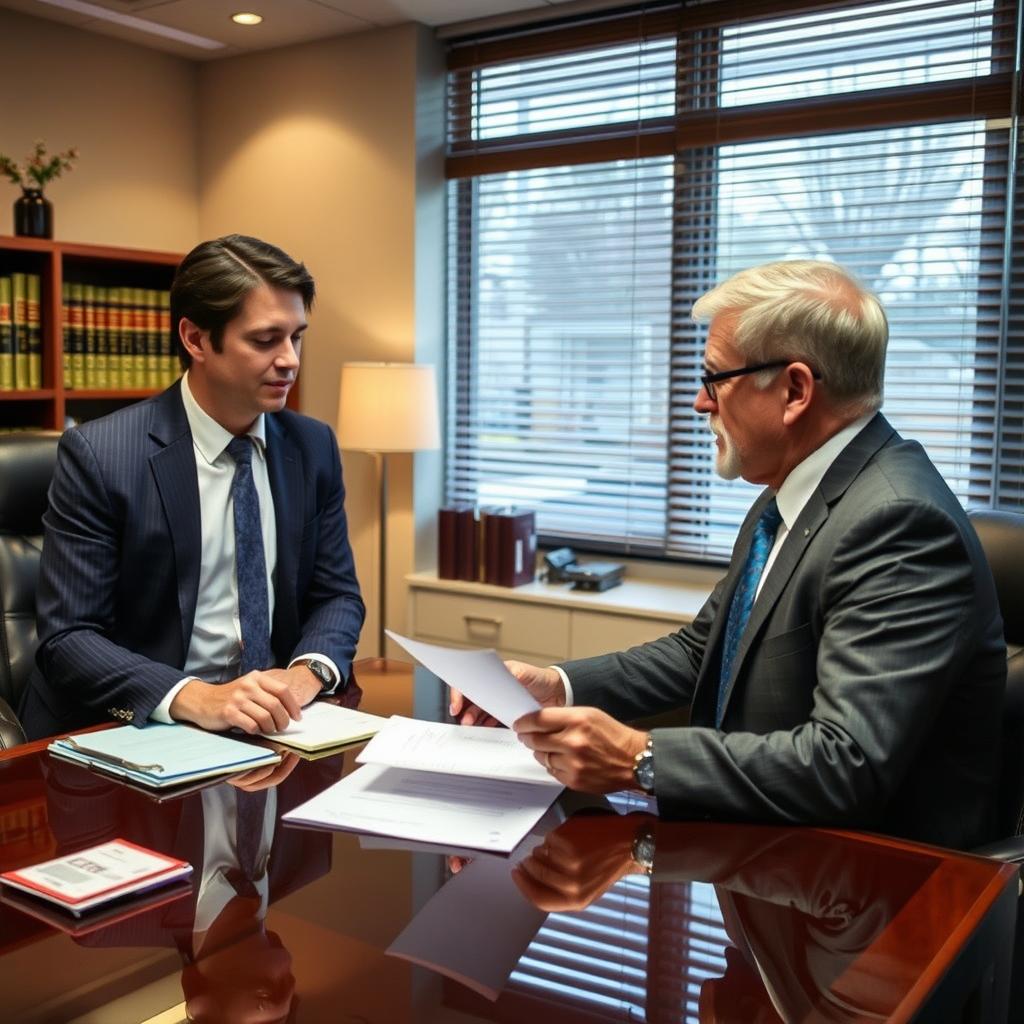
Manufacturing of Controlled Substances lawyer Rockville, MD
Federal prosecutors in Maryland pursue manufacturing of controlled substances cases with substantial resources and seek severe penalties under federal sentencing law. When you are facing an investigation or indictment for manufacturing offenses under 21 U.S.C. § 841, having experienced defense counsel who understands how these charges are built—and how to challenge them—can make a critical difference. Mr. Sris and his Of Counsel at Law Offices Of SRIS, P.C. represent individuals across Maryland in federal criminal matters, including drug-manufacturing allegations in Rockville and throughout the state. Our attorneys appear in the U.S. District Court for the District of Maryland, with its divisions in Baltimore and Greenbelt, and work to develop a thorough defense from the earliest stage. To discuss your situation, call Law Offices Of SRIS, P.C. at (888) 437-7747 and request a consultation. Law Offices Of SRIS, P.C. – Advocacy Without Borders.
What Manufacturing of Controlled Substances Means in Rockville, MD
Rockville sits within Montgomery County, part of the federal judicial district for Maryland. Any federal charge of manufacturing a controlled substance—whether it involves synthetic narcotics, methamphetamine, or other Schedule I or II drugs—is prosecuted by the United States Attorney’s Office, often after investigation by agencies such as the DEA, FBI, or Homeland Security Investigations. The U.S. District Court for the District of Maryland hears these cases, and defendants may appear in either the Baltimore or Greenbelt courthouse depending on where the alleged conduct took place.
Because federal drug manufacturing statutes carry mandatory minimum terms that depend on the type and quantity of the substance, the stakes are high from the outset. A conviction under 21 U.S.C. § 841 can lead to a prison sentence measured in years or even decades, and the federal system does not offer parole. In addition to incarceration, the court may impose substantial fines, forfeiture of property, and a term of supervised release that extends well beyond the prison term. Understanding the sentencing exposure and how prosecutors calculate drug weight and offense level under the United States Sentencing Guidelines is an important part of early case assessment.
Under 21 U.S.C. § 841, manufacturing a controlled substance can result in mandatory minimum sentences—for certain drug quantities, the minimum is five or ten years, and convictions involving death or serious injury can lead to life imprisonment.
Source: 21 U.S.C. § 841; Federal Sentencing Guidelines. 21 U.S.C. § 841 (Cornell)
Reviewed by Mr. Sris, admitted in VA/MD/DC/NJ/NY.
When you retain counsel at Law Offices Of SRIS, P.C., Mr. Sris and his Of Counsel begin analyzing the government’s theory immediately—scrutinizing the charging documents, the basis for any search warrant, the chain of custody of evidence, and the lab analysis that purports to identify the controlled substance. Because Rockville is within easy reach of the firm’s Maryland location, we are available to meet and discuss your case promptly.
How Mr. Sris and His Of Counsel Handle Manufacturing of Controlled Substances Cases
Federal drug-manufacturing cases often turn on questions of knowledge, intent, and the reliability of the government’s evidence. Mr. Sris, a former prosecutor, and his Of Counsel approach each case by testing every element the prosecution must prove. They examine whether search-and-seizure procedures complied with the Fourth Amendment, whether confidential informants provided sufficient indicia of reliability, and whether there were defects in the warrant application that might support a motion to suppress.
The defense strategy is tailored to the facts of the case. In some matters, the focus is on challenging the chemical identification or the method used to calculate drug quantity—both of which directly affect the sentencing range. In others, the defense may center on showing that the defendant lacked the requisite intent to manufacture or that the substance involved was not a controlled substance under federal law. When appropriate, Mr. Sris and his Of Counsel engage in negotiations with the Assistant U.S. Attorney handling the case, exploring resolutions that could reduce the exposure to a mandatory minimum sentence or avoid indictment altogether. Throughout the process, the firm’s attorneys work to keep you informed about the procedural timeline and the options available at each stage, from initial appearance through pretrial motions and, if necessary, trial.
About Mr. Sris and His Of Counsel Team
Law Offices Of SRIS, P.C. was founded in 1997 by Mr. Sris, a former prosecutor who draws on his firsthand understanding of how federal drug investigations are built. Mr. Sris testified before the Virginia House Courts of Justice Committee in support of 2019 HB 635 (chief patron Del. David Bulova). He is admitted to practice in Virginia, Maryland, the District of Columbia, New Jersey, and New York, and he concentrates his practice on complex criminal defense, including federal drug offenses. The firm’s Maryland location is in Rockville, allowing convenient access to federal courthouses in Baltimore and Greenbelt.
Mr. Sris’s Of Counsel team includes attorneys who contribute extensive experience in criminal litigation. Together, Mr. Sris and his Of Counsel bring extensive combined legal experience to federal criminal defense. The firm has documented case results across a broad range of matters, and the majority of those have been favorable to the client. Results may vary. In your case.
Frequently Asked Questions
What are the penalties for manufacturing a controlled substance in Maryland federal court?
Federal manufacturing penalties depend on the drug type and quantity, and they can include mandatory minimum prison terms of five or ten years or more, with no parole. The United States Sentencing Guidelines govern the advisory range, and a conviction under 21 U.S.C. § 841 can also bring fines, forfeiture, and supervised release. Because the federal system has eliminated parole, an individual sentenced to a mandatory minimum must serve the full minimum term. Early involvement of counsel is critical to examine the drug weight attributed to you and to advocate for any available safety-valve or substantial-assistance provisions that may reduce the sentence below the mandatory floor.
How does a federal manufacturing case begin in Rockville?
A federal drug-manufacturing case often starts with an investigation by a federal agency, which may include surveillance, informants, or controlled buys before an arrest or indictment. Once a complaint or indictment is filed in the U.S. District Court for the District of Maryland, the defendant appears before a magistrate judge for an initial appearance, at which bail conditions are set. The case then proceeds through discovery, pretrial motions, and possibly trial. Because federal prosecutors screen cases carefully, retaining a lawyer as soon as you become aware of an investigation can help you make informed decisions before charges are filed.
Can manufacturing of controlled substances charges be dismissed?
Yes, dismissal is possible if the government’s evidence is insufficient or if a motion to suppress evidence is granted and crucial evidence is excluded. However, federal prosecutors do not lightly bring manufacturing charges; they typically have a developed investigative file. Dismissal may occur by way of a successful motion to dismiss the indictment or through a suppression motion that removes the basis for the charge. In practice, many cases resolve through a plea agreement that reduces the charge to a lesser offense, but whether that is appropriate depends on the specific circumstances of each case.
Do I need an attorney just to talk to investigators about manufacturing allegations?
Yes, you should not speak to federal agents without your own attorney present, even if you believe you have nothing to hide. Statements you make to investigating agents can be used against you and may be taken out of context. Agents are trained to obtain incriminating statements, and they are not required to advise someone who is not in custody of his or her Miranda rights. An experienced federal criminal defense lawyer can communicate with investigators on your behalf and help you avoid choices that could inadvertently strengthen the government’s case.
What role does drug quantity play in a manufacturing case?
Drug quantity is one of the most important factors in a federal manufacturing case because it determines the mandatory minimum sentence and the sentencing guideline range. The government must prove the quantity attributable to the defendant, and the defense can challenge the lab analysis, the chain of custody, or the method of estimation. Even a disagreement over a few grams can mean the difference between a five-year and a ten-year mandatory minimum. Mr. Sris and his Of Counsel scrutinize the government’s quantity evidence carefully and work to exclude unreliable or inflated figures.
What should I do if I am contacted by federal agents about a drug investigation?
Politely decline to answer questions and state that you wish to speak with an attorney before any interview. Do not consent to a search of your home, vehicle, or electronic devices. Immediately contact a federal criminal defense lawyer who can intervene with the agents and evaluate whether you are a target of the investigation. Early legal advice can influence whether charges are filed and what conditions you face if they are filed. Reach Law Offices Of SRIS, P.C. at (888) 437-7747 to discuss your situation.
Related Federal Criminal Defense Pages
- Federal Criminal Lawyer Montgomery County
- Prince George’s County Federal Criminal Lawyer
- Howard County Federal Criminal Lawyer
- Anne Arundel County Federal Criminal Lawyer
Authoritative Federal Legal Sources
- U.S. District Court for the District of Maryland
- 21 U.S.C. § 841 – Controlled Substance Manufacturing Prohibited Acts
- U.S. Sentencing Commission – Federal Sentencing Guidelines
Attorney advertising. Prior results do not guarantee a similar outcome. Results may vary. Law Offices Of SRIS, P.C. — (888) 437-7747 — Consultation by appointment only.
Case results depend on a variety of factors unique to each case.