
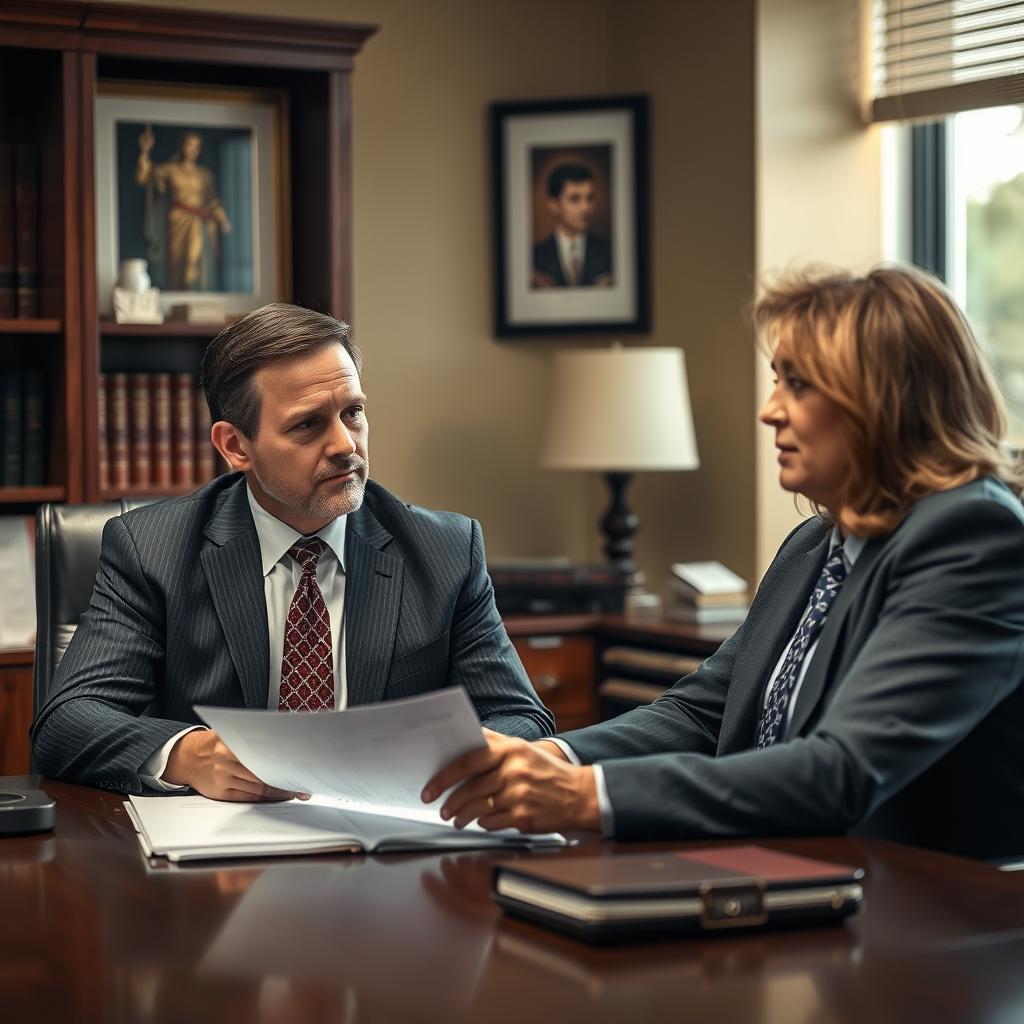
Manufacturing of Controlled Substances lawyer Garrett County, MD
Federal manufacturing of controlled substances charges in Garrett County, Maryland, are prosecuted by the U.S. Attorney’s Office for the District of Maryland, often supported by DEA, FBI, or other federal agency investigations. Under 21 U.S.C. § 841, manufacturing scheduled drugs—whether methamphetamine, fentanyl, cocaine, or other controlled substances—exposes a defendant to mandatory minimum prison sentences, no federal parole, and lengthy supervised release terms. The procedural and sentencing landscape is distinct from state‑court drug cases, and a conviction can alter every aspect of a person’s life. Mr. Sris and his Of Counsel at Law Offices Of SRIS, P.C. Concentrate their defense practice on federal criminal matters, including manufacturing allegations. For a consultation regarding a federal manufacturing investigation or charged offense in Garrett County, call (888) 437‑7747. Law Offices Of SRIS, P.C. – Advocacy Without Borders.
What Federal Manufacturing Charges Mean in Garrett County
Garrett County is Maryland’s westernmost county, comprising communities such as Oakland, Deep Creek Lake, Accident, and Grantsville. Although geographically remote, federal criminal jurisdiction extends across the entire state. Any manufacturing‑of‑controlled‑substances case arising in Garrett County is heard not in a local courthouse but in the U.S. District Court for the District of Maryland, with divisional offices in Baltimore and Greenbelt.
The prosecution is handled by an Assistant U.S. Attorney who draws on the resources of federal investigative agencies. The charging document is typically a grand jury indictment. The case proceeds under the Federal Rules of Criminal Procedure, the Speedy Trial Act, and the advisory U.S. Sentencing Guidelines. Because manufacturing charges often involve allegations of conspiracy under 21 U.S.C. § 846, a person may face liability for the acts of co‑defendants even without directly handling the substances. The potential penalties are driven by the type and quantity of controlled substance alleged, with mandatory minimums that remove judicial discretion at sentencing.
Defendants in Garrett County who are charged federally need counsel who understands the intersection of federal drug statutes, the local practices of the U.S. Attorney’s Office, and the sentencing guidelines. Mr. Sris and his Of Counsel team appear in the District of Maryland and work to protect clients’ rights at every stage—from investigation and bail hearings through trial, if necessary.
How Mr. Sris and His Of Counsel Handle Federal Manufacturing Cases
When a person contacts the firm about a federal manufacturing investigation, the first priority is to prevent or manage the charging decision. Mr. Sris and his Of Counsel engage early with the investigating agency and the U.S. Attorney’s Office, where appropriate, to present mitigating facts and challenge the legal basis for charges. If an indictment has already been returned, the defense team focuses on pretrial motions—including challenges to the sufficiency of the indictment, suppression of evidence obtained through unconstitutional searches or coercive interrogations, and discovery of Brady material.
Federal manufacturing cases frequently involve cooperating witnesses, wiretaps, confidential informants, and complex forensic evidence. Mr. Sris’s experience as a former prosecutor gives him insight into how the government builds its case. The Of Counsel team, with extensive litigation backgrounds, reviews every piece of discovery to identify weaknesses in the prosecution’s theory. The firm’s approach is to evaluate the evidence thoroughly, advise the client on the realistic exposure under the sentencing guidelines, and, when trial is the appropriate path, present a vigorous defense before the jury. Throughout the process, the firm works to achieve the most favorable resolution possible, whether through negotiation, pretrial dismissal, or verdict. Every federal manufacturing case is fact‑intensive, and the firm tailors its strategy to the individual circumstances.
About Mr. Sris and His Of Counsel Team
Mr. Sris, Owner and Founder of Law Offices Of SRIS, P.C., has practiced since 1997 and is admitted in Virginia, Maryland, the District of Columbia, New Jersey, and New York. He began his legal career as a prosecutor—experience that informs his approach to federal criminal defense. Mr. Sris testified before the Virginia House Courts of Justice Committee in support of 2019 HB 635 (chief patron Del. David Bulova).
Mr. Sris works alongside a team of Of Counsel who bring extensive litigation background to federal matters. Mr. Sris and his Of Counsel bring extensive combined legal experience to manufacturing‑of‑controlled‑substances cases. Results may vary. The team focuses on each client’s situation individually, drawing on decades of trial work and knowledge of the federal court system. Law Offices Of SRIS, P.C. serves clients throughout Maryland from its Rockville location, by appointment only. Reach the firm at (888) 437‑7747.
Frequently Asked Questions
What is the difference between a state and a federal manufacturing charge?
Federal manufacturing charges are prosecuted by the U.S. Attorney’s Office under federal statutes and carry generally harsher sentencing exposure, including mandatory minimums and no parole. State manufacturing charges are brought in Maryland Circuit Court and are governed by Maryland state law. Federal cases use the U.S. Sentencing Guidelines, which calculate a guideline range based on offense characteristics and criminal history. Because the federal system has no parole, a convicted individual serves at least 85% of the imposed sentence. The procedural rules, discovery obligations, and jury‑selection processes also differ substantially from state court.
How do federal sentencing guidelines apply to manufacturing of controlled substances?
Federal sentencing at the U.S. District Court for the District of Maryland follows the U.S. Sentencing Guidelines, a points‑based calculation using offense level and criminal history category. While the guidelines are advisory since the Booker decision, they strongly influence the final sentence. For manufacturing offenses, the base offense level is determined by the drug quantity table, and enhancements may apply for factors such as possession of a weapon, role in the offense, or endangerment of minors. Mandatory minimum statutes override downward departures in many drug cases. Mitigation through acceptance of responsibility or substantial assistance under § 5K1.1 can reduce exposure, but every case is assessed individually.
Do I need a federal criminal defense lawyer in Garrett County, Maryland?
Yes, immediately. Federal manufacturing cases at the U.S. District Court for the District of Maryland are prosecuted by the U.S. Attorney’s Office with substantial federal investigative resources and carry sentencing guidelines that often include mandatory minimums. State‑court experience does not translate directly to federal practice, which has its own rules of procedure, pretrial detention standards, and sentencing mechanics. Early engagement before an indictment is returned can materially affect the outcome. Mr. Sris and his Of Counsel offer consultation by appointment. Call (888) 437‑7747.
What should I do if I am under investigation for manufacturing controlled substances?
If you learn of a federal investigation, contact an experienced federal defense attorney immediately and do not speak with law enforcement without counsel present. Federal agents often contact potential targets before charges are filed. Anything you say can be used against you, and even seemingly innocent statements may be used to support a conspiracy charge. Preserve all documents and records, but do not destroy any material—obstruction of justice carries its own severe penalties. Mr. Sris and his Of Counsel advise clients on how to navigate the investigative phase while protecting their rights.
How can a lawyer defend against federal manufacturing charges?
Defense strategies in federal manufacturing cases may include challenging the legality of the search, the reliability of cooperating witnesses, the chain of custody of evidence, and the sufficiency of the government’s proof of intent. The government must prove beyond a reasonable doubt that the defendant knowingly or intentionally manufactured a controlled substance. If the evidence was obtained in violation of the Fourth Amendment, a suppression motion may lead to exclusion of the drugs or equipment. Other common defenses include demonstrating lack of knowledge, challenging the lab analysis, or revealing an unconstitutional entrapment. Each case is evaluated on its facts to identify the most viable defense approach.
What makes Law Offices Of SRIS, P.C. Different in federal manufacturing cases?
Mr. Sris’s background as a former prosecutor gives him insight into how federal cases are built, and his Of Counsel team brings substantial trial experience to the defense. The firm has handled federal criminal matters across multiple jurisdictions since its founding in 1997. Mr. Sris is admitted in five states and the District of Columbia, allowing the firm to address multi‑district investigations. The Rockville location serves all 24 Maryland counties, including Garrett County, by appointment. Every client works with an attorney who understands the federal sentencing landscape and the importance of early case assessment.
For information on federal criminal defense in nearby counties, visit:
Montgomery County Federal Criminal Defense | Prince George’s County Federal Criminal Defense | Howard County Federal Criminal Defense | Anne Arundel County Federal Criminal Defense
Attorney advertising. Prior results do not guarantee a similar outcome.
Results may vary.
Case results depend on a variety of factors unique to each case.