
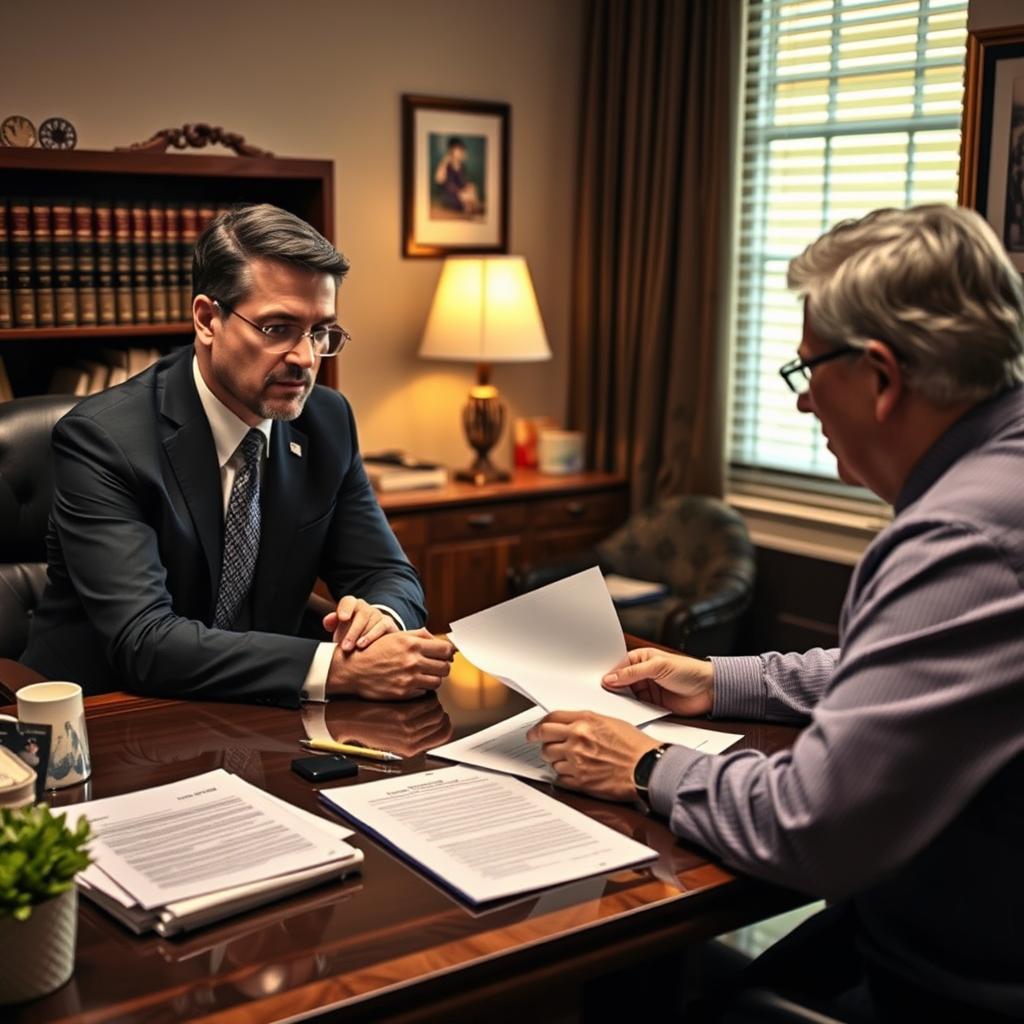
Kickbacks lawyer Talbot County, MD
You built your construction company in St. Michaels over two decades. Last week, federal agents showed up at your business with a search warrant, and a grand jury subpoena followed, naming you as a target in a kickback investigation. Your company’s future, your personal reputation, and your liberty are at stake. Federal authorities in the District of Maryland move quickly, and the U.S. Attorney’s Office has substantial resources. You need a federal criminal defense lawyer who understands how these investigations unfold on the Eastern Shore and who can push back from the very first contact with law enforcement. Reach Law Offices Of SRIS, P.C. at (888) 437-7747 to request a consultation. Law Offices Of SRIS, P.C. – Advocacy Without Borders.
Kickbacks Defense Strategies in Federal Court
Federal kickbacks charges often arise when the government alleges that a payment, gift, or service was exchanged for favorable treatment in a contract, referral, or business relationship that involves federal funds or programs. The legal theories can include honest-services fraud, bribery concerning federal programs under 18 U.S.C. § 666, or mail and wire fraud if communications crossed state lines. An effective defense starts with a thorough analysis of the government’s evidence—usually gathered through extensive grand jury subpoenas, witness interviews, and financial records. Mr. Sris and his Of Counsel work to identify legal issues such as entrapment, ambiguous agreement terms, insufficient federal nexus, or constitutional challenges to searches and seizures. Early intervention, often before an indictment is unsealed, can shape the course of the entire prosecution.
What to Expect When Facing Federal Kickbacks Charges
Federal criminal cases differ significantly from state prosecutions. Investigations are typically conducted by agencies such as the FBI, IRS-Criminal Investigation, or the HSI, and are presented to a grand jury—not a preliminary hearing. If indicted, you will be arraigned in the U.S. District Court for the District of Maryland, either in Baltimore or Greenbelt. Following arraignment, your defense team will receive discovery, including thousands of pages of documents and witness statements. The court will set a scheduling order under the Speedy Trial Act, and motions practice—such as motions to suppress evidence or to dismiss counts—becomes a critical phase. Plea negotiations with the U.S. Attorney’s Office often occur in parallel. If trial is necessary, a jury will decide the facts under the Federal Rules of Evidence, and sentencing will be governed by the advisory United States Sentencing Guidelines. Having an attorney who is familiar with federal practice in Maryland is essential at every stage.
Potential Penalties for Federal Kickbacks
Federal kickbacks laws carry substantial penalties. Conviction under 18 U.S.C. § 666, for example, can lead to significant imprisonment, fines, and restitution. The federal sentencing guidelines incorporate the amount of the alleged kickback, the defendant’s role in the scheme, and any abuse of a position of trust. Mandatory minimum sentences may apply in some bribery contexts, and there is no parole in the federal system. Supervised release follows imprisonment, and asset forfeiture is common—bank accounts, real estate, and business assets tied to the alleged scheme can be seized. The U.S. Attorney’s Office for the District of Maryland has a specialized fraud and public corruption section that prosecutes these cases actively. An experienced defense team works to mitigate exposure, challenge the loss calculation, and advocate for alternatives to incarceration where possible.
Experienced Federal Criminal Defense in Maryland
Mr. Sris, Owner and Founder of Law Offices Of SRIS, P.C., is a former prosecutor with a multi-state practice that includes Maryland. He has testified before the Virginia House Courts of Justice Committee in support of 2019 HB 635 (chief patron Del. David Bulova) and has built a firm that handles complex federal matters. Mr. Sris and his Of Counsel—a team that includes attorneys with prior prosecutorial experience—bring extensive combined legal experience to federal criminal defense. They understand how the U.S. Attorney’s Office builds cases and know the procedures in the District of Maryland. Results may vary. The firm’s Rockville location serves clients in Talbot County and throughout the Eastern Shore, from Easton to Tilghman Island. By appointment. Call (888) 437-7747 to schedule a consultation.
Frequently Asked Questions About Federal Kickbacks Charges in Maryland
What is considered a kickback under federal law?
A kickback is the payment or receipt of something of value intended to influence a business decision, often involving contracts or referrals that use federal funds. Federal statutes such as 18 U.S.C. § 666 and the Anti-Kickback Statute (42 U.S.C. § 1320a-7b) criminalize these transactions. The government must prove a corrupt intent—that the payment was not merely a legitimate business transaction but was designed to secure an improper advantage. Kickbacks can take many forms, including cash, gifts, inflated subcontracts, or sham consulting fees. Whether a particular arrangement is illegal depends heavily on the specific facts and the applicable statutory framework.
How long does a federal kickbacks case take in Maryland?
Federal kickbacks cases typically move through the system over six to eighteen months from indictment to resolution, though complex multi-defendant conspiracies may take longer. The Speedy Trial Act sets certain time constraints, but both sides often agree to continuances to review extensive discovery. Pre-indictment investigations can last a year or more while agents gather evidence. The timeline varies based on the number of defendants, the volume of financial records, and the court’s calendar. Early involvement of defense counsel can sometimes influence the pace of the investigation and lead to a more favorable resolution.
What should I do if I am under investigation for kickbacks?
If you suspect you are under investigation, do not speak with law enforcement without an attorney present and preserve all relevant documents. Even informal conversations with federal agents can be used against you. You should immediately contact an experienced federal criminal defense lawyer who can assess the situation, communicate with prosecutors on your behalf, and work to prevent charges from being filed. Destroying documents or encouraging witnesses to change their stories can lead to additional obstruction charges. The faster you involve counsel, the more options you may have to shape the outcome.
Can federal kickbacks charges be dropped before trial?
Yes, federal kickbacks charges can be dropped or reduced before trial if the defense can demonstrate weaknesses in the government’s case. Early intervention—often at the pre-indictment stage—may persuade the prosecutor to decline prosecution or to bring lesser charges. After indictment, a motion to dismiss may succeed if, for example, the indictment lacks specificity, the statute of limitations has expired, or the government’s evidence was obtained through an unlawful search. While not every case can be resolved before trial, proactive defense work can significantly improve the outcome.
How does a federal kickbacks case differ from a state bribery case?
Federal kickbacks cases are prosecuted in U.S. District Court by the Department of Justice, carry no parole, and involve advisory sentencing guidelines, whereas state cases proceed in Maryland circuit courts with different penalties and procedures. Federal investigations tend to be more resource-intensive, with grand jury subpoenas and interagency task forces. The discovery process in federal court can be broader, and the guidelines often treat financial crimes harshly based on the amount of loss. Understanding the federal system is critical, as strategies that work in state court may not translate directly.
Do I need a lawyer for federal kickbacks charges even if I haven’t been arrested?
Yes, retaining a lawyer at the earliest stage—before an arrest or indictment—gives you the trusted chance to influence the investigation’s direction and protect your rights. A lawyer can negotiate with prosecutors, prepare you for any interaction with agents, and begin gathering exculpatory evidence immediately. Many federal defendants first learn they are targets through a target letter or subpoena. Waiting until an arrest may limit your options. Early representation is a practical step toward a stronger defense.
What are the consequences of a conviction besides imprisonment?
Beyond incarceration, a federal kickbacks conviction can result in substantial fines, restitution orders, asset forfeiture, and long-term professional consequences such as loss of occupational licenses. Supervised release can last several years, with strict conditions. A felony conviction also affects employment opportunities, voting rights, and the ability to possess firearms. For business owners, the collateral damage—loss of government contracts, harm to reputation, and civil liability—can be even more devastating than the criminal sentence itself.
How does the government prove intent in a kickbacks case?
The government proves corrupt intent through circumstantial evidence such as emails, recorded conversations, financial records, and witness testimony that show the payment was meant to influence business decisions. Because direct evidence of a “deal” is rare, prosecutors often rely on patterns of behavior, invoice irregularities, and the timing of payments relative to contract awards. A defense that focuses on legitimate business justifications, or that challenges the credibility of cooperating witnesses, can raise reasonable doubt. The burden rests on the government to prove guilt beyond a reasonable doubt.
Is cooperating with the government always an appropriate approach?
Not necessarily; cooperation can lead to reduced charges but also carries risks, and the decision should be made only after a thorough case evaluation with your lawyer. Proffers—statements made to prosecutors in hopes of a cooperation agreement—must be carefully considered because any admissions can be used against you if negotiations fail. An experienced federal criminal defense attorney can realistically assess the strength of the government’s case, negotiate the terms of any cooperation, and advise whether going to trial is the better course.
Where can I find a kickbacks lawyer near Talbot County?
Law Offices Of SRIS, P.C. represents clients from its Rockville, Maryland location and handles federal criminal matters in the U.S. District Court for the District of Maryland, which covers Talbot County. Mr. Sris and his Of Counsel have appeared in federal court in Baltimore and Greenbelt and know the local practices. To schedule a consultation, call (888) 437-7747. The firm is available by appointment; in-person meetings at the Rockville location can be arranged.
Serving Talbot County from the Rockville Location:
Law Offices Of SRIS, P.C.
199 E. Montgomery Avenue, Suite 100, Room 211
Rockville, MD 20850
(888) 437-7747
By appointment. Call to schedule.
Related federal criminal defense pages:
Montgomery County Federal Criminal Lawyer •
Prince George’s County Federal Criminal Lawyer •
Howard County Federal Criminal Lawyer •
Anne Arundel County Federal Criminal Lawyer •
Frederick County Federal Criminal Lawyer
Attorney advertising. Prior results do not guarantee a similar outcome. Results may vary.
Case results depend on a variety of factors unique to each case.