
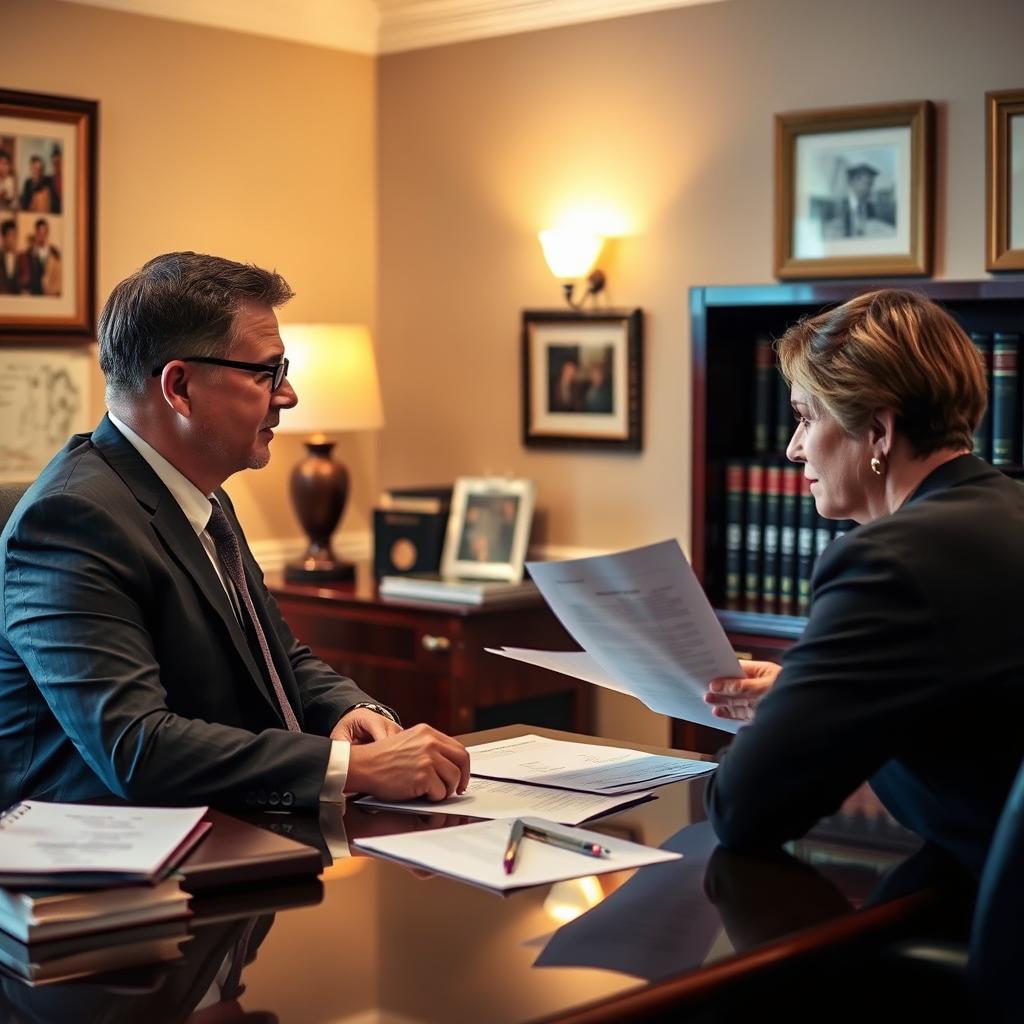
Felon in Possession lawyer Carroll County, MD
Individuals facing a charge of Felon in Possession of a firearm in Carroll County, Maryland, are up against a serious federal criminal matter. The statute 18 U.S.C. § 922(g)(1) makes it a felony for anyone who has a prior qualifying felony conviction to possess any firearm or ammunition. These cases are prosecuted in the United States District Court for the District of Maryland, with court locations in Baltimore and Greenbelt. Federal prosecutors from the U.S. Attorney’s Office bring these charges after investigation by agencies such as the FBI or ATF, and a conviction carries significant consequences—including incarceration, supervised release, and a lifetime federal firearms prohibition. Unlike state court, there is no parole in the federal system, and the U.S. Sentencing Guidelines heavily influence any eventual sentence. If you are under investigation or have been charged with a Felon in Possession offense in Carroll County, acting quickly to secure experienced federal criminal defense representation can make a substantial difference. Law Offices Of SRIS, P.C. has a Maryland practice that serves clients throughout the region, including those with federal matters arising in Carroll County. To speak with Mr. Sris and the firm’s Of Counsel attorneys about your situation, call (888) 437-7747. Law Offices Of SRIS, P.C. – Advocacy Without Borders.
What Felon in Possession Means in Carroll County, Maryland
The federal charge of Felon in Possession of a firearm is defined under 18 U.S.C. § 922(g)(1). In general terms, the statute makes it unlawful for a person who has been convicted in any court of a crime punishable by imprisonment for a term exceeding one year—a felony—to ship, transport, possess, or receive any firearm or ammunition. The term “possess” includes actual possession (having the weapon on your person) as well as constructive possession (having the power and intention to exercise control over it). Federal prosecutors in the U.S. District Court for the District of Maryland must prove three elements beyond a reasonable doubt: (1) that the defendant had a prior felony conviction; (2) that the defendant knew of that conviction; and (3) that the defendant knowingly possessed a firearm that moved in or affected interstate commerce.
Penalties for a violation of § 922(g)(1) can be severe. A first-offense conviction carries a maximum term of imprisonment of 10 years, a fine, and a term of supervised release following incarceration. If the defendant has three prior qualifying convictions for a violent felony or a serious drug offense—the so-called Armed Career Criminal Act, 18 U.S.C. § 924(e)—the court must impose a mandatory minimum sentence of 15 years of imprisonment, up to life. Federal sentencing guidelines calculate a range based on offense level and criminal history category, and while the guidelines are advisory since United States v. Booker (2005), judges give them substantial weight. Additionally, there is no parole in the federal system; an inmate serves at least 85% of the sentence imposed. A conviction also results in a lifetime firearms disability under federal law. Results may vary.
For residents of Carroll County, which includes communities such as Westminster, Sykesville, Eldersburg, Hampstead, Taneytown, and Mount Airy, a federal case typically proceeds in the Baltimore or Greenbelt division of the U.S. District Court for the District of Maryland. The process begins with an indictment by a federal grand jury, followed by an initial appearance and arraignment. Pretrial motions may challenge the admissibility of evidence, the validity of the underlying felony conviction, or the constitutionality of the statute as applied. Given the high stakes, building a strong defense early in the case is critical. Mr. Sris and the firm’s Of Counsel attorneys are familiar with federal procedure in Maryland and represent clients facing Felon in Possession charges in Carroll County and across the state.
How Mr. Sris and the Firm’s Of Counsel Attorneys Handle Felon in Possession Cases
The defense of a federal Felon in Possession charge requires a thorough review of the government’s case and a strategy tailored to the particular facts. Mr. Sris, Owner and Founder of Law Offices Of SRIS, P.C., works alongside the firm’s Of Counsel attorneys to examine every angle. They look first at the alleged predicate felony. Not all prior convictions count as “qualifying” felonies under the federal definition. If the underlying offense was a state misdemeanor, was later expunged, or falls within certain statutory exceptions, the charge may not be sustainable. The prosecution must also prove the defendant’s knowledge of the prior conviction status. A lack of knowledge or a reasonable mistake about the legal status of the conviction can be a valid defense.
Beyond the predicate felony, the firm scrutinizes how the firearm was discovered and whether law enforcement followed constitutional procedures. If a search or seizure violated the Fourth Amendment, the firm’s attorneys will move to suppress the firearm evidence. They also evaluate whether the defendant was in actual or constructive possession of the weapon. For example, a firearm found in a shared residence or vehicle may not be attributable to a specific person without additional evidence. Pretrial motions to dismiss or for a bill of particulars are standard practice in federal court. The firm also negotiates with federal prosecutors when it is in the client’s best interest. Mr. Sris and the firm’s Of Counsel attorneys have experience in federal criminal matters and work to achieve favorable outcomes for each client. Results may vary.
About Mr. Sris and the Firm’s Of Counsel Attorneys
Mr. Sris, Owner and Founder of Law Offices Of SRIS, P.C., has built the firm since 1997. He is a former prosecutor who brings a prosecutor’s insight to criminal defense work. His background includes trial experience and familiarity with the strategies the government employs in federal cases. Mr. Sris testified before the Virginia House Courts of Justice Committee in support of 2019 HB 635 (chief patron Del. David Bulova). He is admitted to practice in Maryland, Virginia, the District of Columbia, New Jersey, and New York, and he concentrates his federal practice on the District of Maryland.
The firm’s Of Counsel attorneys add substantial depth. They bring extensive combined legal experience, with backgrounds in prosecution, litigation, and federal court defense. Working together, Mr. Sris and the firm’s Of Counsel attorneys handle Felon in Possession cases in Carroll County and throughout Maryland, applying collective knowledge to craft comprehensive defense strategies. The firm’s Rockville location serves clients across the state. For a consultation, reach Mr. Sris and the firm’s Of Counsel attorneys at (888) 437-7747.
Frequently Asked Questions
What is a felon in possession charge?
Under 18 U.S.C. § 922(g)(1), a person who has a prior felony conviction is prohibited from possessing a firearm. The charge requires proof of a prior crime punishable by more than one year of imprisonment, the defendant’s knowledge of that conviction, and knowing possession of a firearm that traveled in interstate commerce. The statute applies broadly, covering handguns, rifles, shotguns, and ammunition.
Do I need a federal criminal defense lawyer for a felon in possession case in Carroll County?
Yes, because federal charges carry severe penalties and are prosecuted by the U.S. Attorney’s Office using the resources of federal investigative agencies. A federal defense lawyer understands the U.S. Sentencing Guidelines, pretrial detention rules, and the procedural nuances of the U.S. District Court for the District of Maryland. Retaining counsel early—before indictment when possible—can significantly affect the direction of the case.
How does the federal sentencing process work for a felon in possession conviction?
The court, following the advisory U.S. Sentencing Guidelines, calculates an offense level based on the specific facts of the case, the defendant’s criminal history, and any aggravating or mitigating factors. For a first-time violation, the guideline range can be broad. If the Armed Career Criminal Act applies—three prior qualifying violent- or drug-related felonies—the judge must impose a mandatory minimum of 15 years of imprisonment. The final sentence is at the court’s discretion within the statutory range, and there is no parole in the federal system.
Can a felon in possession charge be dismissed or reduced?
Yes, dismissal or reduction is possible if the evidence is weak, the predicate felony does not qualify, or constitutional violations tainted the investigation. For instance, if the underlying conviction was a state misdemeanor, or if the firearm was seized in an unlawful search, the case may not proceed. Effective pretrial motion practice, conducted by an experienced federal defense attorney, is often the key to a favorable resolution.
What if the firearm was not mine or I didn’t know it was present?
The government must prove that you had knowledge of and control over the firearm—either through actual or constructive possession. If the firearm was found in a shared car, home, or in an area where others had access, the prosecution may have difficulty establishing that you possessed it. An experienced federal defense team will challenge the possession element by examining witness statements, forensic evidence, and the circumstances of the discovery.
How long does a federal felon in possession case take in Maryland?
The timeline varies depending on the complexity of the case, the number of motions filed, and the court’s schedule. Many cases resolve in several months through a plea agreement, while cases that go to trial can take a year or longer. Federal cases are subject to the Speedy Trial Act, which imposes certain deadlines, but the exact duration will depend on the particular facts.
Internal links:
Federal Criminal Lawyer Montgomery County | Federal Criminal Lawyer Prince George’s County | Federal Criminal Lawyer Howard County | Federal Criminal Lawyer Anne Arundel County
Primary sources:
U.S. District Court for the District of Maryland | Maryland Code (General Assembly) | Maryland Judiciary
Attorney advertising. Prior results do not guarantee a similar outcome.
Results may vary.
Case results depend on a variety of factors unique to each case.