
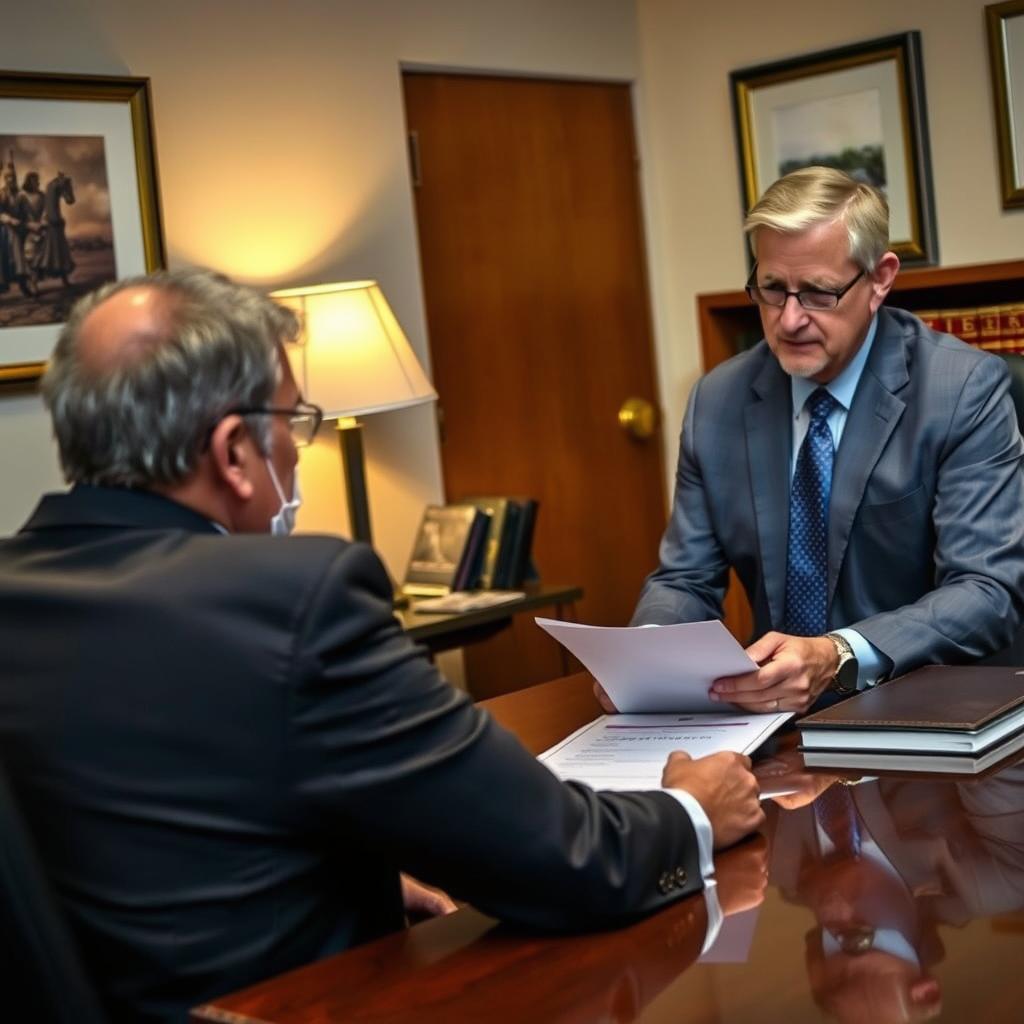
Distribution/Receipt of Child Pornography lawyer Washington County, VA
Federal charges for distribution or receipt of child pornography trigger immediate, severe consequences under U.S. Law. In Washington County, Virginia, these cases are prosecuted by the U.S. Attorney’s Office in the Western District of Virginia, where federal sentencing guidelines, mandatory minimums, and a lack of parole make the stakes extraordinarily high. Law Offices Of SRIS, P.C. represents individuals facing such allegations in the U.S. District Court for the Western District of Virginia, including matters arising in Abingdon, Bristol, Damascus, Glade Spring, and Meadowview. Mr. Sris, Owner and Founder of the firm, and the firm’s Of Counsel attorneys bring experience to federal child pornography defense, focusing on every procedural and evidentiary avenue available under 18 U.S.C. § 2252 and § 2252A. We work to protect your rights from the earliest stage—often before an indictment is returned. For a confidential discussion about your situation, contact Law Offices Of SRIS, P.C. at (888) 437-7747. Law Offices Of SRIS, P.C. – Advocacy Without Borders.
What Distribution/Receipt of Child Pornography Means in Washington County, VA
Washington County lies in Virginia’s southwestern corner, and its federal criminal matters fall under the jurisdiction of the U.S. District Court for the Western District of Virginia. The Abingdon Division—located at 180 West Main Street—is the forum closest to residents of Washington County, though cases may also be heard in Roanoke or other divisions. Federal child pornography offenses typically involve the knowing receipt, distribution, transportation, or possession of visual depictions of minors engaged in sexually explicit conduct. Because these charges rely heavily on digital evidence, forensic analysis of computers, smartphones, and online accounts often forms the backbone of the government’s case.
Unlike state-level offenses, federal prosecution brings the full weight of the U.S. Sentencing Guidelines, which for distribution and receipt carry base offense levels that escalate based on factors such as the age of the depictions, the volume of images or videos, and whether the conduct involved distribution to a minor or distribution for pecuniary gain. Mandatory minimum sentences—often five years or more—are common, and there is no parole in the federal system. Federal charges also trigger lifetime sex offender registration requirements under the Sex Offender Registration and Notification Act (SORNA). Because federal conviction rates are high, early engagement of defense counsel is critical. Mr. Sris and the firm’s Of Counsel attorneys appear on behalf of clients in the Western District of Virginia, scrutinizing the government’s investigation from the first contact with law enforcement through every stage of the proceedings.
How Mr. Sris and the Firm’s Of Counsel Attorneys Handle Federal Child Pornography Cases
Defending against federal distribution or receipt charges demands a methodical, thorough approach. Our representation begins with a careful review of the search warrant, any cooperating witness statements, and the chain of custody of the digital evidence. Law enforcement often uses investigative tools such as IP-address tracing, undercover operations, or peer-to-peer network monitoring. We examine whether the government complied with constitutional requirements, including the particularity of the warrant and the scope of any search. If a violation of the Fourth Amendment or the Stored Communications Act occurred, we move to suppress evidence. Even where suppression is not warranted, procedural, factual, and forensic challenges can significantly affect the course of the case.
We also work to humanize our clients before the court. Federal sentencing hearings allow for presentation of mitigating evidence—such as mental health documentation, employment history, community ties, and acceptance of responsibility—that may influence the sentence imposed under the advisory guidelines. Substantial assistance to the government under 18 U.S.C. § 3553(e) or a downward departure motion under § 5K1.1 of the Sentencing Guidelines can further reduce exposure. Mr. Sris and the firm’s Of Counsel attorneys pursue every lawful avenue to mitigate the consequences of these charges. Every client receives a plain-language explanation of the options and risks at each juncture, so they can make informed decisions.
About Mr. Sris and the Firm’s Of Counsel Attorneys
Mr. Sris, Owner and Founder of Law Offices Of SRIS, P.C., has practiced law since 1997. A former prosecutor, he brings insight into how the government builds its cases. Mr. Sris is admitted in Virginia, Maryland, the District of Columbia, New Jersey, and New York. He testified before the Virginia House Courts of Justice Committee in support of 2019 HB 635 (chief patron Del. David Bulova), reflecting a commitment to legislative engagement on legal issues that affect individuals and families.
The firm’s Of Counsel attorneys include lawyers with backgrounds in complex federal litigation. Together, Mr. Sris and the firm’s Of Counsel attorneys appear in federal court across Virginia, including the Western District of Virginia’s Abingdon Division. Our Shenandoah Location at 505 N Main St, Suite 103, Woodstock, VA 22664, serves clients in Washington County and the surrounding region. By appointment only, we meet with clients in a confidential setting and remain available by phone at (888) 437-7747 to discuss upcoming court dates, case strategy, and any concerns. For a consultation regarding a federal child pornography matter, contact Law Offices Of SRIS, P.C. at (888) 437-7747.
Frequently Asked Questions
What is the difference between distribution and receipt of child pornography under federal law?
Distribution involves transferring or sharing child pornography images or videos, while receipt refers to knowingly obtaining such material, including by downloading it. Under 18 U.S.C. § 2252, both charges carry mandatory minimum sentences and are treated as serious felonies. The government must prove the defendant knew the material depicted a minor engaged in sexually explicit conduct, and that the material was transported in interstate or foreign commerce. The specific charge affects the sentencing guidelines calculation, but both distribution and receipt trigger registration requirements under SORNA. An attorney can review the charging document and the evidence to determine whether the proper offense has been charged.
How does the federal sentencing process work in child pornography cases?
Federal sentencing begins with a presentence investigation report that calculates an advisory guideline range based on the offense level and the defendant’s criminal history. For distribution and receipt, enhancements apply if the material involves prepubescent minors, sadistic conduct, or distribution to a minor. The judge considers the guideline range, the nature of the offense, the defendant’s history, and any mitigating factors before imposing a sentence. In child pornography cases, the guidelines often recommend significant prison terms, but the court has discretion to vary from the range if justified. Acceptance of responsibility can reduce the offense level. An experienced attorney can argue for a variance or departure.
Can I be charged federally for receiving images I did not know were on my computer?
Federal law requires proof that the defendant knowingly received or possessed child pornography. If the material arrived without the defendant’s knowledge—for example, through a pop‑up or an unsolicited email attachment—the government must show that the defendant knowingly retained it. Forensic analysis of computer activity, such as search terms, file organization, and deletion history, often plays a central role. Absence of knowledge can be a defense, but its viability depends heavily on the specific digital forensic evidence. Contacting an attorney before speaking to investigators can help you avoid making statements that could be misinterpreted.
How does a federal child pornography investigation begin in Washington County?
Investigations often start with a cyber‑tip from the National Center for Missing & Exploited Children to a federal task force, which then traces the IP address associated with the suspected activity. Once law enforcement identifies a physical address in Washington County, they may apply for a search warrant to seize computers and storage devices. Federal agents from the FBI or Homeland Security Investigations typically execute the warrant. The investigation may remain under seal, and an individual may not learn of the investigation until agents arrive at the door. The Abingdon Division of the Western District of Virginia would handle any resulting federal charges.
What should I do if I am under investigation for child pornography in the Western District of Virginia?
If you suspect you are under investigation, do not speak with law enforcement without an attorney present. Statements made to agents—even in an effort to explain—can become evidence against you. Preserve all electronic devices but do not attempt to delete files, as destruction of evidence can lead to separate obstruction charges. Contact a federal criminal defense attorney immediately so counsel can communicate with the prosecutor or case agent on your behalf. Early representation can influence whether charges are filed and, if so, on what terms. Reach Law Offices Of SRIS, P.C. at (888) 437-7747 for a consultation.
Will a federal conviction for distribution or receipt require me to register as a sex offender?
Yes, federal convictions for distribution or receipt of child pornography require registration under the Sex Offender Registration and Notification Act (SORNA). Registration is typically a lifetime obligation, with requirements that may include regular in‑person check‑ins with local law enforcement, notification of changes of address or employment, and restrictions on where a registrant may live or work. Failure to register can lead to separate federal charges. The impact of registration extends well beyond the prison term, and counsel can advise on the specific consequences as negotiations or sentencing proceed.
Related Locations:
Attorney advertising. Prior results do not guarantee a similar outcome. Case results depend on a variety of factors unique to each case. Results may vary. Attorney responsible for this advertising: Mr. Sris.