
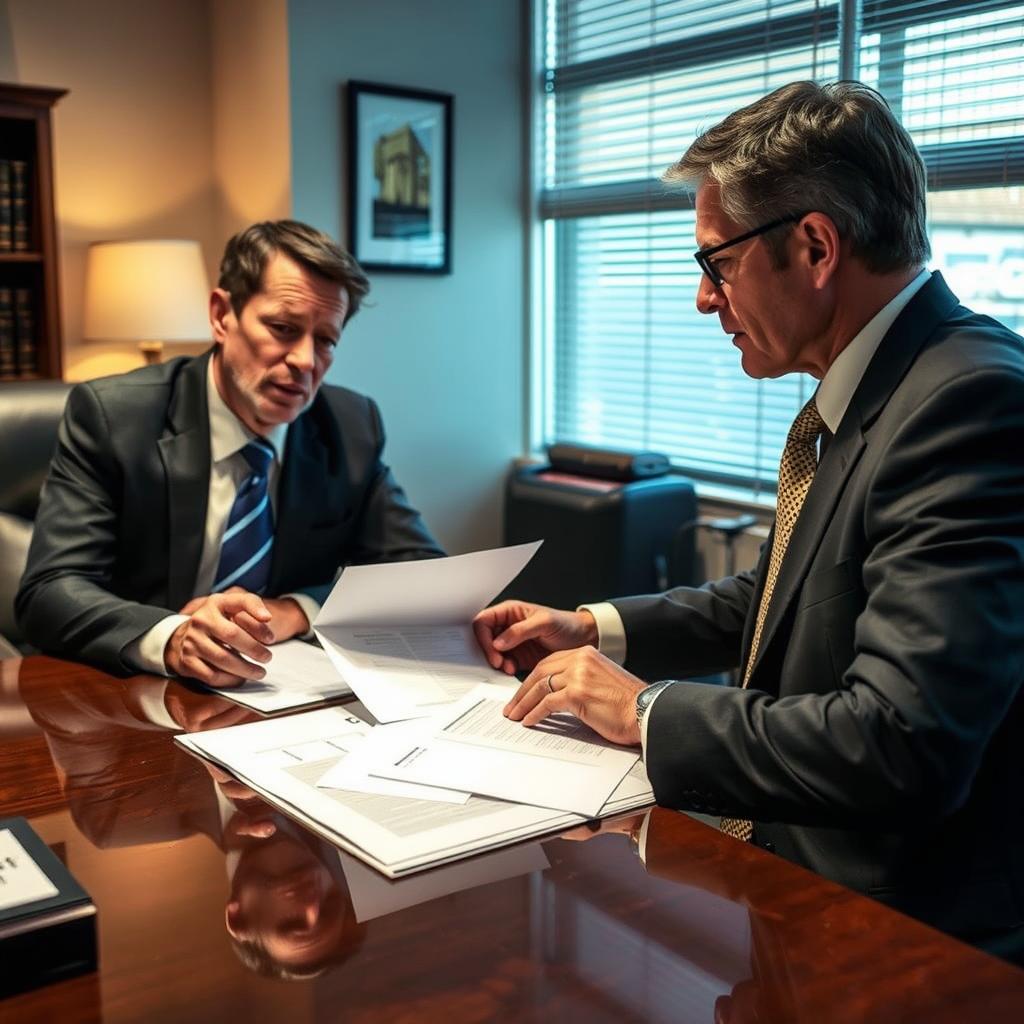
Destruction or Falsification of Records lawyer Talbot County, MD
If you are facing federal charges for destruction or falsification of records in Talbot County, Maryland, the stakes are high. Federal prosecutors pursue these cases actively, and a conviction can lead to significant penalties, including imprisonment, fines, and long-term consequences. Law Offices Of SRIS, P.C. provides experienced federal criminal defense representation to individuals in Talbot County and across Maryland. Mr. Sris, the firm’s Owner and Founder, is a former prosecutor who understands federal investigative tactics and courtroom strategy. He and his Of Counsel team work closely with clients to challenge the government’s evidence and protect their rights at every stage of the federal criminal process. To discuss your situation with a Destruction or Falsification of Records lawyer serving Talbot County, call (888) 437-7747. Law Offices Of SRIS, P.C. – Advocacy Without Borders.
Understanding Federal Destruction or Falsification of Records Charges in Talbot County
Federal law, under Title 18 of the United States Code, makes it a crime to knowingly destroy, alter, or falsify records with the intent to obstruct or influence a matter within federal jurisdiction. These charges often arise in connection with investigations by agencies such as the FBI, IRS Criminal Investigation, the Secret Service, or the DEA. Unlike state-level record-related offenses, federal destruction or falsification of records is prosecuted by the United States Attorney’s Office and is subject to the Federal Sentencing Guidelines. Cases are heard in the U.S. District Court for the District of Maryland, which has courthouses in Baltimore and Greenbelt. Talbot County residents facing these charges will find that their matter proceeds through the federal system rather than through the Talbot County Circuit Court. Because the federal government’s resources are vast and federal conviction rates are high, building an early, informed defense is critical. Mr. Sris and his Of Counsel team work with clients to analyze the specific allegations, including the nature of the records at issue and the claimed nexus to federal proceedings.
The Federal Process for Destruction or Falsification of Records Cases
Federal destruction or falsification of records investigations typically begin when a federal agency suspects that records have been tampered with to impede an inquiry. The investigation may involve grand jury subpoenas, search warrants, and interviews with witnesses. If an indictment is returned, the defendant is arraigned in the U.S. District Court for the District of Maryland. From there, the case proceeds through discovery, pretrial motions, and—if no plea agreement is reached—a trial. Sentencing is informed by the advisory Federal Sentencing Guidelines, and there is no parole in the federal system. Our legal team examines every aspect of the government’s case: whether the evidence was obtained lawfully, whether the records fall within federal jurisdiction, and whether the intent to obstruct can be proven beyond a reasonable doubt. The timeline and strategy vary based on the facts of each case; Mr. Sris and his Of Counsel prioritize a thorough review and clear communication with clients throughout the process.
Frequently Asked Questions
What is destruction or falsification of records under federal law?
Destruction or falsification of records under federal law involves knowingly altering, destroying, or falsifying documents or records with the intent to obstruct a federal matter. The offense is prosecuted under Title 18 and requires proof that the defendant acted with a specific intent to impede, obstruct, or influence a proceeding or investigation. The reach of federal jurisdiction is broad: the records can be physical or electronic, and the underlying matter can range from a criminal investigation to a bankruptcy proceeding or a regulatory review. Because the intent element is often central to the government’s case, a defense strategy may focus on whether the defendant acted knowingly or with the required corrupt purpose.
How does the federal government investigate destruction or falsification of records in Talbot County?
Federal investigations often begin with subpoenas, search warrants, and witness interviews conducted by agencies such as the FBI, IRS Criminal Investigation, HSI, or the Secret Service. Investigators will seek business records, emails, financial documents, and any communications that might show knowledge or intent. In cases arising on Maryland’s Eastern Shore, including Talbot County, the investigation is likely coordinated through the U.S. Attorney’s Office for the District of Maryland. If you become aware that you are under investigation, it is important to seek legal counsel before speaking with any agent.
What are the potential penalties for a federal conviction?
Penalties depend on the specific statute charged and the defendant’s role and criminal history, but a federal conviction can carry a substantial prison term, fines, and supervised release. The Federal Sentencing Guidelines provide advisory ranges that may include enhancements for the amount of loss, obstruction of justice, and leadership roles. Federal court does not offer parole, and restitution may be ordered. Additionally, a felony conviction can result in collateral consequences such as loss of professional licenses and restrictions on firearm ownership.
Can federal destruction or falsification of records charges be dropped?
Charges may be dropped if the prosecution lacks sufficient evidence or if constitutional violations warrant dismissal, but federal prosecutors rarely dismiss cases without significant legal or factual weaknesses. A motion to dismiss might be based on a faulty indictment, a discovery violation, or the suppression of evidence obtained in violation of the Fourth Amendment. An experienced federal defense attorney will scrutinize the government’s case for such grounds.
Do I need a lawyer if I am under investigation but not yet charged?
Yes, engaging a defense attorney at the investigative stage—before any charges are filed—can be critical to protecting your rights and influencing the direction of the investigation. An attorney can interact with federal agents on your behalf, advise you on what not to say, and begin gathering evidence that may persuade the government not to indict. In many federal investigations, early legal intervention can lead to a more favorable outcome.
How do Mr. Sris and his Of Counsel defend against these charges?
Our defense approach includes challenging the government’s evidence, questioning the chain of custody for the records, and attacking the intent element. We investigate whether the records fall under federal jurisdiction, whether the destruction or alteration actually occurred, and whether any alleged actions were accidental or lacked corrupt intent. The team also examines the government’s compliance with procedural rules and negotiates with prosecutors where appropriate. Each strategy is tailored to the facts of the individual case.
What should I do if I am contacted by federal agents?
Politely decline to answer questions and state that you wish to speak with an attorney. You have the right to remain silent, and anything you say can be used against you. Do not provide or destroy any documents, and do not discuss the matter with anyone other than your lawyer. Contact Law Offices Of SRIS, P.C. at (888) 437-7747 to request a consultation as soon as possible.
How are federal cases handled in Talbot County?
Federal cases arising in Talbot County are handled by the U.S. District Court for the District of Maryland, with proceedings typically occurring in Baltimore or Greenbelt. While Talbot County has its own state courts, federal charges bypass the local system entirely. Our Rockville location serves clients across Maryland, and we regularly appear in federal court for clients from Talbot County and the Eastern Shore. The federal courthouse environment is formal, and having an attorney familiar with the local federal rules and the assigned judges’ practices is valuable.
What is the difference between state and federal record falsification?
State charges are prosecuted by local district attorneys under Maryland law, while federal charges are prosecuted by the U.S. Attorney’s Office under Title 18 and carry no parole eligibility. Federal jurisdiction often attaches when the records relate to federal agencies, interstate commerce, or federally regulated matters. The penalties, procedural rules, and sentencing guidelines are distinct. It is possible to face both state and federal charges arising from the same conduct, which requires careful coordination by your defense team.
How much does a federal criminal lawyer cost in Maryland?
Fees vary based on the complexity of the case and the stage of the proceedings. We discuss fees during an initial consultation and aim to be transparent about costs. Payment plans may be available. Contact our firm at (888) 437-7747 to schedule a consultation.
About Mr. Sris and His Of Counsel Team
Mr. Sris, Owner and Founder of Law Offices Of SRIS, P.C., is a former prosecutor who draws on his firsthand understanding of federal investigative techniques to build a strong defense for his clients. He and his Of Counsel team bring extensive combined legal experience to federal criminal matters, including cases involving destruction or falsification of records. The team includes a former Maryland Assistant State’s Attorney, adding valuable insight into how charges are constructed and prosecuted. Results may vary. For knowledgeable representation in Talbot County, call (888) 437-7747.
Federal Criminal Defense in Maryland Counties
- Federal Criminal Lawyer Montgomery County, MD
- Federal criminal defense in Prince George’s County
- Howard County Federal Criminal Attorney
- Anne Arundel County federal criminal representation
- Federal criminal defense lawyer Frederick County, MD
Federal Court and Prosecution Resources
For additional context, the following official sources may be helpful:
- U.S. District Court for the District of Maryland – court rules, forms, and locations.
- U.S. Attorney’s Office for the District of Maryland – prosecutorial policies and press releases.
Attorney advertising. Prior results do not guarantee a similar outcome. Results may vary.
Case results depend on a variety of factors unique to each case.