
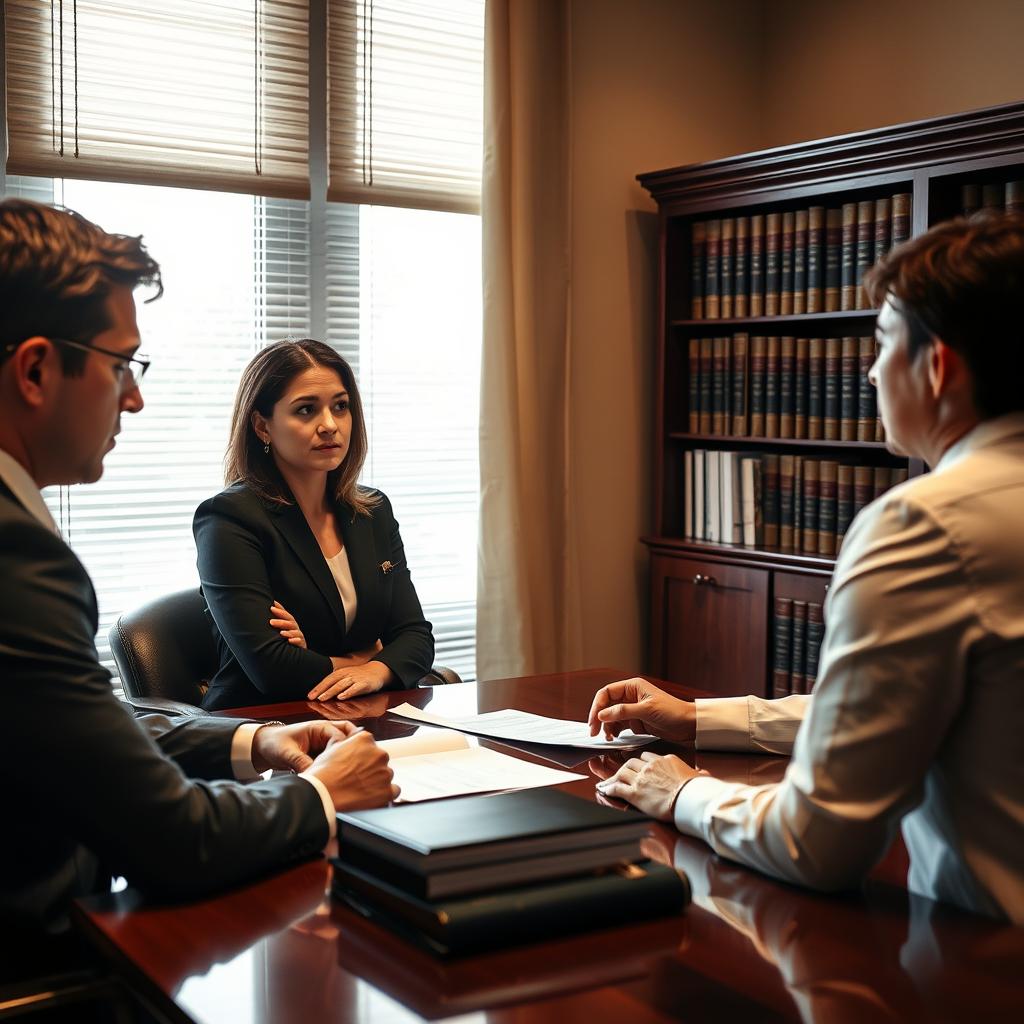
Destruction or Falsification of Records lawyer Baltimore, MD
Federal charges for destruction or falsification of records are prosecuted actively by the U.S. Attorney’s Office in the District of Maryland. When an indictment or grand‑jury investigation originates from the Baltimore Division of the U.S. District Court for the District of Maryland, the stakes are high — a conviction under Title 18 of the United States Code can lead to substantial prison time, significant fines, and a long period of supervised release. Having an attorney who understands the federal rules, the local judges, and the way Assistant United States Attorneys in Baltimore build their cases is critical. Mr. Sris and his Of Counsel team at Law Offices Of SRIS, P.C. represent individuals facing destruction‑or‑falsification allegations throughout Maryland, including in the Baltimore area. If you or someone close to you has been contacted by federal agents or received a target letter, the time to seek counsel is now. Call (888) 437‑7747 to schedule a consultation.
What Destruction or Falsification of Records Means in Federal Court in Baltimore
Under federal law, destroying, altering, or falsifying records with the intent to obstruct a federal investigation, bankruptcy proceeding, or the proper administration of any matter within the jurisdiction of a federal department or agency is a serious felony. In the Baltimore federal courthouse — located at 101 West Lombard Street — these cases are handled by seasoned Assistant United States Attorneys who routinely work with investigators from the FBI, IRS‑Criminal Investigation, and other federal agencies. A person charged in the District of Maryland will appear before a United States Magistrate Judge for an initial appearance and arraignment, after which the case proceeds through pretrial motions, discovery, and, if a plea is not entered, trial before a United States District Judge.
The reach of the federal records offense is broad. It can encompass destruction of documents in a corporate office in downtown Baltimore, deletion of digital files during a government audit, or alteration of financial records maintained by a business in the surrounding counties. Because federal investigators often obtain search warrants or subpoenas before charges are filed, a person may learn that they are under suspicion well before an indictment is returned. Engaging counsel at that early stage — before charges are formally lodged — can make a meaningful difference in how the case develops and whether formal prosecution can be avoided entirely.
How Mr. Sris and His Of Counsel Handle Federal Records Cases
Mr. Sris and his Of Counsel approach every federal destruction‑or‑falsification matter by first examining the government’s evidence for constitutional and procedural issues. Federal records cases frequently involve electronic evidence, and the defense team works with forensic experts to assess whether the data was obtained in compliance with the Fourth Amendment and the Federal Rules of Criminal Procedure. If a motion to suppress is warranted, Mr. Sris and his Of Counsel will litigate it thoroughly in the Baltimore federal court.
Beyond motions practice, the team evaluates the strength of the government’s proof of intent. A destruction‑or‑falsification charge requires that the defendant acted knowingly and with a corrupt purpose; forgetfulness, negligence, or a routine business practice that inadvertently resulted in lost records will not support a conviction. Mr. Sris and his Of Counsel develop the factual narrative that places the alleged conduct in its proper context, often demonstrating that the government’s inference of criminal intent is unsupported. When a pretrial resolution is in the client’s best interest, the team negotiates from a position of thorough preparation, seeking a disposition that minimizes the collateral consequences a federal felony conviction carries.
About Mr. Sris and His Of Counsel Team
Mr. Sris, Owner and Founder, is a former prosecutor who founded the firm in 1997 and has been handling federal criminal matters in Maryland for many years. His experience inside the courtroom informs his approach to every case, from the initial client meeting to post‑verdict proceedings. Mr. Sris testified before the Virginia House Courts of Justice Committee in support of 2019 HB 635 (chief patron Del. David Bulova). Together with his Of Counsel, he brings extensive combined legal experience to federal records defense. Results may vary.
The Of Counsel team includes attorneys with deep backgrounds in federal criminal litigation. Because every attorney other than Mr. Sris serves in an Of Counsel role, the firm draws on a wide range of perspectives without the hierarchy found in traditional law‑firm structures. That flexibility allows Mr. Sris and his Of Counsel to concentrate their efforts on the merits of each client’s case, devoting the time necessary to build a thorough defense whether the matter is resolved through negotiation or at trial in the Baltimore federal courthouse.
Frequently Asked Questions
Do I need a federal criminal defense lawyer in Baltimore, Maryland?
Yes, immediately. Federal cases at U.S. District Court for the District of Maryland are prosecuted by the U.S. Attorney’s Office with federal investigative resources (FBI, IRS‑CI, and others) and carry federal sentencing guidelines that often include mandatory minimums. State‑court experience does not translate — federal practice has distinct rules, pretrial detention standards, and sentencing procedures. Early engagement before indictment materially affects outcomes. For a consultation, reach Mr. Sris and his Of Counsel at (888) 437‑7747.
What is destruction or falsification of records under federal law?
Under 18 U.S.C., a person who knowingly destroys, alters, or falsifies a record with the intent to obstruct a federal investigation or the administration of any matter within federal jurisdiction commits a felony. The statute covers physical documents as well as electronically stored information. The government must prove that the defendant acted with a corrupt purpose — mere negligence or inadvertent loss is not enough. Because the federal conviction rate is high for cases that go to trial, it is essential to work with an attorney who can challenge the government’s evidence of intent and any procedural shortcomings in the investigation.
How does a federal records case proceed in the District of Maryland?
A federal records case in the Baltimore Division begins with an indictment returned by a grand jury or, in some instances, a criminal complaint. The person charged appears before a magistrate judge for an initial appearance and arraignment, where the charges are read and bail conditions are set. After that, the court holds a series of pretrial conferences, and the parties engage in discovery — the exchange of evidence. Motions to suppress or dismiss may be filed. If the case is not resolved through a plea agreement, it proceeds to trial before a United States District Judge. The timeline varies by case complexity and court scheduling.
What are the potential consequences of a federal destruction‑or‑falsification conviction?
A conviction can result in a lengthy federal prison sentence, followed by a term of supervised release. Because there is no parole in the federal system, the sentence imposed is essentially the time the person will serve, minus potential good‑time credits. Fines and restitution are common. Additionally, a federal felony conviction creates a permanent criminal record that can affect employment, professional licensing, and immigration status. The federal sentencing guidelines are advisory, but judges in the District of Maryland give them substantial weight.
What defenses are available against federal records charges?
Common defenses include lack of intent, mistake, and violation of constitutional rights during the investigation. If the government obtained evidence through an unlawful search or seizure, a motion to suppress can critically weaken the prosecution’s case. In some situations, the defense may show that the records in question were not subject to a legal duty to preserve, or that the alleged destruction occurred long after the federal matter had concluded. Mr. Sris and his Of Counsel examine every facet of the investigation for weaknesses that can be developed into a viable defense strategy.
Why hire a federal criminal defense lawyer for a records case in Baltimore?
Because federal prosecutors in Baltimore routinely handle hundred‑defendant conspiracies and complex white‑collar cases — experience in the federal system is not optional. A lawyer who primarily practices in state court will not be familiar with the Federal Rules of Criminal Procedure, the unique bail and detention standards under the Bail Reform Act, or the inner workings of the U.S. Probation Office for the District of Maryland. Mr. Sris and his Of Counsel have been appearing in the Baltimore federal courthouse for years and know the practices that matter at each stage of a records case. To discuss the details of your matter, contact Law Offices Of SRIS, P.C. at (888) 437‑7747.
Attorney advertising. Prior results do not guarantee a similar outcome. Results may vary.
Case results depend on a variety of factors unique to each case.