
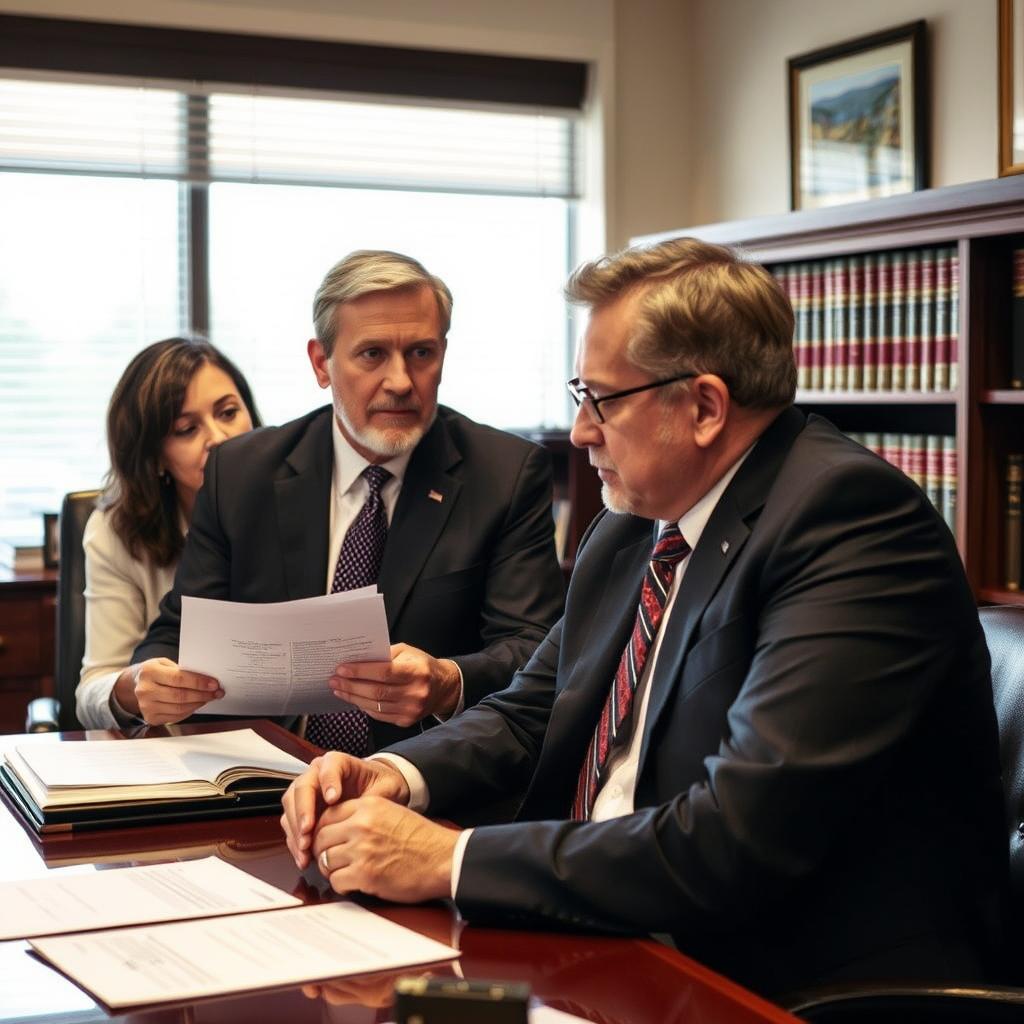
Destruction or Falsification of Records lawyer Anne Arundel County, MD
Your small government contracting firm in Annapolis has just been served with a federal grand jury subpoena demanding production of thousands of financial and operational records. Weeks later, FBI agents execute a search warrant at your leased offices, carting away servers and file boxes. A month after that, you receive a target letter from the U.S. Attorney’s Office for the District of Maryland — you are now the subject of a federal investigation into destruction or falsification of records. An angry former employee may have alerted investigators that records were shredded after the subpoena arrived, or a gap in your document-retention software may have unintentionally overwritten responsive material. Now you face potential indictment in the U.S. District Court for the District of Maryland, with exposure to federal sentencing guidelines that do not include parole. Law Offices Of SRIS, P.C. defends clients in Anne Arundel County against federal destruction or falsification of records charges. Mr. Sris and his team bring decades of combined courtroom experience to these high‑stakes matters. To discuss your case confidentially, call (888) 437-7747. Law Offices Of SRIS, P.C. – Advocacy Without Borders.
Defense Strategies for Federal Destruction or Falsification of Records Charges
A federal destruction or falsification of records prosecution often turns on intent, the scope of any document-retention obligations, and whether the government can prove that records were altered or destroyed with knowledge of a pending federal proceeding. Mr. Sris immediately assesses the factual record to identify the strong $1 theories. Those may include challenging whether the defendant had fair notice of the subpoena’s scope, demonstrating that any missing records were lost through routine data‑management practices — not willful deletion — and scrutinizing the chain of custody of electronic evidence. In many investigations arising in Anne Arundel County, federal agents rely on forensic analysis of company servers and employee computers. Independent forensic experts engaged by the defense may find that the government’s reconstruction of events is incomplete, that metadata contradicts the witness accounts, or that the government’s own spoliation warnings were deficient. The goal is to expose weaknesses before the case reaches trial.
In addition to evidentiary attacks, experienced defense counsel negotiates with the U.S. Attorney’s Office from the earliest stage. Where records were inadvertently destroyed, a voluntary disclosure to the government along with a remediation plan can sometimes avoid criminal charges altogether. If the government moves forward, Mr. Sris litigates suppression motions, challenges the sufficiency of the indictment, and pursues any viable jurisdictional or constitutional defenses. Federal destruction-of-records cases often intersect with broader fraud, money‑laundering, or public‑corruption investigations. Coordination among practice groups within Law Offices Of SRIS, P.C. — drawing on the extensive legal experience of Mr. Sris — ensures that every angle is covered. Results may vary. Past outcomes do not guarantee a similar result
What to Expect in Federal Court in Maryland
If you are facing destruction or falsification of records charges in Anne Arundel County, the case will proceed in the U.S. District Court for the District of Maryland, which has divisions in Baltimore and Greenbelt. The matter typically begins with a grand jury investigation conducted by the U.S. Attorney’s Office in coordination with federal agencies such as the FBI, IRS‑Criminal Investigation, or HSI. You may first learn of the investigation through a subpoena for documents or witness testimony. If the grand jury returns an indictment, law enforcement will arrest you or your lawyer will arrange a voluntary surrender. An initial appearance and arraignment follow, at which the magistrate judge will address pretrial release conditions. Federal courts take destruction-of-records allegations seriously, and the government may argue for detention if it believes the defendant poses a risk of further obstruction. Your defense counsel will prepare a detailed bail package emphasizing community ties, employment, and lack of flight risk.
After arraignment, the defense receives discovery, including grand‑jury transcripts, witness statements, business records, and forensic reports. The case then moves to pretrial motions and plea negotiations. Federal prosecutors often extend plea offers that require cooperation or acceptance of responsibility. Whether to accept a plea or proceed to trial is a strategic decision that Mr. Sris guides clients through, after examining every piece of evidence and evaluating the potential sentencing exposure under the U.S. Sentencing Guidelines. If the case goes to trial, it will be before a jury in the Baltimore or Greenbelt courthouse. The trial process, from jury selection through verdict, is shaped by the Federal Rules of Criminal Procedure and local court practices that counsel familiar with the District of Maryland knows well.
Penalty Overview for Federal Destruction or Falsification of Records
Destruction or falsification of records in federal proceedings is prosecuted under statutes that carry substantial prison terms, fines, and supervised release. Because there is no parole in the federal system, an individual sentenced to a term of imprisonment must serve at least 85% of that sentence. The U.S. Sentencing Guidelines, while advisory since the Supreme Court’s decision in Booker (2005), establish a points‑based calculation that incorporates the offense conduct, any loss amount, the defendant’s role in the offense, and criminal history. A conviction may also bring asset‑forfeiture consequences if the government ties the records offense to broader financial fraud. The actual sentence a judge imposes within the advisory range, or outside it, can be influenced by acceptance‑of‑responsibility credit, substantial‑assistance departures, and safety‑valve provisions in certain drug‑related cases. For destruction-of-records matters, the specific guideline depends on the underlying proceedings that were obstructed. Mr. Sris thoroughly analyzes the relevant guidelines, any mandatory minimums that may apply under companion charges, and the factual strengths of the government’s case to provide a realistic assessment of sentencing exposure.
Attorney Credentials: Mr. Sris and His Of Counsel
Law Offices Of SRIS, P.C. was founded in 1997 by Mr. Sris, a former prosecutor. Mr. Sris is admitted to practice in Virginia, Maryland, the District of Columbia, New Jersey, and New York. He testified before the Virginia House Courts of Justice Committee in support of 2019 HB 635 (chief patron Del. David Bulova). His approach to federal criminal defense combines prosecutorial insight with meticulous preparation of every factual and legal argument available. Mr. Sris brings extensive legal experience to federal criminal matters. Results may vary.
Frequently Asked Questions
What is destruction or falsification of records under federal law?
Destruction or falsification of records is a federal crime involving knowingly altering, destroying, or concealing records with the intent to obstruct a federal investigation or proceeding. Prosecutors often charge this offense under 18 U.S.C. § 1519, which covers acts that impede, obstruct, or influence the investigation or proper administration of any matter within federal jurisdiction. The charge can arise in contexts as varied as corporate fraud, healthcare compliance, export‑control audits, or government‑contract disputes. The government must prove that the defendant acted with a culpable state of mind and that the records were connected to a foreseeable federal matter.
What are the possible defenses to a federal destruction of records charge in Maryland?
Defenses may include lack of intent, absence of a pending federal matter, accidental loss of records, or violations of the defendant’s constitutional rights during the investigation. An experienced attorney will immediately examine whether the subpoena or document‑retention letter was properly served, whether the allegedly destroyed records actually existed, and whether forensic analysis supports the government’s timeline. In some cases, a defendant can show that routine document‑retention policies caused the deletion, not a deliberate act. Mr. Sris and his team also seek to suppress evidence obtained through flawed warrants or custodial interrogations.
What should I do if I think I am under federal investigation in Anne Arundel County?
Do not speak with law enforcement and immediately retain a federal criminal defense lawyer. Anything you say to agents or investigators can be used against you. Preserve all electronic devices, emails, and business records; do not delete or alter any information. Contact Law Offices Of SRIS, P.C. at (888) 437-7747 so that Mr. Sris can contact the U.S. Attorney’s Office on your behalf and begin building your defense before charges are filed. Early intervention often shapes the outcome of the investigation.
How does a federal criminal case proceed in the U.S. District Court for the District of Maryland?
The process typically moves through investigation, indictment, initial appearance, discovery, pretrial motions, plea negotiations or trial, and sentencing. Federal cases in Maryland are prosecuted by the U.S. Attorney’s Office, often after investigation by the FBI, IRS‑CI, or HSI. The case is heard before a federal magistrate and district judge. Procedural deadlines are governed by the Speedy Trial Act and the Federal Rules of Criminal Procedure. Mr. Sris guides clients through each stage, explaining the strategic choices at every turn and ensuring that the defense is prepared for whatever direction the case takes.
Do I need a lawyer if I am only a witness or a subject — not yet a defendant?
Yes. Anyone who receives a federal subpoena or is contacted by federal agents should consult a lawyer before providing any information. A witness or subject can quickly become a target. Even if you believe you have nothing to hide, your statements may be misinterpreted, or you may inadvertently waive privileges. Mr. Sris can accompany you to interviews, negotiate the scope of document production, and protect your rights throughout the investigation, minimizing the risk that you will face charges later.
For a confidential consultation about a destruction or falsification of records matter in Anne Arundel County, contact Law Offices Of SRIS, P.C. at (888) 437-7747. Mr. Sris is available to speak with you today.
Attorney advertising. Prior results do not guarantee a similar outcome. Results may vary.
Case results depend on a variety of factors unique to each case.