
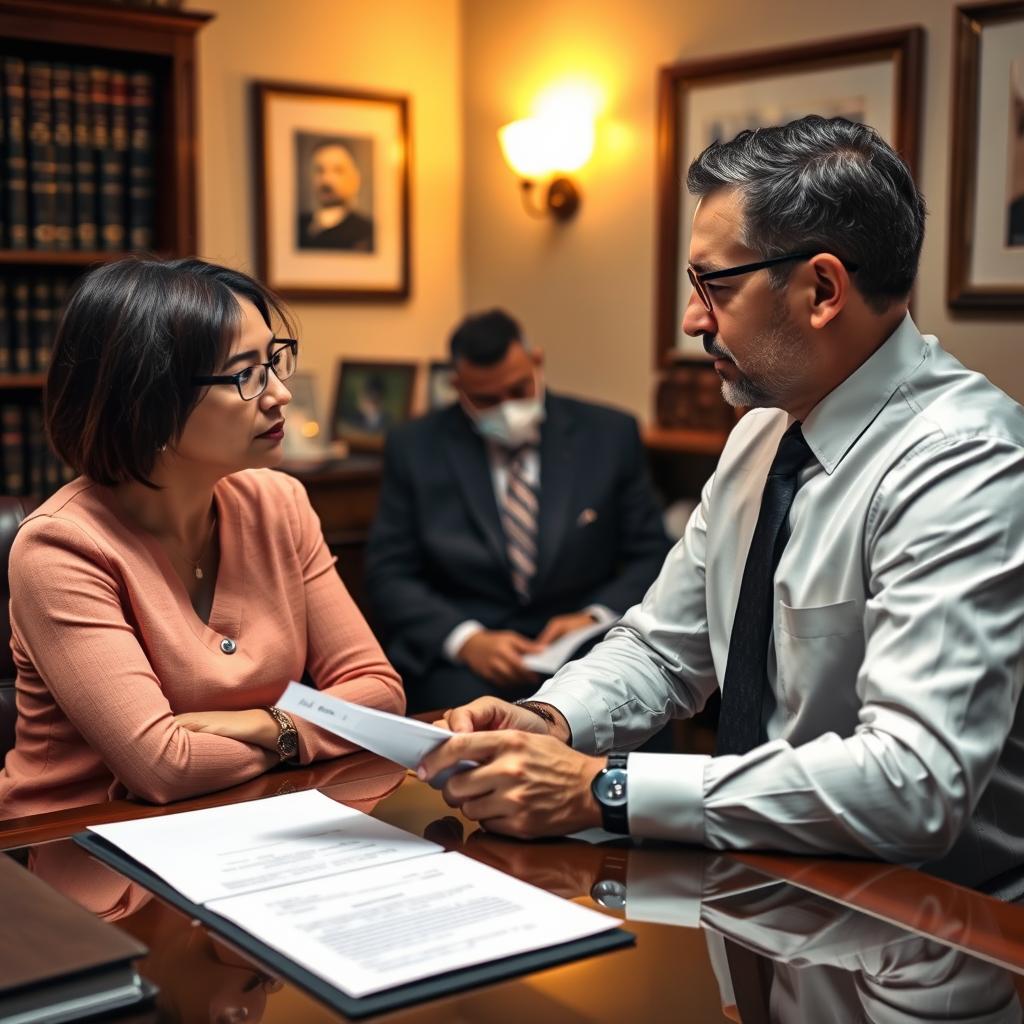
Counterfeiting of Obligations or Securities of the U.S. Lawyer Charles County, MD
Federal counterfeiting charges carry severe consequences. Under 18 U.S.C. §§ 471-485, manufacturing, passing, or possessing counterfeit currency or obligations of the United States is a felony that can result in a maximum prison sentence of 20 to 25 years, substantial fines, and years of supervised release after incarceration. These cases are prosecuted by the U.S. Attorney’s Office in the District of Maryland, not by local state prosecutors, and are heard in the U.S. District Court for the District of Maryland. A federal conviction also means there is no parole—time served is calculated under the advisory U.S. Sentencing Guidelines, which impose a point‑based system and mandatory minimums for many offenses. For residents of La Plata, Waldorf, Indian Head, White Plains, Bryans Road, Hughesville, and all of Charles County, facing an investigation or indictment for counterfeiting of obligations or securities of the U.S. Requires an experienced federal criminal defense attorney who understands both the procedural demands of the federal system and the local practices of the Maryland federal courts. Law Offices Of SRIS, P.C. represents individuals in Charles County and throughout Maryland from our Rockville location. Call (888) 437-7747 to request a consultation.
What Federal Counterfeiting of Obligations or Securities of the U.S. Means in Charles County
Counterfeiting of obligations or securities of the United States is not a state‑level crime. It is a federal offense investigated by agencies such as the United States Secret Service, the FBI, and other federal law enforcement bodies. Charles County residents who are charged with these offenses will see their cases move forward in the U.S. District Court for the District of Maryland, which has courthouses in Baltimore and Greenbelt. Unlike the District Court of MD for Charles County or the Charles County Circuit Court, which handle state‑level matters, the federal court operates under the Federal Rules of Criminal Procedure and the U.S. Sentencing Guidelines. This distinction is critical: a federal prosecution typically involves a grand jury indictment, extensive pre‑trial motion practice, and sentencing before a federal district judge who must consider guideline ranges, statutory mandatory minimums, and the advisory nature of the guidelines after United States v. Booker.
Because federal prosecutors bring these cases with the full resources of the Department of Justice, the conviction rate in federal court is statistically high, and the consequences of a conviction—including the absence of parole—can be life‑altering. A person accused of counterfeiting in Charles County needs a defense team that is familiar with the Assistant U.S. Attorneys in the Maryland district, the procedural tendencies of the federal magistrate judges who handle initial appearances and detention hearings, and the way sentencing factors such as acceptance of responsibility, substantial assistance under § 5K1.1, and the safety‑valve provision can materially affect the outcome. Our Rockville location serves clients throughout Charles County, and we appear regularly in the U.S. District Court for the District of Maryland.
How Mr. Sris and His Of Counsel Handle Federal Counterfeiting Cases
Mr. Sris and his Of Counsel approach every federal counterfeiting case with a thorough review of the government’s evidence, beginning with the indictment and supporting affidavit. They examine whether the government can prove each element of the offense beyond a reasonable doubt—did the defendant actually manufacture, pass, or possess a counterfeit obligation or security of the United States? Was the item a genuine obligation or security within the meaning of the statute? Did the defendant act with the requisite intent? Challenges to the sufficiency of the evidence, the legality of searches and seizures, and the reliability of forensic document examination are all explored during the discovery phase.
In many cases, the government’s case relies on cooperating witnesses, financial records, or surveillance. Mr. Sris and his Of Counsel scrutinize the credibility of witnesses and the chain of custody for physical evidence. Pretrial motions may address suppression issues or request a bill of particulars. Where the evidence is strong, the team works to negotiate a plea agreement that minimizes exposure—pursuing reductions for early acceptance of responsibility, arguing for a departure or variance at sentencing, and presenting mitigating personal history and characteristics. If trial is necessary, Mr. Sris and his Of Counsel bring extensive litigation experience to the courtroom, leveraging Mr. Sris’s background as a former prosecutor to anticipate the government’s strategy and to build a well‑prepared defense. Because there is no parole in the federal system, every decision—from pretrial release to sentencing advocacy—is made with a clear understanding of how it affects the client’s ultimate time in custody and supervised release.
About Mr. Sris and His Of Counsel Team
Mr. Sris, Owner and Founder of Law Offices Of SRIS, P.C., has been practicing law since 1997 and is admitted in Virginia, Maryland, the District of Columbia, New Jersey, and New York. A former prosecutor, he has a firsthand understanding of how the government builds and prosecutes criminal cases. His experience allows him to identify weaknesses in the prosecution’s case and to craft a defense strategy tailored to the specific facts of each federal counterfeiting matter. Mr. Sris testified before the Virginia House Courts of Justice Committee in support of 2019 HB 635 (chief patron Del. David Bulova).
Mr. Sris is supported by Of Counsel attorneys who bring additional experience in criminal litigation. Together, Mr. Sris and his Of Counsel have documented 4,739+ case results across all practice areas since 1997. Results may vary. Over 120 years of combined legal experience between Mr. Sris and his Of Counsel inform every case the firm handles. While every federal matter is unique, the team’s collective knowledge of the U.S. District Court for the District of Maryland and its procedures helps clients navigate the process with a clearer understanding of what to expect.
The maximum term of imprisonment for counterfeiting obligations or securities of the United States under 18 U.S.C. § 471 is 20 years; under § 472 it is 20 years; and under § 485 it is 10 years. Certain aggravated offenses carry up to 25 years.
Source: 18 U.S.C. §§ 471, 472, 485. Reviewed by Mr. Sris, admitted in VA/MD/DC/NJ/NY.
Frequently Asked Questions
What is counterfeiting of obligations or securities of the United States?
Counterfeiting of obligations or securities of the U.S. Is the federal crime of manufacturing, passing, or possessing fake currency, bonds, stamps, or other financial instruments issued by the government. The offense is codified in 18 U.S.C. §§ 471‑485 and covers a range of conduct from actually printing counterfeit bills to simply possessing counterfeit obligations with the intent to defraud. Because these are federal charges, they are prosecuted in U.S. District Court and carry penalties that go well beyond what a state court could impose. A conviction also eliminates the possibility of parole.
What are the penalties for federal counterfeiting charges in Maryland?
A conviction for counterfeiting under 18 U.S.C. § 471 can result in up to 20 years in federal prison, a fine, and a term of supervised release. Specific maximum sentences vary by the exact statute charged—§ 472 carries up to 20 years, while § 485 may carry up to 10 years—and aggravated circumstances can increase exposure to 25 years. The actual sentence is determined by the U.S. Sentencing Guidelines, which calculate an offense level based on the amount of counterfeit items, the defendant’s role, and any aggravating or mitigating factors. Mandatory minimum sentences are rare in counterfeiting cases but may apply if the offense is connected to certain other crimes. Because the federal system has no parole, an individual sentenced to a term of imprisonment will serve at least 85% of the pronounced sentence.
How does the federal court process work for a counterfeiting case in Charles County?
A federal counterfeiting case typically begins with an investigation by the Secret Service or another federal agency, followed by an arrest and an initial appearance before a U.S. Magistrate Judge. Within a short time, a detention hearing is held to determine whether the defendant will be released or held pending trial. The government then presents the case to a grand jury, which may return an indictment. Arraignment follows, and the case proceeds through discovery, pretrial motions, and, if no plea is reached, trial. Sentencing occurs after a conviction or guilty plea, with the judge applying the U.S. Sentencing Guidelines in an advisory capacity. For Charles County residents, all proceedings take place in the U.S. District Court for the District of Maryland.
Do I need a lawyer for federal counterfeiting charges in Charles County?
Yes, anyone facing a federal counterfeiting investigation or charge should contact an experienced federal criminal defense attorney immediately. Federal cases move quickly, and early representation can affect pretrial release decisions, evidence preservation, and whether charges are filed at all. An attorney familiar with the Maryland federal courts can evaluate the government’s evidence, advise on the risks of cooperation, and negotiate with the U.S. Attorney’s Office before an indictment is returned. Self‑representation in federal court is exceptionally risky given the complexity of the sentencing guidelines and the absence of parole.
What should I do if I am under investigation for counterfeiting?
Do not speak to law enforcement or anyone else about the matter without a lawyer present. Exercise your right to remain silent and decline to consent to any searches until you have counsel. Preserve any documents that may be relevant, but do not destroy or alter anything—such conduct can lead to obstruction‑of‑justice charges. Contact an experienced federal defense attorney who can contact the investigating agency on your behalf and work to protect your interests before charges are filed. Early intervention often leads to the trusted opportunity for a favorable resolution.
For additional resources, see our pages on federal criminal defense in nearby Maryland counties:
- Montgomery County federal criminal defense
- Prince George’s County federal criminal lawyer
- Howard County federal criminal attorney
- Anne Arundel County federal criminal defense
- Frederick County federal criminal lawyer
Authoritative references:
- 18 U.S.C. § 471 – counterfeiting obligations of the United States
- U.S. District Court for the District of Maryland
- U.S. Sentencing Guidelines
Attorney advertising. Prior results do not guarantee a similar outcome. Results may vary.
Case results depend on a variety of factors unique to each case.