
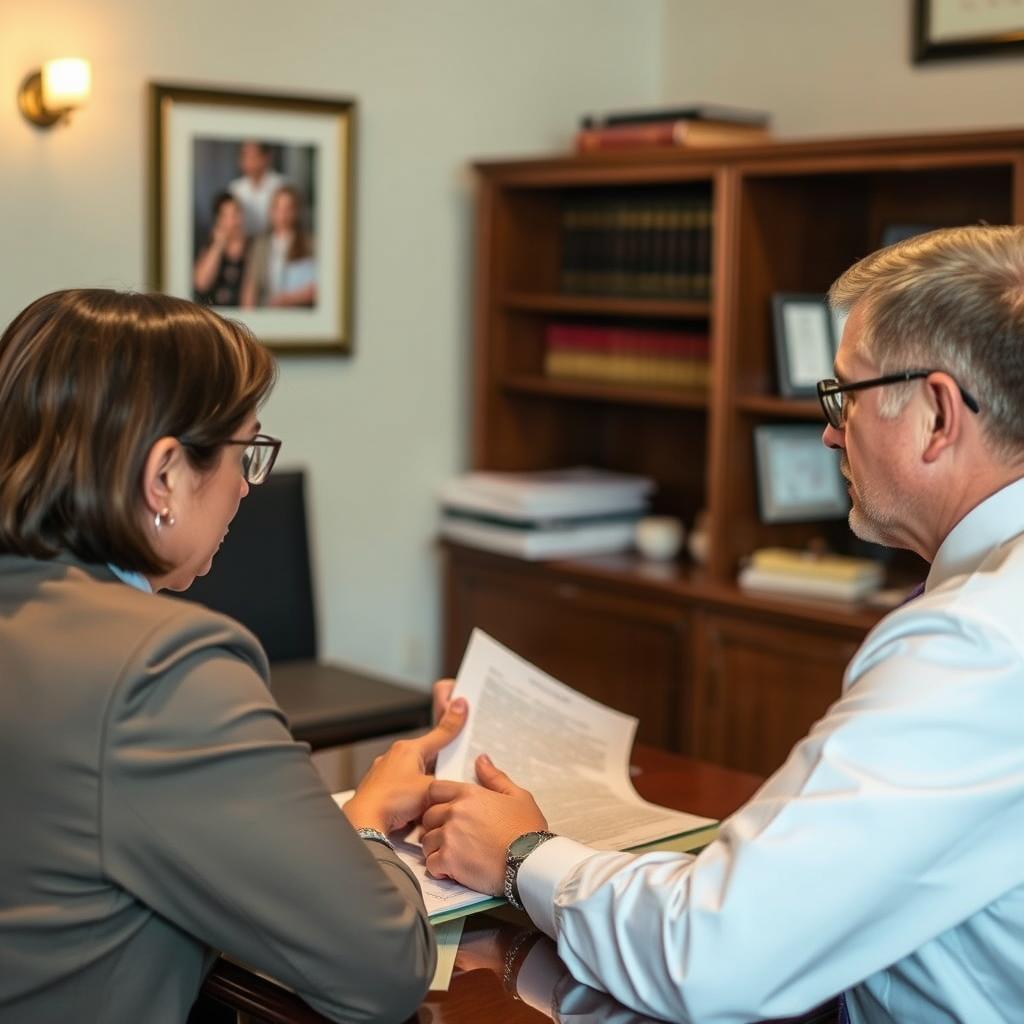
Continuing Criminal Enterprise lawyer Talbot County, MD
Facing a continuing criminal enterprise charge—often called a “CCE” or “drug kingpin” prosecution—can feel overwhelming. Federal prosecutors in Maryland use 21 U.S.C. § 848 to target individuals they believe led or organized a large-scale drug operation. If you are under investigation or have been indicted in Talbot County, the case will move through the U.S. District Court for the District of Maryland, which sits in Baltimore and Greenbelt. A conviction under § 848 carries severe mandatory minimum penalties: 20 years, and life for repeat leaders. Because the government’s resources are substantial—with investigations handled by the FBI, DEA, HSI, ATF, and IRS Criminal Investigation—having an experienced federal defense attorney on your side early is important. At Law Offices Of SRIS, P.C., Mr. Sris and his Of Counsel team represent clients in federal criminal matters arising in Talbot County and throughout the Eastern Shore. Reach your team at (888) 437-7747 to request a confidential consultation. Law Offices Of SRIS, P.C. – Advocacy Without Borders.
A first-time continuing criminal enterprise conviction under 21 U.S.C. § 848 carries a mandatory minimum sentence of 20 years in federal prison; a repeat conviction carries life without the possibility of parole.
Source: 21 U.S.C. § 848. Cornell Legal Information Institute
Reviewed by Mr. Sris, admitted in VA, MD, DC, NJ, and NY.
What a Continuing Criminal Enterprise Charge Means for You in Talbot County
Unlike most federal drug charges, which punish a single act of distribution or possession, a CCE count targets the alleged leader of an ongoing drug business. To prove the offense at trial, the U.S. Attorney’s Office—through its Baltimore or Greenbelt division—must show that you committed a continuing series of federal drug felonies, that you supervised five or more people, and that you obtained substantial income or resources from the operation. This combination of proof makes CCE prosecutions among the most complex and resource-intensive cases in the federal system.
For someone living in Easton, St. Michaels, Oxford, Trappe, or Tilghman Island, the procedural realities are shaped by the U.S. District Court for the District of Maryland. Pretrial matters such as detention hearings and initial appearances often take place before a federal magistrate judge in Baltimore. You may be appointed counsel if you qualify for CJA representation, but the rules of evidence, the United States Sentencing Guidelines, and the government’s ability to seek asset forfeiture create a challenging environment. Mr. Sris and his Of Counsel routinely appear in federal court and understand how to challenge the prosecution’s narrative from the earliest stages—including whether the alleged enterprise qualifies as a CCE or should be treated as a less severe conspiracy case.
Frequently Asked Questions
What is a continuing criminal enterprise under federal law?
A continuing criminal enterprise, defined by 21 U.S.C. § 848, is the federal charge used to prosecute leaders of large-scale drug operations. To convict, the government must prove that the defendant committed a series of federal drug felonies while organizing, supervising, or managing five or more other people, and that the defendant obtained substantial income or resources from the enterprise. It is often called the “drug kingpin” statute because it targets those at the top of a trafficking network, not street-level dealers.
What are the penalties for a continuing criminal enterprise conviction?
The penalty for a first-time continuing criminal enterprise conviction is a mandatory minimum of 20 years in federal prison, and a conviction for a second or subsequent CCE offense carries a sentence of life. These sentences are served without parole. In addition, fines, supervised release, and asset forfeiture are almost always part of the case. The United States Sentencing Guidelines may lengthen the term based on drug quantity, the defendant’s role, and whether violence or firearms were involved.
How does the federal investigation process work in Maryland for CCE cases?
Continuing criminal enterprise investigations in Maryland are typically led by multi-agency federal task forces that include the FBI, DEA, ATF, HSI, IRS Criminal Investigation, and the U.S. Secret Service. Investigators may use wiretaps, confidential informants, undercover agents, surveillance, and financial record analysis over many months. Most CCE cases result in a grand jury indictment from the U.S. Attorney’s Office for the District of Maryland. Once charges are filed, the case proceeds to arraignment, pretrial motions, discovery, and either a plea or trial in the U.S. District Court in Baltimore or Greenbelt.
What court handles continuing criminal enterprise cases in Talbot County?
Continuing criminal enterprise charges arising out of Talbot County are prosecuted in the U.S. District Court for the District of Maryland. This federal court has two divisions—Baltimore and Greenbelt—and CCE cases are generally heard in Baltimore. A defendant may first appear before a federal magistrate judge for an initial appearance and detention hearing. The case then moves to a district judge for trial or sentencing. Because the court is federal, none of the local state courts—such as the Talbot County Circuit Court or the District Court of MD for Talbot County—have jurisdiction over a CCE charge.
How does a federal CCE charge differ from a drug conspiracy charge?
A drug conspiracy under 21 U.S.C. § 846 requires the government to prove that two or more people agreed to commit a drug offense, while a continuing criminal enterprise charge under 21 U.S.C. § 848 additionally requires proof of a supervisory role over at least five people and substantial income. CCE is a leadership-focused charge, often involving a longer investigation and much harsher mandatory minimums. In many cases, a defendant may face both a conspiracy count and a CCE count, which requires a defense that addresses the different elements of each charge.
Can a continuing criminal enterprise charge be reduced or dismissed?
A CCE charge may be reduced to a lesser drug conspiracy or distribution count if the government’s evidence cannot meet the additional statutory elements. Mr. Sris and his Of Counsel examine whether the prosecution can prove all required elements—particularly the supervisory role and the “continuing series” of violations. A motion to dismiss the indictment or suppress evidence, when legally supported, can also limit the government’s case. While no outcome can be past results do not guarantee a similar outcome, a thorough early review of the investigative record can reveal weaknesses that may lead to a more favorable resolution.
What should I do if I believe I am under investigation for a CCE in Maryland?
If you suspect you are under investigation for a continuing criminal enterprise, you should exercise your right to remain silent and immediately seek advice from an experienced federal criminal defense attorney. Do not speak with law enforcement without counsel present. Preserve any documents or records that may be relevant, but do not destroy anything—destruction of evidence is itself a separate federal crime. Early legal intervention can help shape the direction of the investigation and preserve your options. Contact Law Offices Of SRIS, P.C. at (888) 437-7747 for a consultation.
How does an attorney defend against a continuing criminal enterprise charge?
Defenses in a continuing criminal enterprise case may include challenging the sufficiency of the evidence that the defendant supervised five people, that the operation was “continuing,” or that the defendant’s income met the statutory threshold. Other avenues may involve attacking the legality of search warrants, wiretaps, or the reliability of cooperator testimony. Because CCE cases are built on extensive investigation, a defense grounded in a methodical examination of the government’s discovery can identify gaps. Mr. Sris draws on years of experience in federal court to prepare a defense strategy tailored to the specific facts of each case.
Do I need a lawyer for a continuing criminal enterprise charge in Talbot County?
Yes, you need a lawyer because continuing criminal enterprise charges carry the most severe mandatory minimum sentences in federal drug law and are prosecuted by the U.S. Attorney’s Office with considerable resources. Without counsel, you face the government alone in a system where the rules of evidence, the Sentencing Guidelines, and the complexity of the charges can be overwhelming. The right to an attorney is fundamental in federal cases. To discuss your situation, contact Law Offices Of SRIS, P.C. at (888) 437-7747.
What happens during the first court appearance in a federal CCE case in Maryland?
Your first court appearance in a continuing criminal enterprise case is typically an initial appearance before a federal magistrate judge in the U.S. District Court for the District of Maryland. The judge will advise you of the charges, review the government’s request for detention, and consider bail or pretrial release conditions. A preliminary hearing or detention hearing may follow within days. Because the government often argues that a defendant in a CCE case is a flight risk or danger, having an attorney present who can challenge that assertion is crucial. A subsequent arraignment sets the stage for pretrial motions and trial scheduling.
How long does a federal continuing criminal enterprise case take in Maryland?
The timeline for a continuing criminal enterprise case in Maryland varies, but the Speedy Trial Act requires a trial to begin within 70 days of the defendant’s initial appearance unless certain excludable time applies. In practice, CCE cases often take much longer because of the volume of discovery, complex pretrial motions, and the possibility of continuances granted by the court. A case can last from several months to a year or more before resolution. For guidance on your specific matter, reach Mr. Sris and his Of Counsel at (888) 437-7747.
About Mr. Sris and His Of Counsel Team
Mr. Sris, Owner and Founder of Law Offices Of SRIS, P.C., is a former prosecutor with years of experience in criminal trial work. Admitted in Virginia, Maryland, the District of Columbia, New Jersey, and New York, he has practiced since 1997 and concentrates his work on complex criminal defense, including federal drug and CCE matters. He is supported by a team of Of Counsel attorneys with backgrounds in prosecution, law enforcement, and trial advocacy. Mr. Sris and his Of Counsel bring extensive combined legal experience. Results may vary. For federal criminal cases in Talbot County, the group works together to prepare a defense that challenges the government’s evidence at every stage.
Reviewed by Mr. Sris, Owner and Founder, admitted in Virginia, Maryland, District of Columbia, New Jersey, and New York.
Federal Criminal Lawyer Montgomery County | Prince George’s County Federal Criminal Attorney | Howard County Federal Criminal Defense | Anne Arundel County Federal Criminal Lawyer | Frederick County Federal Criminal Defense Attorney
Attorney advertising. Prior results do not guarantee a similar outcome.
Results may vary.
Case results depend on a variety of factors unique to each case.