
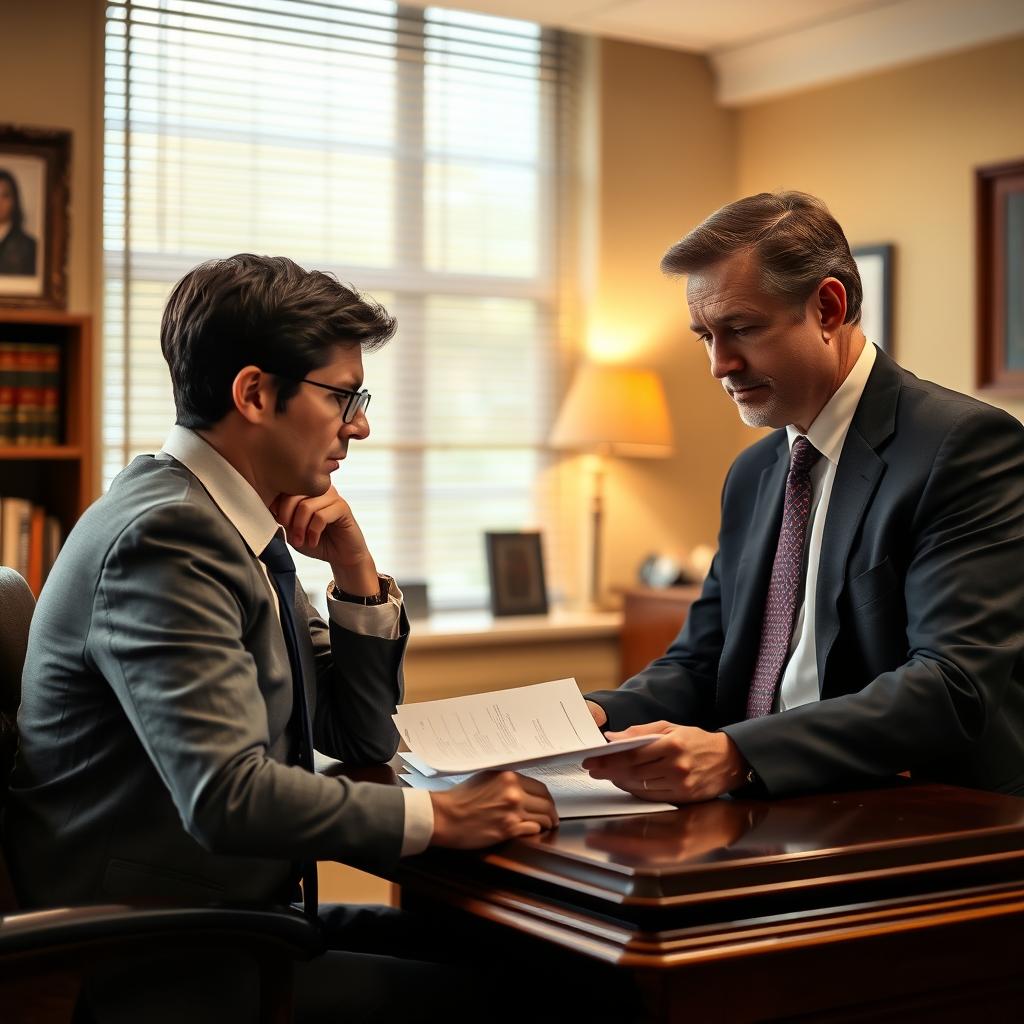
Conspiracy to Commit Money Laundering lawyer Charles County, MD
Federal conspiracy to commit money laundering is a serious offense prosecuted under 18 U.S.C. § 1956(h). A conviction can result in substantial prison time, forfeiture of assets, and lasting damage to your career and reputation. If you are facing federal conspiracy-to-commit-money-laundering charges in Charles County, Maryland, you need a defense team with experience in the U.S. District Court for the District of Maryland. Law Offices Of SRIS, P.C., founded in 1997, provides seasoned representation for individuals and businesses under investigation or indictment. Mr. Sris, a former prosecutor, and his Of Counsel team bring over 120 years of combined legal experience to federal conspiracy defense. Results may vary. They understand how the U.S. Attorney’s Office builds these cases and how to respond effectively. To request a consultation about your situation, call (888) 437-7747. Law Offices Of SRIS, P.C. – Advocacy Without Borders.
What Federal Conspiracy to Commit Money Laundering Means in Charles County
Charles County sits in southern Maryland, with its major communities—La Plata, Waldorf, Indian Head, White Plains, Bryans Road, and Hughesville—connected by Routes 301, 228, 210, and 5. Federal criminal matters arising here are handled by the U.S. District Court for the District of Maryland, whose courthouses in Baltimore and Greenbelt hear all federal felony cases from Charles County. The U.S. Attorney’s Office for the District of Maryland prosecutes conspiracy-to-commit-money-laundering charges alongside investigations by federal agencies such as the FBI, DEA, IRS Criminal Investigation, HSI, ATF, and the U.S. Secret Service.
Federal conspiracy law treats an agreement to commit money laundering as severely as the completed offense. Under 18 U.S.C. § 1956(h), a person who conspires to violate the money laundering statute faces the same maximum penalty—up to twenty years in prison—as someone who actually carried out the laundering. Unlike many state conspiracy statutes, federal law does not require proof of an overt act; the government need only show that two or more people agreed to commit the offense. Once charged, the case proceeds through grand jury indictment, arraignment in the U.S. District Court for the District of Maryland, pretrial motions, discovery, and potentially trial. Sentencing operates under the advisory U.S. Sentencing Guidelines, and there is no parole in the federal system. Asset forfeiture frequently accompanies these prosecutions, placing the accused’s property at risk from the earliest stages.
Mr. Sris and his Of Counsel appear regularly in federal court in Maryland. They are familiar with the procedures, the judges’ expectations, and the strategies that can affect the course of a federal conspiracy case. Law Offices Of SRIS, P.C. serves Charles County from its Maryland location at 199 E. Montgomery Avenue, Suite 100, Room 211, Rockville, MD 20850. Clients from throughout Charles County can reach the firm at (888) 437-7747 for a consultation.
How Mr. Sris and His Of Counsel Handle Federal Conspiracy Cases
Every federal conspiracy-to-commit-money-laundering matter begins with a thorough review of the government’s evidence and the procedures that were followed. Federal investigations often rely on wiretaps, financial records, cooperating witnesses, and electronic surveillance. Mr. Sris and his Of Counsel scrutinize the methods used to gather that evidence. They look for weaknesses in the chain of custody, challenges to the validity of search warrants, and any violation of the defendant’s constitutional rights that can lead to suppression or dismissal.
Early engagement is essential. The team often interacts with the U.S. Attorney’s Office before charges are filed, presenting information that may influence the charging decision. If an indictment is returned, they evaluate every available defense—whether the evidence fails to prove an agreement, whether the defendant lacked the requisite intent, or whether the alleged transaction did not involve proceeds of specified unlawful activity. They also explore avenues to negotiate reduced charges or sentencing agreements, including cooperation when appropriate. Throughout the process, the firm’s focus is on building a thorough, well-prepared defense tailored to the specific facts of the case. No result can be past results do not guarantee a similar outcome, but the team works to achieve the most favorable outcome possible.
About Mr. Sris and His Of Counsel Team
Mr. Sris, Owner and Founder of Law Offices Of SRIS, P.C., has practiced law since 1997 and is admitted in Virginia, Maryland, the District of Columbia, New Jersey, and New York. Before founding the firm, he served as a prosecutor, an experience that informs his approach to federal criminal defense. Mr. Sris testified before the Virginia House Courts of Justice Committee in support of 2019 HB 635 (chief patron Del. David Bulova). He and his Of Counsel team bring over 120 years of combined legal experience to every case. Results may vary. Mr. Sris and his Of Counsel have documented 4,739+ case results across all practice areas since 1997.
Frequently Asked Questions
What is the difference between state and federal charges?
Federal charges are prosecuted by the U.S. Attorney with generally harsher penalties and no parole; an experienced federal defense attorney is critical. State charges are brought by local prosecutors and tried in state court under state law, while federal charges are handled by the U.S. Attorney’s Office in U.S. District Court under federal statutes. Federal cases often involve multi-agency investigations and carry mandatory minimum sentences for certain offenses. Because the federal system does not afford parole, a defendant who receives a custodial sentence serves at least 85 percent of the imposed time. The procedural rules, discovery obligations, and sentencing guidelines in federal court differ markedly from those in Maryland’s state courts. Early engagement with counsel who understands the federal system can have a significant impact on case strategy.
What is federal criminal court and how is it different in Maryland?
Federal criminal cases in Maryland are prosecuted by U.S. Attorneys in U.S. District Court and carry harsher sentencing guidelines than state charges. In Maryland, the primary federal venue is the U.S. District Court for the District of Maryland, with courthouses in Baltimore and Greenbelt. Federal prosecutors have access to substantial resources and often file charges only after a thorough investigation. The Federal Rules of Criminal Procedure govern the process, and the U.S. Sentencing Guidelines—though advisory—heavily influence the judge’s sentence. Unlike Maryland state court, there is no probation before judgment in the federal system, and supervised release follows any prison term. The firm’s lawyers are familiar with both the procedural and practical differences and represent clients in the District of Maryland.
How do federal sentencing guidelines work in Charles County, Maryland?
Federal sentencing at U.S. District Court for the District of Maryland follows the U.S. Sentencing Guidelines—a points-based calculation using offense level and criminal history category. While the guidelines are advisory since the Supreme Court’s decision in United States v. Booker (2005), they remain the starting point for every federal sentence. The court calculates a guideline range by determining the base offense level, applying specific offense characteristics (such as the amount of money involved or the defendant’s role in the offense), and adjusting for acceptance of responsibility. This offense level is combined with the defendant’s criminal history category to produce a recommended sentencing range in months. Mandatory minimum statutes can override the guideline range, and statutory provisions such as the safety valve or substantial assistance under § 5K1.1 can reduce exposure. Mr. Sris and his Of Counsel understand how these calculations work and how to present mitigating information at sentencing.
Do I need a federal criminal defense lawyer in Charles County, Maryland?
Yes, immediately. Federal cases at U.S. District Court for the District of Maryland are prosecuted by the U.S. Attorney’s Office with federal investigative resources and carry federal sentencing guidelines that often include mandatory minimums. State-court experience does not translate directly to federal practice, which has distinct rules regarding pretrial detention, discovery, and sentencing. Early engagement—even before indictment—materially affects outcomes. An experienced federal defense attorney can evaluate the government’s evidence, advise on cooperation or plea options, and challenge procedural errors. Law Offices Of SRIS, P.C. provides this representation. Call (888) 437-7747 to request a consultation.
How does a Maryland federal criminal lawyer defend against conspiracy to commit money laundering charges?
A Maryland federal lawyer defends against conspiracy to commit money laundering by challenging the government’s evidence of an agreement, examining the financial transactions for legitimate purpose, and asserting any constitutional or procedural violations. Defense strategies may include disputing whether the defendant knowingly joined the conspiracy, demonstrating that the funds were not derived from specified unlawful activity, or proving that the defendant withdrew from the conspiracy before any act was taken. The attorney also reviews search warrants, wiretap applications, and the handling of financial records for Fourth Amendment or statutory violations. In many cases, pretrial motions to suppress evidence or to dismiss flawed counts can narrow the government’s case. Every defense is tailored to the facts; an experienced attorney evaluates the specific circumstances under 18 U.S.C. § 1956(h) and federal conspiracy law to build the strong $1.
What should I do if I am facing conspiracy to commit money laundering charges in Maryland?
If facing conspiracy to commit money laundering charges in Maryland, contact a federal criminal attorney immediately and refrain from discussing the case with anyone except your lawyer. Preserve all relevant documents, communications, and financial records, but do not alter or destroy any potential evidence. Do not speak with law enforcement or federal agents without counsel present. The statute of limitations and court deadlines require prompt action; delay can limit defense options. Request a consultation with Law Offices Of SRIS, P.C. by calling (888) 437-7747. The firm’s attorneys can advise you on next steps and begin working to protect your rights.
Attorney advertising. Prior results do not guarantee a similar outcome. Results may vary.
Case results depend on a variety of factors unique to each case.