
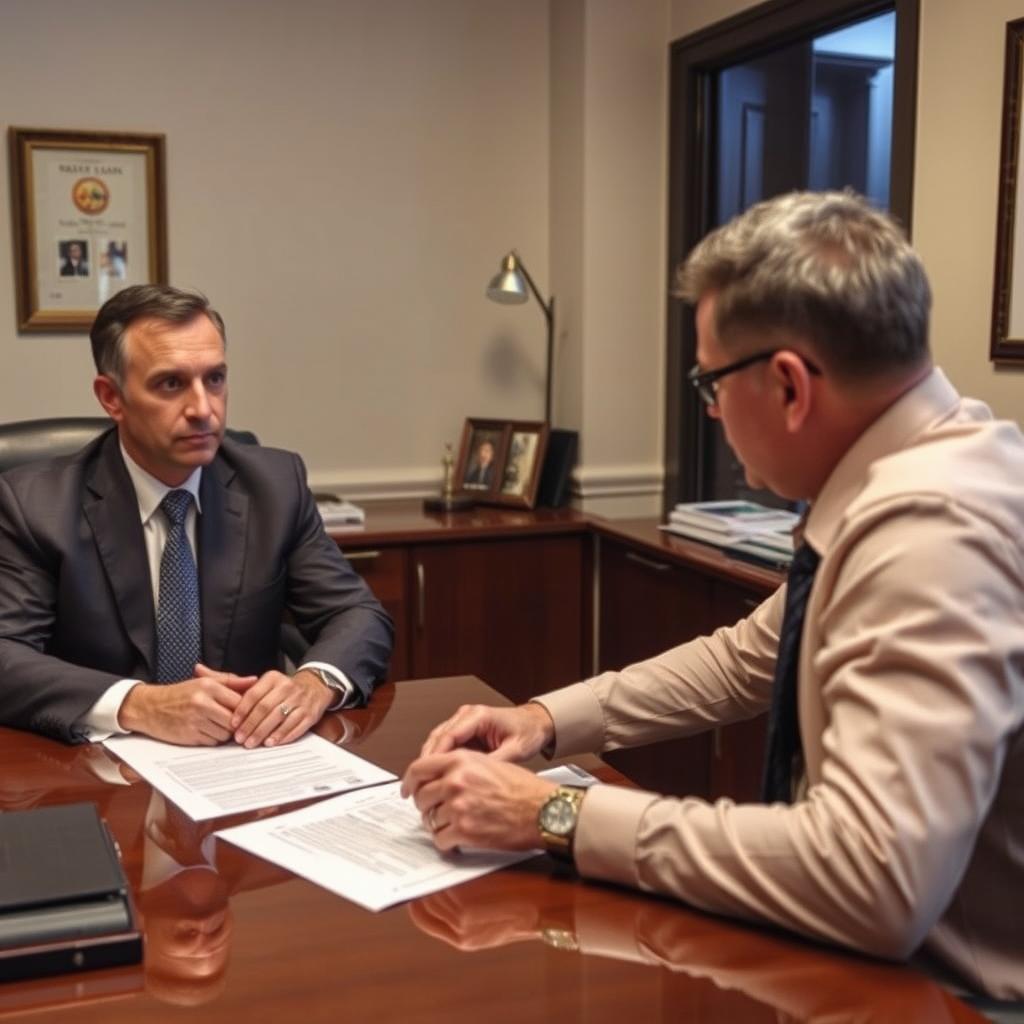
Conspiracy to Commit an Offense lawyer Allegany County, NY
Federal conspiracy to commit an offense under 18 U.S.C. § 371 is prosecuted actively in the U.S. District Court for the Western District of New York, which covers Allegany County. A conviction does not require the underlying crime to have succeeded — only that an agreement existed and at least one overt act was taken in furtherance of it. Penalties can mirror the maximum sentence for the underlying offense, and the federal system carries no parole. If you are facing an investigation or indictment in Allegany County, understanding how the U.S. Attorney’s Office builds conspiracy cases is critical. Mr. Sris, a former prosecutor admitted to practice in New York, focuses his federal defense work on protecting clients caught in these wide-ranging prosecutions. Reach Law Offices Of SRIS, P.C. at (888) 437-7747 to request a consultation. Law Offices Of SRIS, P.C. – Advocacy Without Borders.
What Federal Conspiracy to Commit an Offense Means in Allegany County, NY
Conspiracy to commit an offense against the United States is charged under 18 U.S.C. § 371 when two or more people agree to violate a federal law and at least one of them performs an act to carry out that agreement. The agreement itself is the core of the charge. Federal prosecutors in the Western District of New York frequently use conspiracy allegations to link co-defendants and introduce evidence that might otherwise be inadmissible if each person were tried separately. Because Allegany County residents who are charged federally appear in the Buffalo or Rochester courthouses of the Western District, familiarity with the local U.S. Attorney’s priorities and the presiding federal magistrate and district judges is an important part of crafting a defense strategy.
The maximum statutory penalty under § 371 is five years’ imprisonment for a general conspiracy, or the maximum penalty for the underlying offense if that offense is a misdemeanor or a lesser felony. However, many conspiracy charges are paired with substantive offenses that carry far longer sentences. Under the Federal Sentencing Guidelines, the offense level is often driven by the most serious overt act or the intended loss, and mandatory minimum statutes — common in drug and firearms cases — may apply. Mr. Sris and his Of Counsel team review every indictment and criminal complaint for jurisdictional defects, duplicity issues, and overbroad conspiracy theories. An early response matters because federal investigators from the FBI, DEA, or ATF typically spend months assembling a case before charges are filed; an attorney who engages during the investigatory stage may be able to influence whether a case is brought at all.
How Mr. Sris Handles Federal Conspiracy to Commit an Offense Cases
Mr. Sris approaches each federal conspiracy matter from the perspective of a former prosecutor. He understands the charging decisions, witness-cooperation incentives, and grand jury procedures that the U.S. Attorney’s Office uses to build its cases. After reviewing discovery and speaking with the client, he identifies the strengths and weaknesses of the government’s agreement theory. Often, one co-defendant’s statement or a single overt act is stretched into a broader conspiracy charge; challenging the sufficiency of the evidence as to a particular defendant can make a significant difference in plea negotiations or at trial.
The firm’s defense strategy in the Western District of New York emphasizes thorough preparation: filing appropriate pretrial motions, evaluating suppression issues, and, where warranted, retaining forensic experts to examine financial records, digital evidence, or communications data. Because federal sentencing exposure is high and the Guidelines heavily influence outcomes, Mr. Sris carefully documents mitigating factors — acceptance of responsibility, minimal role in the conspiracy, or substantial assistance to the government where appropriate — so that any sentencing hearing is as fully informed as possible. He works collaboratively with his Of Counsel team to ensure that each client receives close attention and a defense built on the specific facts of the case, not a generic template.
About Mr. Sris and His Of Counsel Team
Mr. Sris is the Owner and Founder of Law Offices Of SRIS, P.C. He has been practicing since 1997 and is admitted to the bars of Virginia, Maryland, the District of Columbia, New Jersey, and New York. His background as a former prosecutor gives him insight into how the government builds conspiracy cases from the earliest stages of an investigation. He limits his personal caseload so that he can maintain direct involvement in each matter, supported by experienced Of Counsel attorneys who bring additional perspectives from prior careers in prosecution, law enforcement, and litigation. Over 120 years of combined legal experience between Mr. Sris and his Of Counsel underpin the firm’s federal criminal defense work. Results may vary.
Mr. Sris and his Of Counsel have documented 4,739+ case results since 1997 across all practice areas. For federal conspiracy matters, the firm draws on the same methodical approach that has produced favorable outcomes in complex criminal litigation. Mr. Sris testified before the Virginia House Courts of Justice Committee in support of 2019 HB 635 (chief patron Del. David Bulova). Reach Law Offices Of SRIS, P.C. at (888) 437-7747 to schedule a consultation.
Frequently Asked Questions
What is federal conspiracy to commit an offense under 18 U.S.C. § 371?
Federal conspiracy to commit an offense requires an agreement between two or more persons to violate a federal criminal statute and an overt act by at least one co-conspirator to further that agreement. The conspiracy charge is separate from any underlying substantive offense and can be prosecuted even if the underlying crime was never completed. The maximum penalty for a general conspiracy is five years in prison, but many conspiracy counts are tied to offenses carrying significantly longer sentences, and the government may seek forfeiture, fines, and supervised release. Because the agreement element can be proven through circumstantial evidence, even a single meeting or phone call can be used to argue that a conspiracy existed. An experienced federal defense attorney examines whether the government can actually establish the agreement and whether the charged overt act is sufficient under the law.
Do I need a lawyer if I am under investigation for conspiracy in Allegany County, NY?
Yes, you should retain a federal criminal defense lawyer immediately if you believe you are the subject of a conspiracy investigation. Federal agencies such as the FBI, DEA, or IRS-CI may investigate for months before an indictment, and any statement you make to agents can be used as an overt act in a later conspiracy charge. An attorney can communicate with the government on your behalf, advise you of your rights, and work to prevent charges from being filed. Early engagement often leads to better outcomes, but do not speak with investigators before you have counsel. Reach Law Offices Of SRIS, P.C. at (888) 437-7747 to discuss your situation.
How does the federal conspiracy process work in the Western District of New York?
After an investigation, the U.S. Attorney’s Office presents the case to a federal grand jury sitting in Buffalo or Rochester; if the grand jury returns an indictment, the defendant is arraigned in the U.S. District Court for the Western District of New York. At arraignment, a federal magistrate judge addresses bail and the defendant enters a plea. Pretrial motions, including challenges to the indictment or attempts to suppress evidence, follow. Discovery is governed by the Federal Rules of Criminal Procedure, and the government must disclose certain material before trial. Many cases resolve through plea agreements, but the firm prepares every matter as though it will go to trial. Sentencing takes place before a U.S. District judge and is heavily influenced by the advisory Guidelines.
What are possible defenses to a federal conspiracy charge?
Defenses may include showing that no agreement existed, that the defendant withdrew from the conspiracy before any overt act occurred, or that the overt act cited by the government is insufficient as a matter of law. In some cases, the defense may challenge the scope of the conspiracy — arguing that the defendant was only loosely associated with other actors and never joined the illegal plan. Entrapment, although rare, applies where government conduct induced a person to commit a crime they were not predisposed to commit. An experienced lawyer evaluates the discovery, interviews witnesses, and determines which defenses have the strongest factual and legal foundation given the particular conspiracy charged.
What should I bring to a consultation with a federal criminal lawyer?
Bring any documents you have received from law enforcement or the court — such as subpoenas, target letters, or charging documents — and a written summary of any contact you have had with investigators. Also bring a timeline of events if you feel one is relevant. Do not bring physical evidence that may be subject to seizure without first discussing it with your attorney. The lawyer will want to understand the full scope of the government’s interest and your role so they can give you an honest assessment of your exposure and the steps that can be taken. Contact Law Offices Of SRIS, P.C. at (888) 437-7747 to schedule a confidential consultation.
Federal Criminal Defense Overview · New York Location · Federal Criminal Lawyer Buffalo, NY
18 U.S.C. § 371 — Conspiracy to Commit Offense Against the United States · U.S. District Court for the Western District of New York · 18 U.S.C. § 3582 — Imposition of a Sentence of Imprisonment
Attorney advertising. Prior results do not guarantee a similar outcome. Case results depend on a variety of factors unique to each case. Results may vary.
Reviewed by Mr. Sris, Owner and Founder. Admitted in Virginia, Maryland, District of Columbia, New Jersey, and New York. Practicing since 1997.