
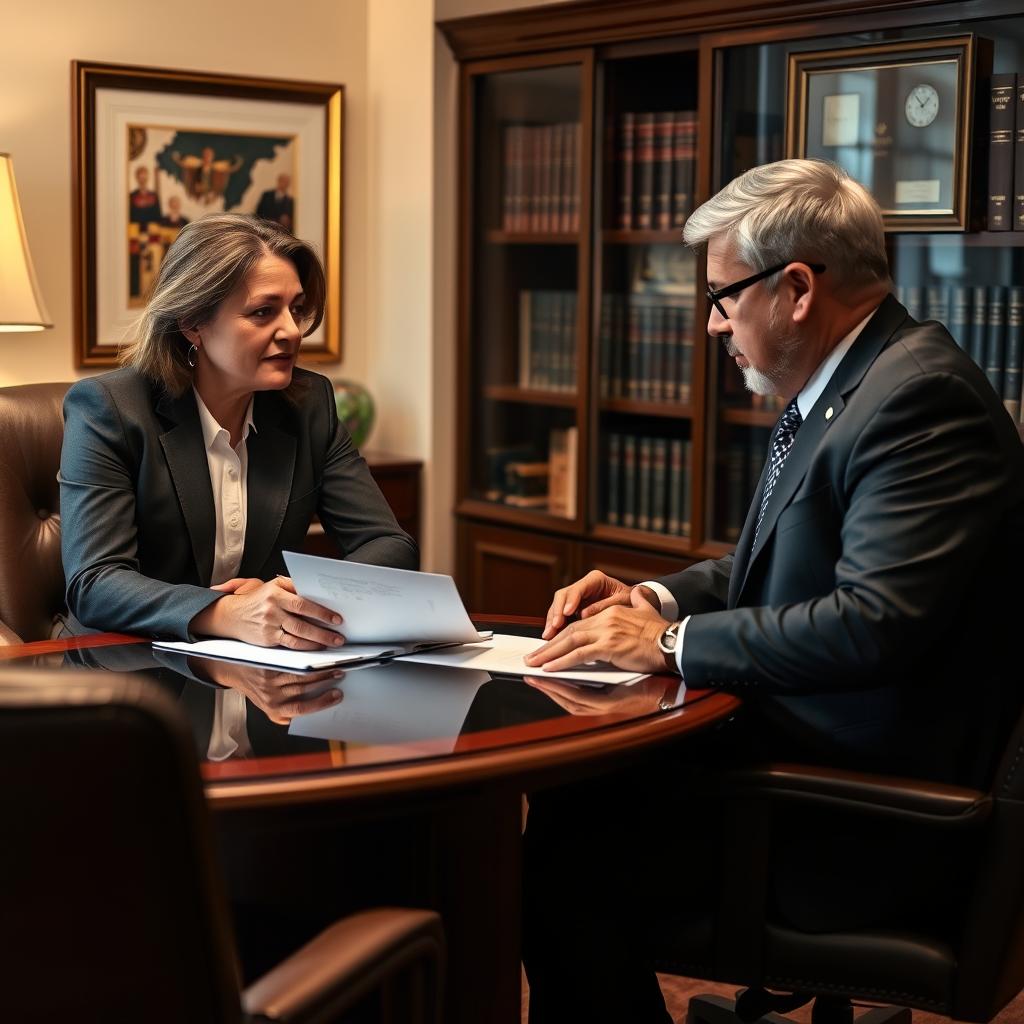
Bringing in and Harboring Aliens lawyer Harford County, MD
Federal allegations of bringing in and harboring aliens carry serious consequences for individuals in Harford County, Maryland. These immigration‑related crimes are prosecuted by the U.S. Attorney’s Office for the District of Maryland in the U.S. District Court, where federal sentencing guidelines and the potential for lengthy imprisonment or deportation consequences apply. The attorneys at Law Offices Of SRIS, P.C. have experience handling federal criminal matters, including charges under 8 U.S.C. § 1324. Having an experienced federal defense lawyer on your side at the earliest stage can be important. To discuss your situation with an attorney, call (888) 437‑7747. Law Offices Of SRIS, P.C. – Advocacy Without Borders.
Law Offices Of SRIS, P.C.
- Founded in 1997
- Attorneys admitted in Virginia, Maryland, the District of Columbia, New Jersey, and New York
- Languages: English, Spanish, Tamil
- Phone: (888) 437‑7747 – during business hours availability
- By appointment only. Our Rockville location serves clients throughout Harford County.
Federal Immigration Crime Defense for Harford County Residents
Harford County sits northeast of Baltimore along the I‑95 corridor, and its residents who face federal charges generally appear in the U.S. District Court for the District of Maryland. The court holds proceedings in Baltimore and Greenbelt, and cases are handled under the Federal Rules of Criminal Procedure and the U.S. Sentencing Guidelines. Mr. Sris and the firm’s Of Counsel attorneys have experience appearing in federal court. The firm’s Maryland location is in Rockville, and we represent clients from communities across Harford County, including Bel Air, Aberdeen, Havre de Grace, Edgewood, Fallston, Jarrettsville, and Forest Hill.
Federal criminal charges are fundamentally different from state‑level accusations. The investigations are typically led by federal agencies—HSI, the FBI, DEA, IRS‑CI, ATF, and the Secret Service, among others. Federal prosecutors have considerable resources, and the conviction rate in federal court is high. That reality makes experienced legal representation vital for anyone contacted by federal agents or named in a federal indictment. Law Offices Of SRIS, P.C. has handled federal criminal cases since 1997 and understands the procedural landscape of the District of Maryland.
What Is Bringing in and Harboring Aliens Under Federal Law?
Federal law prohibits a range of conduct involving unlawful entry, transportation, and concealment of noncitizens. The principal statute is 8 U.S.C. § 1324, which makes it a crime to knowingly bring an alien to the United States at a place other than a designated port of entry; to transport or move an alien within the United States; to conceal, harbor, or shield from detection an alien; or to encourage or induce an alien to enter or reside in the United States. The statute also criminalizes conspiracy to commit any of these acts. A conviction can arise from relatively straightforward factual scenarios, such as providing transportation to an undocumented individual, or from more complex organized‑smuggling operations. The government’s burden of proof is the same in every federal criminal case—beyond a reasonable doubt—but the investigative tools at its disposal, including wiretaps, surveillance, and cooperating witnesses, often make these cases document‑intensive.
Under 8 U.S.C. § 1324, a conviction for bringing in or harboring aliens may result in a maximum prison term of 20 years. If the offense results in the death of any person, the maximum sentence is life imprisonment. In addition to imprisonment, defendants may face substantial fines and a term of supervised release. A conviction can also trigger immigration consequences for the defendant, including deportation or removal proceedings if the defendant is not a U.S. Citizen. While sentencing in a particular case depends on many factors—the offense level under the U.S. Sentencing Guidelines, the defendant’s criminal history, and any mandatory minimums that apply—the potential penalties are severe. Early engagement with an attorney experienced in federal criminal defense can influence the trajectory of the case.
How Are These Cases Prosecuted in the U.S. District Court for the District of Maryland?
Federal bringing‑in‑and‑harboring investigations often begin months or years before an arrest. Agents from Homeland Security Investigations (HSI) or the FBI may gather evidence through surveillance, traffic stops, financial records, or confidential informants. When prosecutors believe they have sufficient evidence, they present the matter to a federal grand jury, which determines whether to return an indictment. The indictment is the formal charging document, and once it is unsealed, the defendant is taken into custody or summoned for an initial appearance before a U.S. Magistrate Judge.
The initial appearance includes the reading of charges and a detention hearing, at which the court decides whether the defendant will be released pending trial or detained. Federal law, particularly the Bail Reform Act, creates a presumption of detention in many cases carrying serious penalties or involving a flight risk. Arraignment follows, where the defendant enters a plea. From that point, the case moves through pretrial motions, discovery, potential plea negotiations, and, if no resolution is reached, a trial. Sentencing occurs after conviction or plea and is governed by the advisory U.S. Sentencing Guidelines. The firm’s attorneys focus on protecting the client’s rights throughout each stage, challenging the government’s evidence, and advocating for the most favorable outcome possible—whether through dismissal, a favorable plea, or trial.
Defense Approach in Federal Immigration Crime Cases
Defending a federal harboring or bringing‑in case requires a careful review of the government’s evidence and a strategic assessment of legal and factual issues. The attorneys at Law Offices Of SRIS, P.C. Examine the circumstances of the alleged conduct, the legality of any search or seizure, the reliability of witness statements, and the compliance of investigating agents with constitutional and statutory procedures. In some cases, the defense may focus on the client’s lack of knowledge that the person being transported or harbored was present in the country unlawfully. In others, the defense may challenge whether the conduct alleged constitutes “harboring” or “bringing in” within the statutory definition. Because federal sentencing guidelines can impose lengthy terms of imprisonment, plea discussions and sentencing advocacy often focus on downward departures, safety‑valve provisions where available, and arguments under 18 U.S.C. § 3553(a). Every case is different, and Mr. Sris and the firm’s Of Counsel attorneys work to develop a defense tailored to the facts.
Frequently Asked Questions
What is the difference between state and federal charges in Maryland?
Federal charges in Maryland are prosecuted by the U.S. Attorney’s Office in the U.S. District Court, while state charges are handled by local prosecutors in the Maryland District Court or Circuit Court. Federal cases generally carry harsher penalties, no parole, and more extensive investigative resources. The federal system also follows its own sentencing guidelines and evidentiary rules. If you are facing federal charges in Harford County, your case will proceed in the U.S. District Court for the District of Maryland, not in the Harford County Circuit Court, even if the alleged conduct occurred within the county.
What should I do if I am under investigation for bringing in and harboring aliens?
If you suspect you are under federal investigation, contact an experienced federal criminal defense attorney immediately and do not speak with agents without counsel. Preserve any documents or electronic records that may be relevant. Federal investigations can move quickly, and early legal guidance can help you avoid statements that might be used against you. The attorneys at Law Offices Of SRIS, P.C. can advise you on how to respond to a target letter, a grand jury subpoena, or a search warrant.
How do federal sentencing guidelines affect a bringing‑in‑and‑harboring case?
The U.S. Sentencing Guidelines provide a point‑based calculation that considers the offense level and the defendant’s criminal history, resulting in a recommended sentencing range. While the guidelines are advisory, they strongly influence the judge’s decision. Factors like acceptance of responsibility, substantial assistance to the government, and eligibility for the safety valve (when applicable) can reduce the guideline range. Sentencing advocacy is a crucial part of defense work, and our attorneys are prepared to present mitigation evidence to the court.
Can a conviction for bringing in and harboring aliens lead to deportation?
Yes, a conviction for an immigration crime under 8 U.S.C. § 1324 can result in deportation or removal proceedings for non‑citizen defendants. These offenses are often classified as aggravated felonies or crimes involving moral turpitude under the Immigration and Nationality Act, both of which carry severe immigration consequences. If you are not a U.S. Citizen and are facing federal charges, it is essential that your defense attorney coordinates with immigration counsel to understand the collateral consequences.
How does a lawyer defend against federal harboring charges?
Defense strategies may include challenging the legality of the stop or search, disputing the defendant’s knowledge or intent, or demonstrating that the alleged conduct does not meet the statutory definition of “harboring” or “bringing in.” The attorney may also negotiate with the government for a reduced charge or a favorable plea agreement, and prepare for trial if a resolution cannot be reached. Because federal prosecutors often build cases on cooperating witnesses or informants, testing the credibility and reliability of those witnesses is often a central part of the defense.
What is the role of Homeland Security Investigations (HSI) in these cases?
HSI, a division within U.S. Immigration and Customs Enforcement, is the primary investigative agency for immigration‑related federal crimes, including bringing in and harboring aliens. HSI agents conduct surveillance, execute search warrants, interview witnesses, and work with federal prosecutors to build cases. Other agencies, such as the FBI or DEA, may also be involved when the allegations overlap with drug trafficking or other criminal activity. Understanding how these investigations unfold can help an attorney anticipate the government’s strategy.
Is bail available for federal immigration crime charges?
Bail in federal court is governed by the Bail Reform Act, and a magistrate judge must determine whether the defendant presents a flight risk or a danger to the community. In harboring and smuggling cases, the government often argues that the defendant is a flight risk, particularly if the defendant has ties to another country. Pretrial detention is common, but an attorney can present arguments for release on conditions, such as electronic monitoring, surrender of travel documents, or third‑party custody. A prompt detention hearing is critical.
How long does a federal criminal case in Maryland usually take?
The timeline of a federal case varies based on complexity, the number of defendants, and whether the case proceeds to trial. Under the Speedy Trial Act, the government must bring a defendant to trial within 70 days of the indictment or initial appearance, but many delays are excludable. A straightforward matter may resolve in several months, while a multi‑defendant smuggling conspiracy could take a year or more. The attorneys at Law Offices Of SRIS, P.C. work to move the case forward while ensuring that adequate time is available to prepare the defense.
Do I need a lawyer if I have not been arrested but only received a grand jury subpoena?
Yes. A grand jury subpoena is a serious indication that you are a target or subject of a federal investigation. You should consult with an attorney before responding. The attorney can help you understand the scope of the subpoena, assert any applicable privileges, and protect your rights during testimony. What you say to the grand jury can be used against you later, so having counsel is essential.
Can charges be reduced or dismissed before trial?
Charges may be reduced through negotiations with the prosecutor, dismissed if the evidence is insufficient, or result in a plea agreement to a lesser offense. An attorney can file pretrial motions to suppress evidence or challenge the indictment. The government may also agree to dismiss charges in exchange for cooperation or if the evidence weakens. Each case depends on its specific facts, and no outcome is past results do not guarantee a similar outcome.
About Mr. Sris and the Firm’s Of Counsel Attorneys
Mr. Sris, Owner and Founder of Law Offices Of SRIS, P.C., has practiced criminal defense since the firm was founded in 1997. A former prosecutor, he brings firsthand trial experience and an insider’s understanding of how the government builds its cases. Mr. Sris is admitted to practice in Virginia, Maryland, the District of Columbia, New Jersey, and New York, and has handled federal criminal matters throughout the Mid‑Atlantic region.
The firm’s Of Counsel attorneys augment the practice with additional litigation experience, including an attorney who served as an Assistant State’s Attorney in Maryland. The collective background of Mr. Sris and his Of Counsel provides insight into both prosecution tactics and defense strategy. Mr. Sris and the firm’s Of Counsel attorneys bring extensive combined legal experience. Results may vary.
To discuss your case with an attorney, reach Law Offices Of SRIS, P.C. at (888) 437‑7747. We serve Harford County and all Maryland communities from our Rockville location. Consultations are by appointment only.
Additional Resources
For federal practice in Harford County, cases proceed in the U.S. District Court for the District of Maryland. Official information about the court is available on its website. The statute governing bringing in and harboring aliens can be reviewed in the U.S. Code.
- U.S. District Court for the District of Maryland
- 8 U.S.C. § 1324 – Bringing in and harboring certain aliens
Federal Criminal Defense in Nearby Maryland Counties
Law Offices Of SRIS, P.C. provides federal criminal defense representation in Harford County and surrounding areas. For more information, you may also review our pages for neighboring jurisdictions:
- Montgomery County Federal Criminal Lawyer
- Prince George’s County Federal Criminal Lawyer
- Howard County Federal Criminal Lawyer
- Anne Arundel County Federal Criminal Lawyer
- Frederick County Federal Criminal Lawyer
Attorney advertising. Prior results do not guarantee a similar outcome. Case results depend on a variety of factors unique to each case.
Attorney responsible for this advertising: Mr. Sris.