
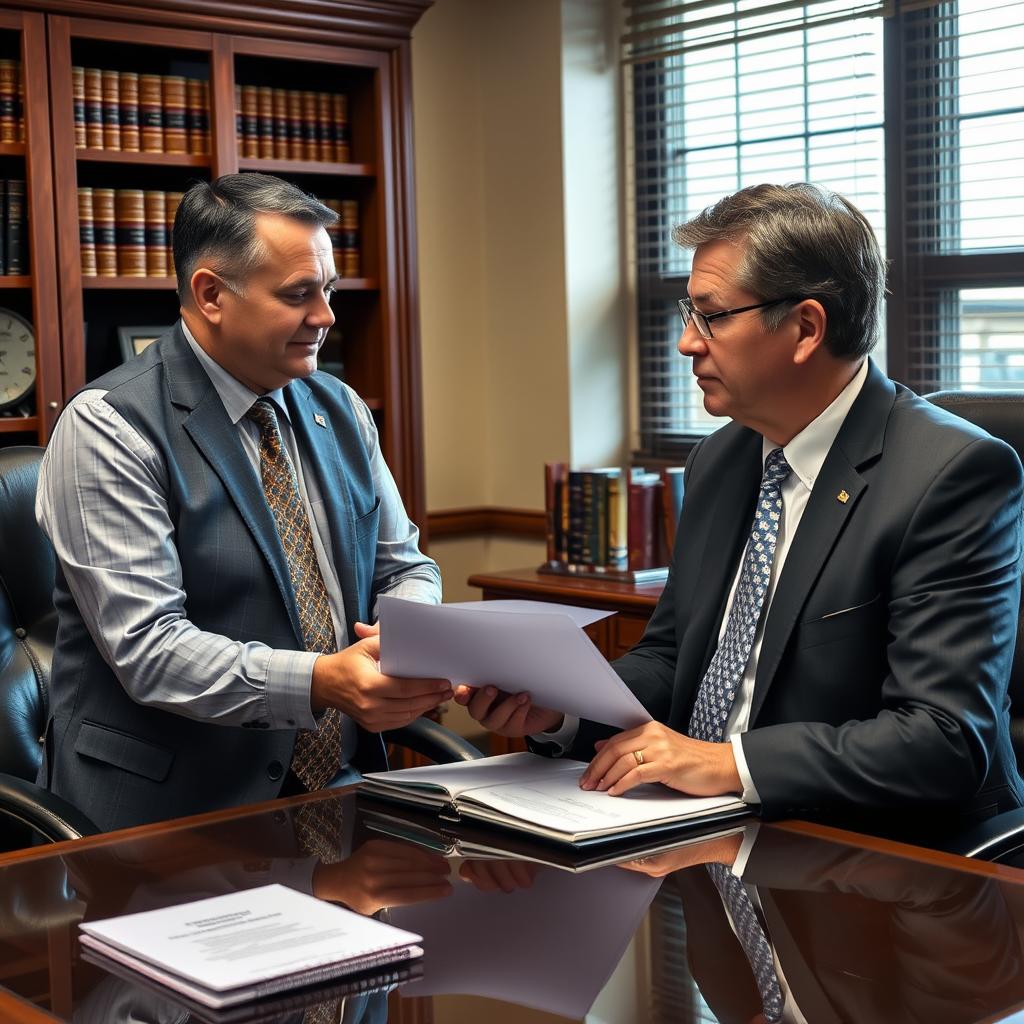
What Should You Do If You Are Charged With Bringing in and Harboring Aliens in Garrett County, MD?
You are driving on Interstate 68 near Deep Creek Lake when you see blue lights in your rearview mirror. Hours later, you learn you are under federal investigation for bringing in or harboring aliens. Instead of facing a Garrett County District Court judge, your case moves to the U.S. District Court for the District of Maryland — a different system with federal sentencing guidelines, mandatory minimums, and no parole. The U.S. Attorney’s Office for the District of Maryland prosecutes these cases under 8 U.S.C. § 1324. Reaching an experienced federal criminal defense attorney immediately is critical. Call Law Offices Of SRIS, P.C. at (888) 437-7747. Law Offices Of SRIS, P.C. – Advocacy Without Borders.
How the Firm Defends Bringing in and Harboring Aliens Cases
Federal prosecution under 8 U.S.C. § 1324 penalizes conduct that ranges from unlawfully bringing a noncitizen into the United States to harboring, concealing, or shielding them from detection after entry. The indictment may charge a single act or a coordinated scheme. Mr. Sris and the firm’s Of Counsel attorneys focus on understanding each client’s role, the strength of the government’s evidence, and the procedural steps that can affect the case.
Defense strategies often begin with examining the investigative tactics used by Homeland Security Investigations (HSI), the Federal Bureau of Investigation (FBI), or other federal agencies. If the government relied on a warrant, the warrant’s scope and the underlying probable cause can be challenged. In some cases, the evidence may show that the accused did not know the person’s status or had no intent to violate the law. Mr. Sris and the firm’s Of Counsel attorneys explore all avenues — from motion practice to suppression issues to negotiations with the U.S. Attorney’s Office — to build the strong $1 for each client.
What to Expect in a Federal Criminal Case in Garrett County
Federal criminal cases in Garrett County proceed not through the local District Court in Oakland but through the U.S. District Court for the District of Maryland, primarily in the Baltimore or Greenbelt divisions. The process typically moves through several stages:
- Investigation and charging: Federal agents build a case, often through surveillance, interviews, and document review. An arrest or a grand jury indictment may follow.
- Initial appearance and arraignment: A defendant appears before a federal magistrate judge, is informed of the charges, and enters a plea. Detention or release conditions are set under the Bail Reform Act.
- Discovery and pretrial motions: The government discloses its evidence. Motions to suppress evidence or dismiss the indictment are filed where appropriate.
- Plea negotiations or trial: Many federal cases resolve through plea agreements that may reduce exposure. If the case goes to trial, the firm’s Of Counsel attorneys prepare for jury selection, cross-examination, and presentation of a defense.
- Sentencing: If convicted, the court applies the U.S. Sentencing Guidelines, which calculate a range based on the offense level and the defendant’s criminal history. The guidelines are advisory, but mandatory minimum penalties can override them.
Because there is no parole in the federal system, the sentence imposed is the sentence served, minus good-time credit of up to 54 days per year. Supervised release follows incarceration.
Potential Penalties for Bringing in and Harboring Aliens
A conviction under 8 U.S.C. § 1324 carries significant consequences. For a first-time offense involving a single alien, a defendant can face up to 10 years in prison. If the offense was committed for commercial advantage or private financial gain, the maximum penalty increases. When serious bodily injury or the use of a dangerous weapon is involved, the sentence can be even higher. Fines can reach $250,000 per alien, and asset forfeiture is common in cases tied to financial transactions. In addition, a conviction may trigger immigration consequences for noncitizen defendants, including deportation or ineligibility for future immigration benefits.
Because federal sentencing guidelines base the recommended range on multiple factors — such as the number of aliens involved, whether a firearm was present, and acceptance of responsibility — the ultimate outcome depends heavily on the facts of the case and the quality of the defense. Mr. Sris and the firm’s Of Counsel attorneys work to present mitigating evidence and to negotiate for the lowest possible sentence within the applicable law.
About Mr. Sris and the Firm’s Of Counsel Attorneys
Mr. Sris, Owner and Founder of Law Offices Of SRIS, P.C., is a former prosecutor who founded the firm in 1997. He practices across five jurisdictions — Virginia, Maryland, the District of Columbia, New Jersey, and New York — and has testified before the Virginia House Courts of Justice Committee in support of 2019 HB 635 (chief patron Del. David Bulova). His understanding of federal criminal procedure and his experience in complex litigation inform the firm’s approach to every case.
The firm’s Of Counsel attorneys include individuals with substantial trial experience in both state and federal courts. Together, Mr. Sris and the firm’s Of Counsel attorneys bring extensive combined legal experience. Results may vary. For those facing federal charges in Garrett County, the firm offers representation that focuses on protecting rights at each stage of the federal process. Reach the firm at (888) 437-7747 to discuss your situation.
Frequently Asked Questions
What should I do if I am contacted by a federal agent about an immigration investigation?
You should politely decline to answer questions and immediately contact a federal criminal defense attorney. Federal agents are trained to obtain statements that can be used against you. Even innocent answers can become the basis for a false-statement charge under 18 U.S.C. § 1001. Before any interview, an attorney can determine whether speaking with agents is in your interest and, if so, set the ground rules for any interaction. Early legal involvement preserves your options and protects you from inadvertently waiving important constitutional rights.
Can a Garrett County resident face federal charges for helping a family member who might be undocumented?
Yes, certain actions intended to assist a noncitizen family member can expose a Garrett County resident to federal charges under 8 U.S.C. § 1324. The statute covers not only active smuggling or transportation but also harboring or concealing a person from detection. Providing housing, transportation, or employment with knowledge that the person is in the country unlawfully could be scrutinized. However, the government must prove intent and knowledge, and not every act of kindness constitutes a crime. The facts determine whether a viable defense exists, and consultation with an experienced attorney is essential.
How does the federal court handle a case where the defendant lives in Garrett County but the court is in Baltimore?
The U.S. District Court for the District of Maryland holds proceedings in either Baltimore or Greenbelt, and the government may agree to reasonable accommodations for defendants who must travel long distances. For initial appearances, arraignments, and some pretrial hearings, the court may allow remote appearances or schedule matters on dates that minimize travel burdens. The firm’s attorneys appear in both divisions and are familiar with the local practices of the federal judges and magistrate judges. Travel logistics are a regular part of planning a federal case and can be addressed early in the representation.
What are the immigration consequences of a conviction for bringing in or harboring aliens?
A conviction under 8 U.S.C. § 1324 can carry severe immigration consequences for a noncitizen defendant, including deportation, loss of permanent resident status, and permanent bars to reentry. The offense is likely to be classified as an aggravated felony or a crime involving moral turpitude under the Immigration and Nationality Act. Even a plea agreement in a criminal case can trigger removal proceedings. A defense strategy that accounts for the collateral immigration effects is critical when the defendant is not a U.S. Citizen. Mr. Sris and the firm’s Of Counsel attorneys incorporate immigration considerations into every step of the case.
Is it possible to get bail in a federal harboring case?
Yes, pretrial release is possible in many federal harboring cases, but the decision rests with the magistrate judge under the Bail Reform Act, which evaluates risk of flight and danger to the community. Federal courts often set conditions such as electronic monitoring, travel restrictions, or a co-signer bond. The government may argue for detention if it believes the defendant has ties outside the country or if the charge involves a commercial smuggling enterprise. The firm’s Of Counsel attorneys prepare a thorough bail package — including evidence of community ties in Garrett County, employment history, and family connections — to advocate for the least restrictive conditions.
How do mandatory minimums work in a bringing in and harboring aliens case?
Certain aggravating factors can trigger mandatory minimum prison terms under 8 U.S.C. § 1324, such as a prior smuggling conviction or an offense that results in death or serious bodily injury. For a basic first-time offense, there is no statutory mandatory minimum, but the sentencing guidelines will drive the range, and the government may seek an upward variance based on the number of aliens or other factors. Safety valve and substantial assistance under § 5K1.1 can reduce a sentence below a mandatory minimum, but these provisions have specific eligibility requirements. Understanding which incentives apply in a particular case is a key part of the defense strategy.
Can I talk to a lawyer today if I think I am under investigation for harboring?
Yes. Even if you have not been charged, you can consult an attorney to protect your rights and begin preparing a proactive defense. Early involvement allows counsel to reach out to the assigned prosecutor, preserve evidence, and sometimes present information that dissuades the government from seeking charges. Law Offices Of SRIS, P.C. is available by phone at (888) 437-7747, and consultations are by appointment. Taking action before an indictment can significantly influence the trajectory of the case.
How does a federal harboring case affect someone who is already on supervised release or probation?
A new federal charge can trigger a violation of supervised release or probation, experienced to additional hearings and potential revocation of the prior term. The government may seek to revoke release based on the new criminal conduct even before a conviction, using a preponderance-of-the-evidence standard. The firm’s Of Counsel attorneys address both the new charge and the violation allegation concurrently, working to minimize the overall exposure. Coordination between the two matters is essential to avoid unforeseen pitfalls.
Additional Federal Criminal Defense Resources in Maryland
For those seeking information about federal criminal representation in other Maryland counties, the following pages may be helpful:
- Federal Criminal Lawyer in Montgomery County, MD
- Federal Criminal Lawyer in Frederick County, MD
- Federal Criminal Lawyer in Anne Arundel County, MD
For a comprehensive statutory breakdown of federal criminal offenses, visit the firm’s main federal criminal defense page.
Reach a Federal Criminal Defense Lawyer in Garrett County
If you or someone you know faces a federal charge involving bringing in or harboring aliens, contact Law Offices Of SRIS, P.C. to request a consultation. Mr. Sris and the firm’s Of Counsel attorneys appear in the U.S. District Court for the District of Maryland and serve clients in Garrett County and throughout Maryland. Call (888) 437-7747 — phones are answered during business hours. Meetings are available by appointment at the firm’s Rockville location.
Rockville Location (by appointment)
199 E. Montgomery Avenue, Suite 100, Room 211
Rockville, MD 20850
Attorney advertising. Prior results do not guarantee a similar outcome. Results may vary.
Case results depend on a variety of factors unique to each case.