
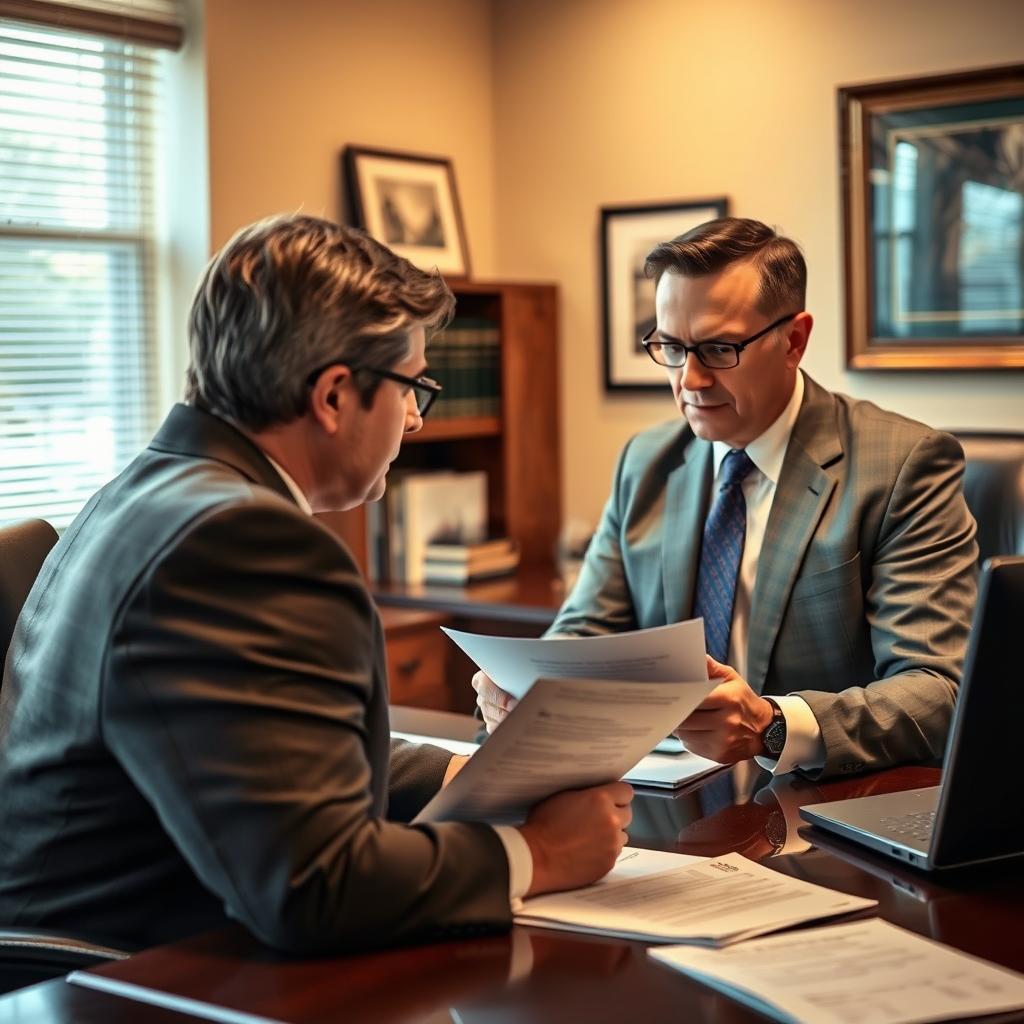
Attempt lawyer Charles County, MD
Federal law treats an attempt to commit a crime as seriously as the completed offense itself. Under 18 U.S.C. § 1113 and the specific statutes for each underlying offense, the government must prove that the defendant acted with the specific intent to commit the charged crime and took a substantial step toward its commission. If you are facing an attempt charge in Charles County, the matter will proceed in the U.S. District Court for the District of Maryland — either the Greenbelt or Baltimore division — where federal sentencing guidelines, mandatory minimums, and the absence of parole create stakes far higher than in state court. Mr. Sris and his Of Counsel bring over 120 years of combined legal experience to federal criminal defense, and have documented 4,739+ case results since 1997. Results may vary. Contact Law Offices Of SRIS, P.C. at (888) 437-7747 to request a consultation. Law Offices Of SRIS, P.C. – Advocacy Without Borders.
What Federal Attempt Charges Mean in Charles County
A federal attempt charge arises when law enforcement and prosecutors believe a person intended to commit a federal crime and moved beyond mere preparation. The line between “preparation” and a “substantial step” is a fact-intensive question that federal courts resolve case by case. In Maryland, cases are investigated by agencies including the FBI, DEA, IRS‑CI, HSI, ATF, and the U.S. Secret Service. Once an indictment is returned, the case is docketed in the U.S. District Court for the District of Maryland. The court has divisional offices in Baltimore and Greenbelt; Charles County matters are typically assigned to the Greenbelt division, which is the southern division serving the Washington, D.C. Suburbs and Southern Maryland. Charles County residents facing federal charges will attend court appearances in Greenbelt or, for certain proceedings, in Baltimore.
The maximum penalty for attempt tracks the penalty for the completed offense. For example, if the completed offense carries up to 20 years of imprisonment, a conviction for attempt can also result in a sentence of up to 20 years. Federal sentencing guidelines apply, and the advisory guideline range is calculated from the offense level of the underlying crime, adjusted for factors such as acceptance of responsibility, substantial assistance to the government, and the defendant’s criminal history. There is no parole in the federal system; a term of imprisonment is followed by a period of supervised release. In many drug, firearm, and child-exploitation cases, mandatory minimum statutes override downward departures, making the stakes particularly high. Because the federal conviction rate exceeds 90%, consulting with an attorney who practices regularly in the U.S. District Court for the District of Maryland is important as soon as an individual becomes aware of an investigation.
Under 18 U.S.C. § 1113 and the offense-specific statutes, federal attempt carries the same maximum penalty as the completed crime and requires proof of specific intent and a substantial step toward commission.
Source: 18 U.S.C. § 1113; see also Federal Criminal Code (18 U.S.C.). 18 U.S.C. § 1113 (Cornell LII)
Reviewed by Mr. Sris, admitted in VA/MD/DC/NJ/NY.
How Mr. Sris and His Of Counsel Handle Federal Attempt Cases
Federal attempt prosecutions demand an early, thorough approach that addresses both the factual allegations and the legal framework that defines “substantial step.” Mr. Sris and his Of Counsel begin by reviewing the government’s theory of the case, examining whether the evidence actually shows conduct beyond mere preparation. They evaluate whether law enforcement followed proper procedures during the investigation and whether any statements or physical evidence are subject to challenge under the Fourth Amendment, the Fifth Amendment, or the Federal Rules of Criminal Procedure.
Because federal cases often involve cooperating witnesses, electronic surveillance, and complex financial or forensic evidence, Mr. Sris and his Of Counsel work with qualified attorneys to test the government’s proof. They engage in pretrial motion practice where warranted, and they communicate with the U.S. Attorney’s Office from an early stage to explore whether alternatives to trial — such as a pretrial diversion program, a deferred prosecution agreement, or a plea to a lesser charge — are available. If a case proceeds to trial, Mr. Sris and his Of Counsel prepare a defense that holds the government to its burden of proving every element beyond a reasonable doubt. The timeline of a federal case varies by its complexity and the court’s schedule; Mr. Sris and his Of Counsel keep clients informed at each stage.
About Mr. Sris and His Of Counsel Team
Mr. Sris founded Law Offices Of SRIS, P.C. in 1997. A former prosecutor, he has built a five‑jurisdiction practice concentrated in criminal defense, including federal criminal matters. He is admitted to practice in Virginia, Maryland, the District of Columbia, New Jersey, and New York. Mr. Sris testified before the Virginia House Courts of Justice Committee in support of 2019 HB 635 (chief patron Del. David Bulova). He and his Of Counsel team handle cases in the U.S. District Court for the District of Maryland, drawing on over 120 years of combined legal experience. Results may vary.
The Of Counsel team includes attorneys with backgrounds in prosecution, law enforcement, and trial advocacy. They work collaboratively with Mr. Sris to develop defense strategies, challenge the government’s evidence, and represent clients at every stage of a federal criminal proceeding. The firm’s Rockville location — 199 E. Montgomery Avenue, Suite 100, Room 211, Rockville, MD 20850 — serves clients throughout Maryland, including Charles County. Contact the firm at (888) 437-7747 to request a consultation.
Frequently Asked Questions
What constitutes a federal attempt charge in Maryland?
Federal attempt charges require the government to prove that the defendant specifically intended to commit a federal crime and took a substantial step toward its completion. Under 18 U.S.C. § 1113 and offense‑specific statutes, the maximum penalty for attempt is the same as for the completed offense. A substantial step must be more than mere preparation, though federal courts interpret this requirement broadly. Cases are prosecuted in the U.S. District Court for the District of Maryland, where the U.S. Attorney’s Office presents evidence to a grand jury before an indictment is returned.
How do federal prosecutors prove an attempt offense?
Prosecutors must prove beyond a reasonable doubt that the defendant had the specific intent to commit the underlying crime and engaged in conduct that amounts to a substantial step. The substantial step must be an act that strongly corroborates the defendant’s criminal purpose. Federal prosecutors rely on witness testimony, surveillance, recorded communications, and documentary evidence to show both elements. Because the line between preparation and a substantial step is fact‑specific, an experienced defense attorney examines whether the government’s evidence actually meets the legal standard.
What are the potential penalties for federal attempt in Maryland?
A conviction for federal attempt carries the same maximum term of imprisonment, supervised release, fines, and restitution as the completed offense. Federal sentencing guidelines apply, and the advisory range is calculated using the offense level of the underlying crime. There is no parole in the federal system. Mandatory minimum sentences apply in many drug, firearm, and child‑exploitation cases, limiting the court’s ability to depart downward. Asset forfeiture may also be sought. The actual sentence depends on the specific facts and the defendant’s criminal history.
Do I need a lawyer if I am charged with federal attempt in Charles County?
Yes, it is important to consult with a federal criminal defense attorney as soon as possible. Federal cases move on a different track than state cases, with grand jury proceedings, detention hearings, and strict pretrial deadlines. Early legal guidance can affect whether charges are filed, what conditions of release are set, and what defense strategies are available. Mr. Sris and his Of Counsel accept federal criminal matters in the U.S. District Court for the District of Maryland and can review your situation. Contact the firm at (888) 437-7747 to request a consultation.
How does the federal court process work for an attempt charge in Maryland?
After an investigation, the case may begin with a complaint, an arrest, or an indictment. The defendant makes an initial appearance before a federal magistrate judge, who addresses pretrial detention and appointment of counsel. A grand jury then considers the evidence and may return an indictment. Following arraignment, the discovery process, pretrial motions, and plea negotiations take place. If no resolution is reached, the case proceeds to trial before a district judge. Sentencing occurs after conviction or a guilty plea and follows the federal sentencing guidelines.
How do federal sentencing guidelines apply to attempt offenses?
For attempt, the guideline range is based on the offense level for the substantive crime the defendant is charged with attempting. The base offense level is determined by the underlying statute, and adjustments are made for factors such as the defendant’s role in the offense, acceptance of responsibility, and any obstruction of justice. The court also considers the advisory sentencing range under the U.S. Sentencing Guidelines and the factors listed in 18 U.S.C. § 3553(a). While the guidelines are advisory, they exert a strong influence on the sentence ultimately imposed.
Related Practice Areas
Federal Criminal Lawyer Montgomery County |
Federal Criminal Lawyer Prince George’s County |
Federal Criminal Lawyer Howard County |
Federal Criminal Lawyer Anne Arundel County |
Federal Criminal Lawyer Frederick County
Authoritative Resources
U.S. District Court for the District of Maryland |
Maryland Judiciary |
18 U.S.C. § 1113 (Cornell LII)
Case results depend on a variety of factors unique to each case.