
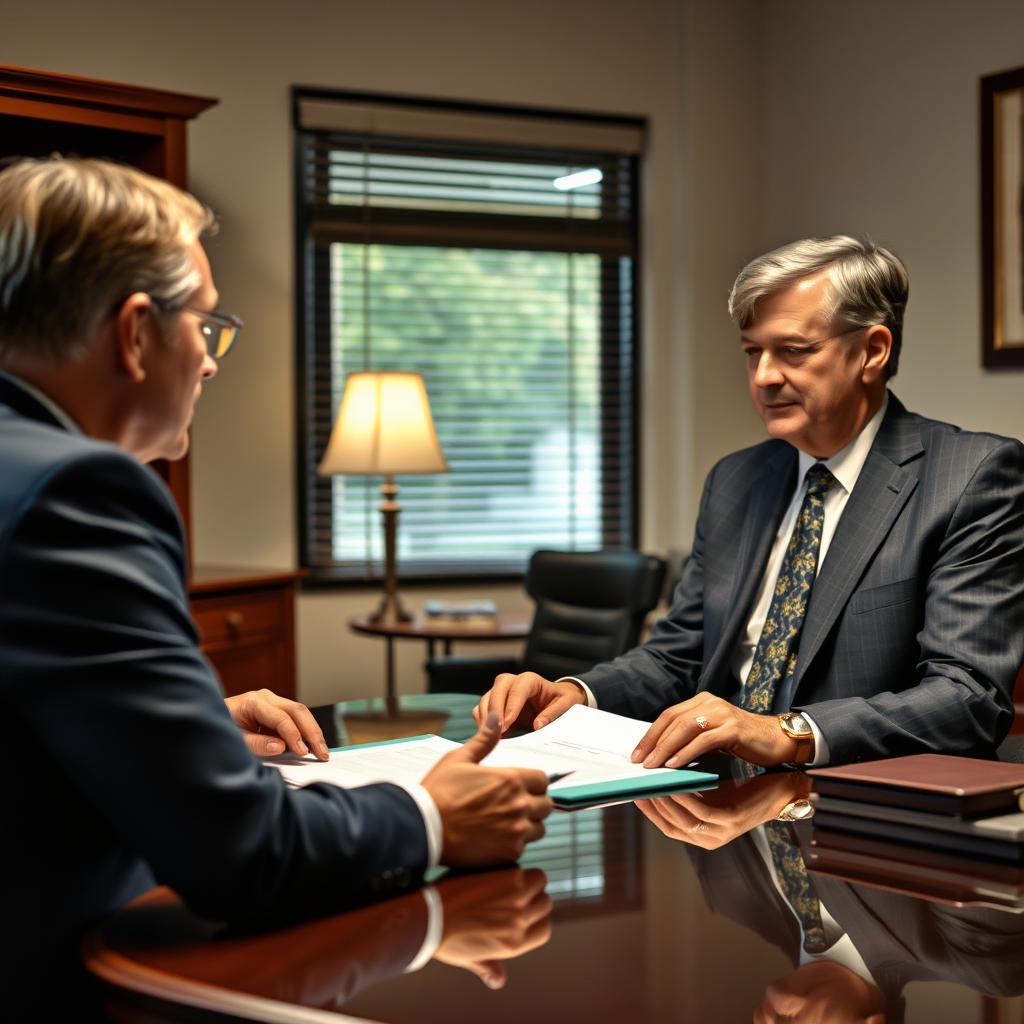
False Claims lawyer Talbot County, MD
You operate a business in Easton or provide services to a federal agency, and a routine contract turns into a federal investigation. Or perhaps you submitted a claim for Medicare reimbursement, and now agents from the Department of Health and Human Services Office of Inspector General are asking questions. Federal false claims allegations rarely arrive with a simple phone call; they often surface through a grand jury subpoena, a search warrant executed at your place of business, or a target letter from the U.S. Attorney’s Office for the District of Maryland. When the government contends that you knowingly presented a false or fraudulent claim for payment, the consequences can include felony charges under 18 U.S.C. § 287, with a maximum penalty of five years in prison, as well as civil liability under the False Claims Act. For residents and business owners in Talbot County—from Easton, St. Michaels, Oxford, Trappe, and Tilghman Island—the immediate need is experienced legal counsel who understands how federal false claims cases are investigated and prosecuted. Mr. Sris and his Of Counsel at Law Offices Of SRIS, P.C. handle federal false claims matters for clients on the Eastern Shore and throughout Maryland. To schedule a consultation, call (888) 437-7747. Law Offices Of SRIS, P.C. – Advocacy Without Borders.
What Federal False Claims Defense Means in Talbot County, Maryland
Federal false claims cases are not adjudicated in Talbot County’s District or Circuit Court. They are prosecuted in the U.S. District Court for the District of Maryland, whose courthouses sit in Baltimore and Greenbelt, both more than 60 miles from Easton. For someone living in Talbot County, facing charges in a distant federal courtroom adds a logistical burden. Mr. Sris and his Of Counsel represent clients before the Baltimore and Greenbelt divisions, handling everything from initial appearance and arraignment through pretrial motions, plea negotiations, and trial. Because federal prosecutors often rely on evidence gathered by agencies such as the FBI, the Defense Criminal Investigative Service, the IRS Criminal Investigation Division, or the Department of Health and Human Services Office of Inspector General, a defense strategy must account for the government’s substantial investigative resources and the procedural realities of federal criminal practice.
False claims prosecutions are complex. The government must prove, beyond a reasonable doubt, that the defendant knowingly submitted a materially false claim to a federal agency or a federally funded program. In a county like Talbot, where many businesses are small and closely held, a single disputed billing can trigger an investigation that threatens the owner’s livelihood. The firm’s approach is to engage early—often during the investigatory stage before charges are filed—to communicate with the U.S. Attorney’s Office, preserve evidence, and assess whether the matter can be resolved without indictment. Mr. Sris and his Of Counsel also routinely evaluate whether the government’s theory of the case rests on a misinterpretation of contract terms, billing rules, or regulatory guidance, and they prepare to challenge the charges at every procedural stage.
How Mr. Sris and His Of Counsel Handle Federal False Claims Cases
Federal false claims defense begins with a careful review of the government’s allegations. Mr. Sris and his Of Counsel scrutinize the indictment or the investigative file to determine precisely what statements or claims the government considers false, and whether the alleged falsehood was material to the government’s payment decision. In many cases, the defense centers on the absence of intent; the statute requires proof that the defendant acted “knowingly,” which means with actual knowledge, deliberate ignorance, or reckless disregard of the truth. A mistake, sloppy recordkeeping, or a good-faith disagreement about the interpretation of a regulation does not constitute a false claim. The firm’s attorneys examine billing records, correspondence, internal policies, and witness statements to build a factual narrative that undermines the government’s assertion of criminal intent.
If the case proceeds to litigation, Mr. Sris and his Of Counsel file targeted pretrial motions to suppress evidence obtained in violation of the Fourth Amendment, to dismiss charges based on defects in the indictment, or to compel disclosure of exculpatory material under Brady v. Maryland. Because federal sentencing guidelines can result in significant incarceration even for a first-time offender, the team also works closely with clients to present mitigating information at sentencing, should that become necessary. The firm’s multi-state practice—Mr. Sris is admitted in Virginia, Maryland, the District of Columbia, New Jersey, and New York—means that clients whose activities cross state lines receive seamless representation regardless of where related charges may be filed.
About Mr. Sris and His Of Counsel Team
Mr. Sris, Owner and Founder of Law Offices Of SRIS, P.C., has over two decades of experience representing clients in serious federal criminal cases. He is a former prosecutor, a background that gives him an inside understanding of how the government builds and presents its cases. His approach to federal false claims defense is thorough—he works to identify every weakness in the prosecution’s case and to protect his clients’ rights at every stage of the proceedings. Mr. Sris is admitted to practice in Virginia, Maryland, the District of Columbia, New Jersey, and New York.
Mr. Sris’s Of Counsel team includes attorneys with extensive criminal defense experience in Maryland’s state and federal courts. Together, they provide a level of attention that allows the firm to handle complex false claims matters while giving each client individualized representation. Law Offices Of SRIS, P.C. serves Talbot County from its Rockville location; consultations can be scheduled by calling (888) 437-7747.
Frequently Asked Questions
What is a federal false claim under 18 U.S.C. § 287?
A federal false claim under 18 U.S.C. § 287 is a criminal charge that arises when the government alleges a person knowingly made or presented a false, fictitious, or fraudulent claim to any U.S. Agency or department. The claim must have been material to the government’s decision to pay money or provide property. Criminal penalties include up to five years in prison, fines, and restitution. Civil liability under the False Claims Act, 31 U.S.C. § 3729, can also result in treble damages and per-claim penalties.
What should I do if I am facing federal false claims charges in Talbot County?
If you learn that you are the subject of a federal false claims investigation or are charged in the U.S. District Court for the District of Maryland, your first step should be to contact an experienced federal criminal attorney and refrain from speaking with investigators or anyone else about the matter until you have legal representation. Preserve all relevant documents, financial records, and correspondence, but do not destroy or alter anything. Even seemingly innocent statements to agents can be used to build a case against you. Early involvement of defense counsel can often influence whether charges are filed and what those charges look like.
How does a Maryland defense attorney challenge federal false claims allegations?
A defense attorney challenges federal false claims allegations by attacking the government’s proof of knowledge and materiality, by filing motions to suppress unlawfully obtained evidence, and by negotiating with prosecutors to resolve the case on favorable terms. Because the statute requires proof that the defendant acted knowingly, many defenses focus on showing that the disputed claim was the result of a mistake, ambiguous regulation, or good-faith interpretation of contract terms. Counsel may also argue that the alleged falsehood did not influence the government’s payment decision, making it immaterial under the statute.
Can a federal false claims case be resolved without a trial?
Many federal false claims cases are resolved through pretrial motions, negotiations with the U.S. Attorney’s Office, or a plea agreement, rather than proceeding all the way to trial. The government may agree to dismiss charges or reduce them to a lesser offense if the defense can demonstrate weaknesses in the case. In appropriate circumstances, Mr. Sris and his Of Counsel work to achieve a resolution that minimizes the client’s exposure to incarceration and financial penalties. Each case is unique, and outcomes depend on the specific facts and evidence.
How long does a federal false claims investigation and prosecution take?
A federal false claims investigation can last months or even more than a year before charges are filed; once indicted, the case moves forward under the Speedy Trial Act, though the timeline varies depending on the complexity of the allegations and the number of co-defendants. Federal fraud cases often involve voluminous discovery and extensive motion practice, which can extend the pretrial phase. Clients should anticipate a process that requires patience, consistent communication with counsel, and careful preparation for each court appearance.
Do I need a lawyer to handle a federal false claims case if I live in Talbot County?
Yes—federal false claims cases are serious felony prosecutions with the potential for prison, fines, and lasting damage to your professional reputation; retaining an attorney with federal criminal experience is essential. The federal court system has its own rules of evidence and procedure, and federal sentencing guidelines can impose severe penalties. An attorney who practices regularly in the U.S. District Court for the District of Maryland can evaluate the strength of the government’s case, protect your rights, and guide you through each step of the process. To discuss your situation, call Law Offices Of SRIS, P.C. at (888) 437-7747.
Primary authority and additional information:
- 18 U.S.C. § 287 – False, fictitious or fraudulent claims
- 31 U.S.C. § 3729 – False Claims Act civil liability
- U.S. District Court for the District of Maryland
Attorney advertising. Prior results do not guarantee a similar outcome. Results may vary.
Case results depend on a variety of factors unique to each case.