
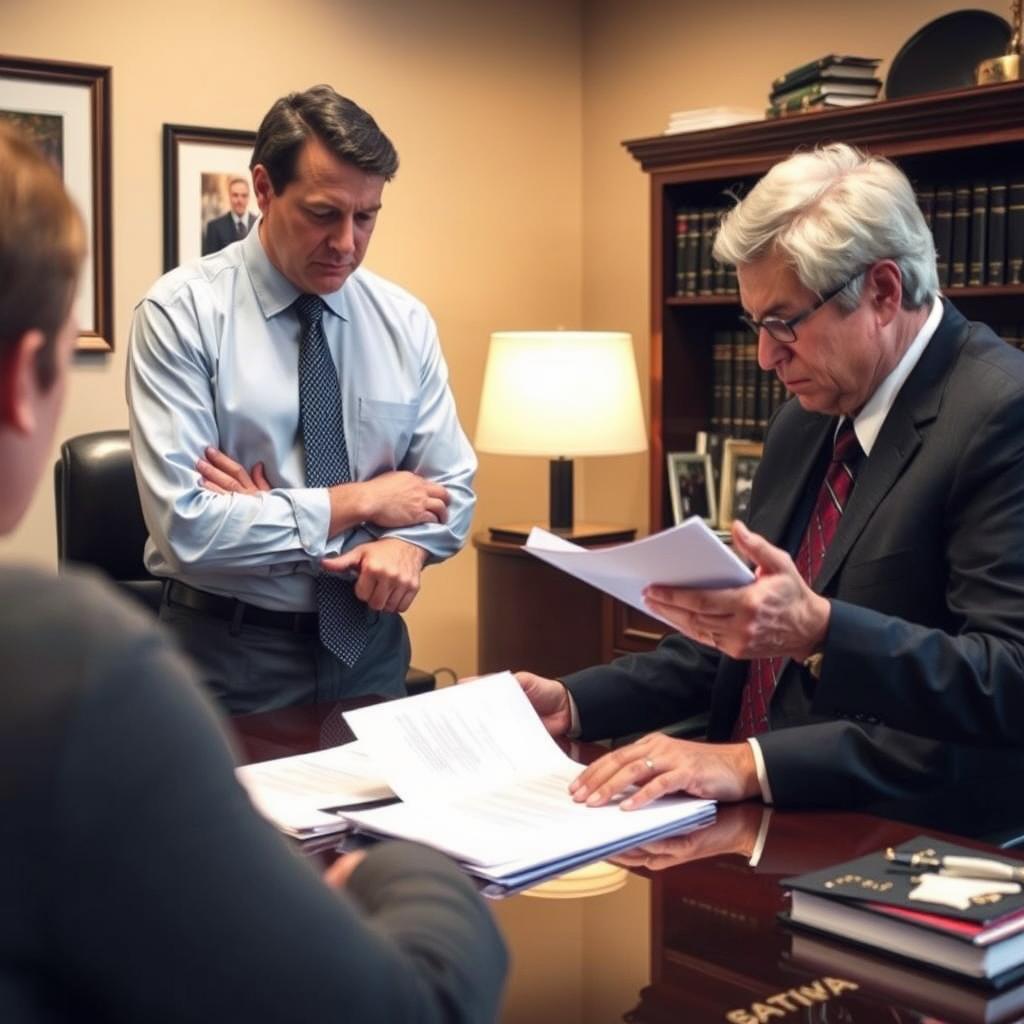
Theft of Government Property lawyer Cecil County, MD
Federal theft of government property charges in Cecil County, Maryland, are prosecuted under 18 U.S.C. § 641 and related statutes in the U.S. District Court for the District of Maryland. These matters involve allegations of stealing, embezzling, or knowingly converting money, property, or records belonging to a federal agency or program. Because the federal government has virtually unlimited investigatory resources—often deploying agents from the FBI, IRS Criminal Investigation, Department of Defense, or the U.S. Postal Inspection Service—the government typically builds its case methodically before an arrest or indictment. If you are being investigated or have been charged with theft of government property in Cecil County, the federal prosecution is led by the U.S. Attorney’s Office for the District of Maryland, with main divisions in Baltimore and Greenbelt. The stakes are high: federal sentencing guidelines apply, there is no parole in the federal system, and a conviction can carry significant imprisonment, fines, and restitution. Mr. Sris and his Of Counsel team at Law Offices Of SRIS, P.C. Appear in the U.S. District Court for the District of Maryland to defend clients from Cecil County and across the state. To request a consultation, call (888) 437-7747. Law Offices Of SRIS, P.C. – Advocacy Without Borders.
What Theft of Government Property Means in Cecil County, MD
Cecil County sits at the northern tip of Maryland, bordered by Pennsylvania and Delaware. While it is part of the state court system’s Third District—with the District Court of Maryland for Cecil County and the Cecil County Circuit Court handling local matters—federal theft of government property charges are not litigated in those courthouses. Instead, they are adjudicated in the U.S. District Court for the District of Maryland, whose Baltimore and Greenbelt divisions hear all federal criminal cases arising from Cecil County.
The federal theft statute, 18 U.S.C. § 641, broadly covers stealing or misappropriating any “record, voucher, money, or thing of value of the United States or of any department or agency thereof.” A charge can stem from a wide range of conduct: taking cash from a federal grant program, diverting Social Security benefits, converting surplus government equipment for personal use, or submitting false invoices to a federal contractor. In Cecil County, federal investigations often intersect with facilities such as the Bainbridge Naval Training Center or government operations along the I‑95 corridor. Because federal agents may spend months or years constructing a case through grand jury subpoenas, witness interviews, and document analysis, individuals frequently learn they are under investigation only after an indictment is returned. Understanding the difference between a state criminal proceeding and a federal prosecution is critical, and having counsel familiar with the U.S. District Court for the District of Maryland is essential.
How Mr. Sris and His Of Counsel Handle Theft of Government Property Cases
Mr. Sris and his Of Counsel approach federal theft of government property cases with a focus on protecting the client’s rights from the earliest possible stage—ideally before charges are filed. Federal investigations often involve grand jury subpoenas, search warrants, and requests for interviews. The first priority is to evaluate whether the government has a viable case and, where appropriate, to engage in pre-indictment negotiations aimed at reducing the likelihood of formal charges or shaping the charges that are ultimately brought.
If an indictment is returned, the firm’s representation includes thorough discovery review, including analysis of forensic accounting reports, electronic records, and witness statements. Motion practice may challenge the legality of searches, the sufficiency of the indictment, or the admissibility of evidence. When the case involves alleged loss amounts, the firm scrutinizes the government’s calculations, as these figures directly affect the advisory sentencing range under the U.S. Sentencing Guidelines. At every stage, the goal is to help the client make informed decisions—whether that means proceeding to trial, negotiating a plea that accurately reflects the facts, or presenting mitigation at sentencing. Mr. Sris and his Of Counsel draw on their experience in federal criminal defense to identify weaknesses in the government’s proof and to present the client’s side of the story effectively.
About Mr. Sris and His Of Counsel Team
Mr. Sris, Owner and Founder of Law Offices Of SRIS, P.C., has practiced since 1997 and is admitted in Virginia, Maryland, the District of Columbia, New Jersey, and New York. A former prosecutor, he brings firsthand knowledge of how the government builds and presents criminal cases—insight that informs the defense strategy in every federal theft matter. Mr. Sris testified before the Virginia House Courts of Justice Committee in support of 2019 HB 635 (chief patron Del. David Bulova). The firm’s Of Counsel team, which includes a former Maryland Assistant State’s Attorney with extensive trial experience, works collaboratively to develop case theories, challenge evidence, and prepare for hearings at the U.S. District Court for the District of Maryland.
Frequently Asked Questions
What is the difference between state and federal theft charges?
Federal theft of government property charges are prosecuted by the U.S. Attorney’s Office and carry harsher penalties than most state-level theft offenses, with no possibility of parole. State theft crimes in Maryland are handled in District or Circuit Court, often with lower maximum sentences and the possibility of early release or probation. In federal court, an experienced defense attorney familiar with the U.S. Sentencing Guidelines and local practices in the U.S. District Court for the District of Maryland is essential. The two systems operate under different procedural rules, and a conviction in federal court can have far‑reaching collateral consequences. For guidance on your specific situation, reach Law Offices Of SRIS, P.C. at (888) 437-7747.
How do federal sentencing guidelines work in Cecil County, Maryland?
Federal sentencing at U.S. District Court for the District of Maryland follows the U.S. Sentencing Guidelines — a points-based calculation using offense level and criminal history category. While advisory since Booker (2005), the guidelines strongly influence the judge’s decision. Mandatory minimum statutes override downward departures in many drug, firearm, and fraud offenses. Acceptance of responsibility, substantial assistance under § 5K1.1, and safety‑valve eligibility (where applicable) can materially reduce exposure. The sentencing judge in Baltimore or Greenbelt will consider the nature of the theft, the amount of loss, and the defendant’s role. To discuss the details of your matter, contact Law Offices Of SRIS, P.C. at (888) 437-7747.
What should I do if I am under investigation for theft of government property in Cecil County?
If you are under investigation for federal theft of government property, do not speak with federal agents without an attorney present. Preserve all documents, emails, and financial records, but do not destroy anything. Contact a federal criminal defense attorney immediately—early intervention, before charges are filed, can shape the course of the investigation and may influence the prosecutor’s charging decision. An attorney can communicate with agents on your behalf and assess whether charges might be avoided altogether. For a consultation, reach Mr. Sris and his Of Counsel at (888) 437-7747.
How can a lawyer defend against a federal theft of government property charge?
Defense strategies in federal theft of government property cases focus on challenging the government’s evidence of intent, the valuation of the loss, and the chain of custody of property. The prosecution must prove that the defendant knowingly took or converted government property with the intent to deprive the government of its use. Common defense approaches include establishing that the property was not government-owned, that the defendant lacked the requisite intent, that the loss amount is overstated, or that the defendant’s conduct was authorized. In some instances, duress or entrapment may be raised. Every case is fact-specific, and a thorough review of discovery often reveals weaknesses in the government’s proof. For guidance on your specific situation, reach Law Offices Of SRIS, P.C. at (888) 437-7747.
Do I need a federal criminal defense lawyer for a theft of government property case in Cecil County, MD?
Yes, immediately. Federal cases are prosecuted by the U.S. Attorney’s Office with federal investigative resources and carry sentencing guidelines that often include mandatory minimums. State‑court experience does not translate to federal practice, which has distinct rules, pretrial detention standards, and sentencing procedures. Early engagement before indictment materially affects outcomes. For a consultation, reach Mr. Sris and his Of Counsel at (888) 437-7747.
What is a grand jury indictment and how does it affect my case?
A grand jury indictment is the formal charging document in federal court, issued after a prosecutor presents evidence to a group of citizens. The grand jury does not determine guilt; it only decides whether there is probable cause to believe a crime was committed. The proceedings are secret, and the defendant usually has no right to be present. Once indicted, the case moves forward to arraignment, pretrial motions, and trial or plea. Having counsel before an indictment is returned can make a critical difference in shaping the charges or avoiding indictment altogether. For guidance on your specific situation, reach Law Offices Of SRIS, P.C. at (888) 437-7747.
Related Locations
Federal Criminal Lawyer Montgomery County, MD ·
Federal Criminal Lawyer Prince George’s County, MD ·
Federal Criminal Lawyer Howard County, MD ·
Federal Criminal Lawyer Anne Arundel County, MD ·
Federal Criminal Lawyer Frederick County, MD
Primary sources:
U.S. District Court for the District of Maryland ·
U.S. Attorney’s Office, District of Maryland ·
U.S. Sentencing Guidelines
Attorney advertising. Prior results do not guarantee a similar outcome. Case results depend on a variety of factors unique to each case. Results may vary.