
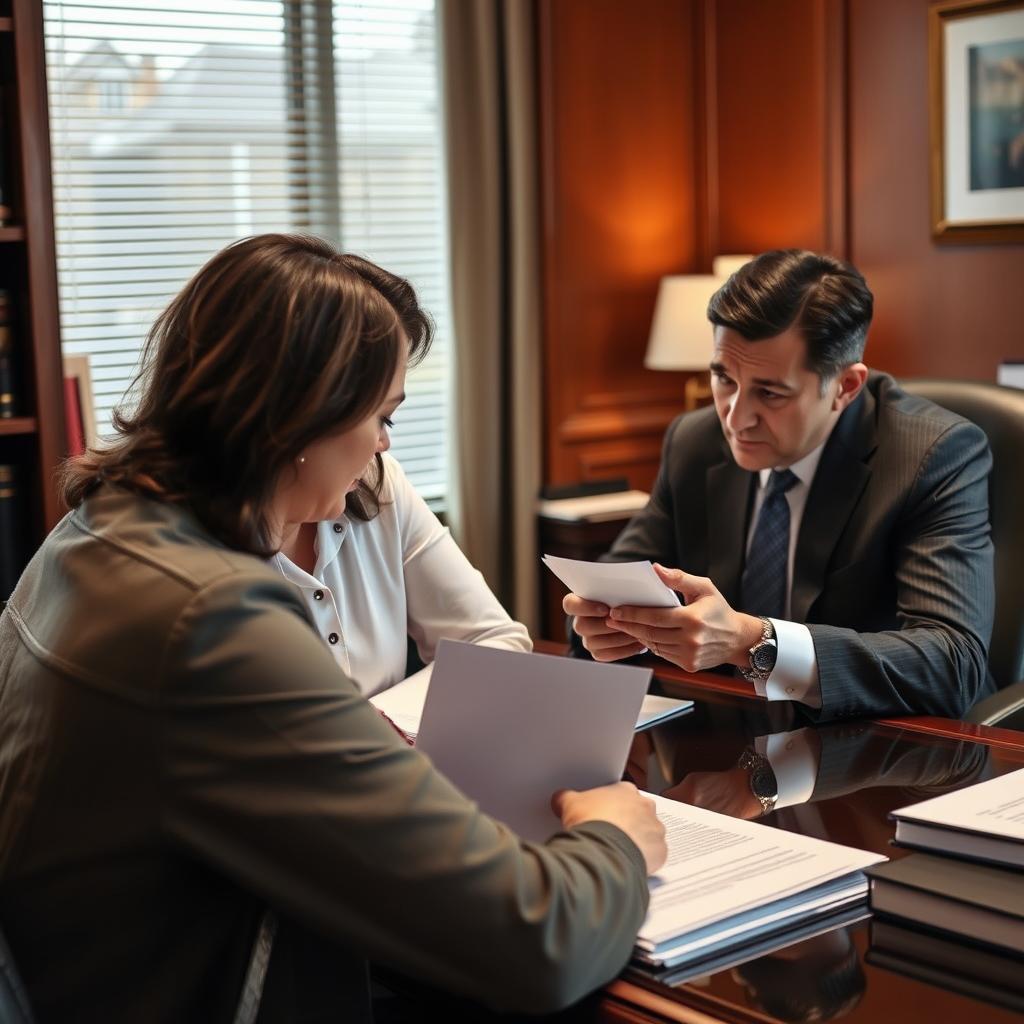
Money Laundering lawyer Allegany County, NY
Federal money laundering charges place your liberty and financial future at immediate risk. When a federal investigation targets financial transactions in Allegany County, New York, you need counsel who understands both the complexities of 18 U.S.C. § 1956 and the federal court landscape where these cases are prosecuted. Mr. Sris and his Of Counsel team at Law Offices Of SRIS, P.C. represent individuals facing money laundering allegations in the Western District of New York and throughout the state. There is no parole in the federal system, and conviction rates remain high. Early engagement with an experienced federal defense attorney can meaningfully affect the direction of a case. For a consultation, reach Law Offices Of SRIS, P.C. at (888) 437-7747. Law Offices Of SRIS, P.C. – Advocacy Without Borders.
What Money Laundering Means in Allegany County, New York
Money laundering is a federal felony that involves conducting, or attempting to conduct, a financial transaction with proceeds the person knows came from some form of unlawful activity. The alleged transaction can be a deposit, a wire transfer, a purchase of property, or any movement of funds designed to conceal the source, ownership, or control of the proceeds. Under 18 U.S.C. § 1956, the government must prove that the defendant knowingly engaged in the transaction with the intent to promote the carrying on of specified unlawful activity, to evade taxes, to conceal or disguise the nature or location of the proceeds, or to avoid a transaction-reporting requirement.
Because money laundering is a federal offense, cases arising anywhere in Allegany County – Cuba, Wellsville, Alfred, or Andover – are prosecuted not in state courts but in the U.S. District Court for the Western District of New York. The U.S. Attorney’s Office for the Western District draws on investigative resources from the FBI, IRS‑Criminal Investigation, DEA, Homeland Security Investigations, and other federal agencies. Allegany County’s location along the I‑86 corridor and its proximity to the Pennsylvania border can introduce multi‑state dimensions that expand the scope of a federal inquiry. A local federal defense attorney cannot prevent a federal grand jury from returning an indictment, but early representation can influence charging decisions, pretrial release conditions, and the strategic direction of the case before an indictment is unsealed.
How Mr. Sris and His Of Counsel Handle Money Laundering Cases
Money laundering investigations often begin months or years before any arrest. Receiving a target letter, a subpoena for financial records, or a visit from federal agents is a signal that the government has already assembled significant documentation. Mr. Sris and his Of Counsel team approach every money laundering matter by first understanding the full scope of the alleged unlawful activity and the financial trail the government has constructed. They work with forensic accountants and other financial professionals when needed to examine bank records, transaction logs, and business documentation to assess whether the government can prove the knowledge and intent elements 18 U.S.C. § 1956 requires.
Because money laundering charges often accompany underlying criminal allegations – drug trafficking, fraud, public corruption, or racketeering – the defense strategy may focus on challenging the predicate offense as well as the financial transactions themselves. Mr. Sris and his Of Counsel evaluate every procedural avenue, including whether the government obtained financial records in compliance with the Fourth Amendment, whether any statements the client made to investigators are admissible, and whether the prosecution’s theory of the case holds up under the federal sentencing guidelines. In matters where trial presents unacceptable risk, they negotiate with the U.S. Attorney’s Office to pursue charge reductions, pre‑indictment resolutions, or cooperation agreements that can reduce exposure under the guidelines.
About Mr. Sris and His Of Counsel Team
Mr. Sris, Owner and Founder of Law Offices Of SRIS, P.C., has practiced law since 1997. He is a former prosecutor who brings firsthand knowledge of how the government builds its cases to the defense of individuals accused of federal crimes. His legal practice spans five states: he is admitted in Virginia, Maryland, the District of Columbia, New Jersey, and New York. He testified before the Virginia House Courts of Justice Committee in support of 2019 HB 635 (chief patron Del. David Bulova). Mr. Sris and his Of Counsel bring over 120 years of combined legal experience with 4,739+ documented firm-wide results. Results may vary.
Frequently Asked Questions
What is money laundering under federal law?
Federal money laundering is the knowing conduct of a financial transaction using the proceeds of certain specified unlawful activities, with the intent to promote further criminal activity, conceal the source of funds, evade taxes, or avoid reporting requirements. It arises from 18 U.S.C. § 1956 and related sections. The government must prove the proceeds came from a “specified unlawful activity” — a list that includes numerous federal felonies. A charge can be brought even if the underlying crime was never prosecuted. Penalties may reach 20 years per count, fines, and forfeiture of assets involved. The federal sentencing guidelines heavily influence the eventual sentence. There is no parole in the federal system.
If I receive a target letter or subpoena in Allegany County, what should I do?
Contact a federal criminal defense attorney immediately and do not speak with law enforcement or anyone else about the matter. A target letter means a federal prosecutor believes there is substantial evidence linking you to a crime and you are likely to be indicted. You should preserve all relevant financial records and avoid destroying anything, as document destruction can itself be a separate offense. Early legal engagement can position you to negotiate with the government before an indictment, possibly avoiding charges or reducing their scope. Mr. Sris and his Of Counsel can reach the U.S. Attorney’s Office to discuss the status and scope of the investigation.
How do federal sentencing guidelines affect a money laundering sentence in the Western District of New York?
The U.S. Sentencing Guidelines calculate an offense level based on the amount of money involved and other specific offense characteristics, then combine it with the defendant’s criminal history category to produce an advisory sentencing range. While the guidelines are advisory after United States v. Booker, the sentencing judge must correctly calculate them and consider them. Money laundering enhancements turn on the value of the laundered funds, the defendant’s role in the offense, and whether the money was traced to certain serious underlying crimes. At the U.S. District Court for the Western District of New York, the probation officer prepares a presentence investigation report that the court relies on heavily. An experienced federal defender can challenge that report’s calculations and present mitigating evidence to the judge.
Can money laundering charges be filed without an underlying crime being prosecuted?
Yes, federal prosecutors can charge money laundering based solely on proceeds they can prove came from a specified unlawful activity, even if no one has been convicted of the underlying offense. The statute requires only that the funds be derived from some form of unlawful activity, not that the predicate crime be charged or adjudicated. This makes money laundering a powerful tool for prosecutors. The government must present evidence that the property involved in the transaction represented the proceeds of the unlawful activity. Challenging that evidentiary link is often central to the defense. An attorney can examine whether the government has sufficient proof that the funds are, in fact, proceeds of a crime.
What role do asset forfeiture and restitution play in a money laundering case?
Federal prosecutors routinely seek criminal forfeiture of any property involved in or traceable to the money laundering offense, as well as a money judgment for the amount of the laundered proceeds. This can include bank accounts, real estate, vehicles, and business interests. Forfeiture is part of the criminal sentence and can be imposed even before trial through pretrial restraining orders. Restitution may also be ordered if a victim suffered a pecuniary loss as a result of the underlying criminal activity. Mr. Sris and his Of Counsel work to protect assets, challenge forfeiture allegations that are not properly supported, and negotiate to limit the forfeiture scope during plea discussions.
Do I need a lawyer if I am under investigation but haven’t been charged?
Yes, retaining counsel during the investigation phase is often the single most consequential decision you can make. Federal investigations can last months, and agents may gather financial documents, interview witnesses, and use grand jury subpoenas before an arrest. A lawyer can engage with the prosecutor to present exculpatory information, negotiate for a declination of prosecution, or influence how and whether charges are filed. If you wait until after an indictment, many procedural options are already foreclosed. Early involvement frequently leads to better outcomes. Mr. Sris and his Of Counsel are available to discuss your situation at (888) 437-7747.
How does the federal money laundering statute differ from New York state money laundering laws?
New York’s money laundering statutes, set out in Article 470 of the Penal Law, criminalize similar conduct but apply only to transactions involving proceeds of criminal conduct under New York law and are prosecuted in state courts. Federal money laundering under 18 U.S.C. § 1956 is prosecuted in federal court, carries its own sentencing guidelines, and applies to proceeds from a broader list of specified unlawful activities that include federal and foreign crimes. Federal charges often carry longer potential sentences, no parole, and the involvement of federal investigative agencies. If you face allegations that cross state lines or involve federal crimes, federal prosecution is likely. A defense attorney who understands both systems can better advise you on exposure and strategy.
What should I expect during a federal grand jury proceeding in Allegany County?
The federal grand jury meets in secret, and the target of an investigation generally has no right to be present, to cross‑examine witnesses, or to present evidence unless invited by the prosecutor. The grand jury determines whether probable cause exists to return an indictment. While the proceeding occurs in the Western District of New York, it is not open to the public, and the rules of evidence are relaxed. If you receive a grand jury subpoena, you should consult an attorney right away because testimony you give can be used against you later. An attorney can advise you on whether to invoke your Fifth Amendment right and can negotiate the terms of your appearance with the prosecutor.
How can a lawyer challenge the evidence in a money laundering case?
A defense attorney may challenge the government’s evidence by filing motions to suppress financial records obtained without proper legal process, challenging the admissibility of statements made to agents, and disputing the chain of custody of documents. The defense also tests whether the government can prove beyond a reasonable doubt that the funds were proceeds of a specified unlawful activity and that the defendant knew the nature of the funds. Forensic accounting attorneys may be retained to trace the flow of money and identify legitimate sources. In many cases, showing that transactions were ordinary business activities or that the defendant lacked the requisite intent can undermine the prosecution’s theory.
Where can I find a money laundering defense lawyer near Allegany County, New York?
You can reach Law Offices Of SRIS, P.C. at (888) 437-7747 to speak with an attorney about money laundering allegations in Allegany County and the surrounding Western New York region. The firm’s New York presence serves clients from Cuba, Wellsville, Alfred, and throughout Allegany County. Our location is in Buffalo, New York, and we represent individuals in all federal courts in the state. For a private consultation, contact Mr. Sris and his Of Counsel at (888) 437-7747.
Federal money laundering under 18 U.S.C. § 1956 carries a maximum penalty of 20 years imprisonment per count.
Source: 18 U.S.C. § 1956. Cornell LII
Reviewed by Mr. Sris, admitted in VA/MD/DC/NJ/NY.
Attorney advertising. Prior results do not guarantee a similar outcome. Case results depend on a variety of factors unique to each case. Results may vary.
Attorney advertising. Prior results do not guarantee a similar outcome.