
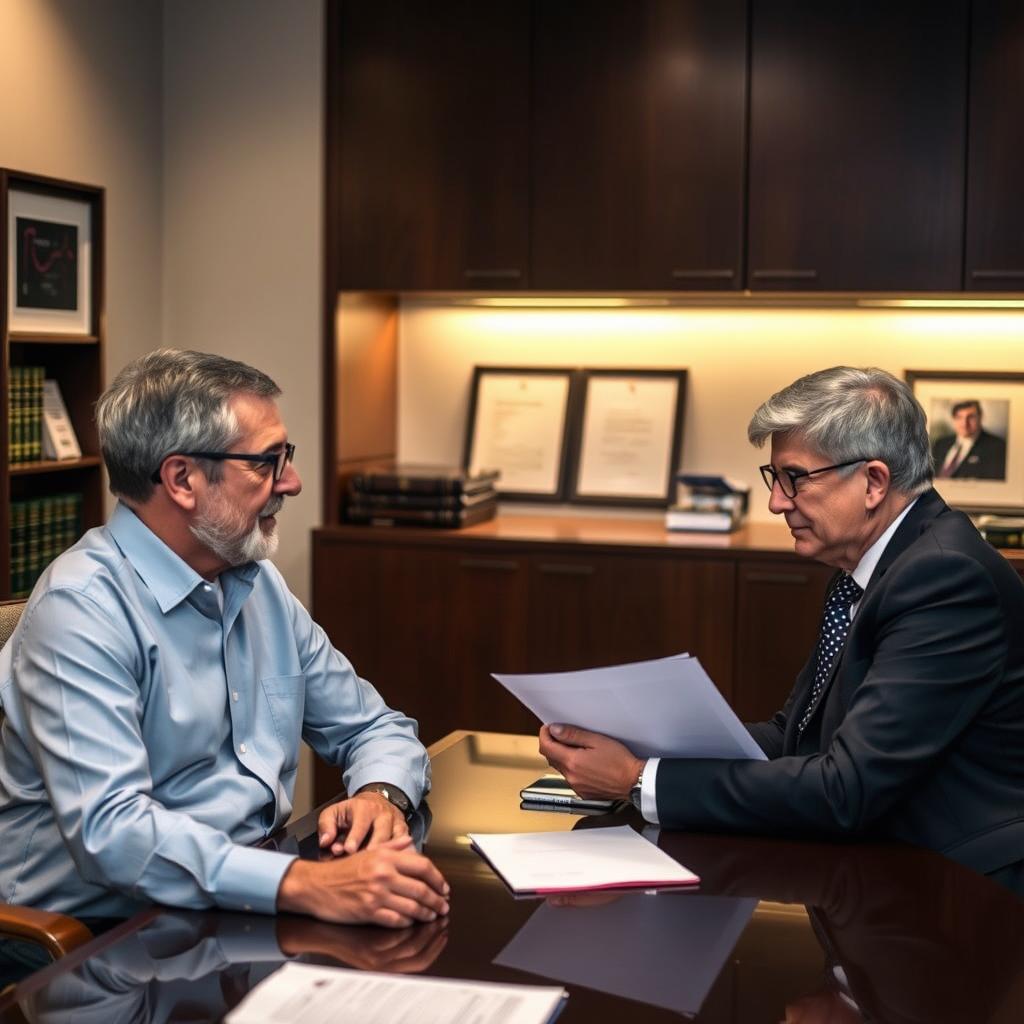
Aiding and Abetting lawyer Prince George’s County, MD
Federal criminal charges for aiding and abetting carry substantial consequences, including the possibility of imprisonment, fines, supervised release, and asset forfeiture. When you face a federal charge in Prince George’s County, Maryland, the case is prosecuted by the U.S. Attorney’s Office for the District of Maryland and heard in the U.S. District Court. Law Offices Of SRIS, P.C. represents clients in federal court throughout Maryland. Mr. Sris, the firm’s Owner and Founder, leads a team of experienced Of Counsel attorneys who concentrate their practice on federal criminal defense, including complex charges under 18 U.S.C. § 2 — the federal aiding and abetting statute. The firm’s Rockville location serves clients from Upper Marlboro, Bowie, College Park, Laurel, Hyattsville, Greenbelt, and all communities in Prince George’s County. For a confidential consultation about a federal aiding and abetting matter, call (888) 437-7747. Law Offices Of SRIS, P.C. – Advocacy Without Borders.
What Federal Aiding and Abetting Means in Prince George’s County
Aiding and abetting under federal law is not a separate crime with its own punishment. Instead, 18 U.S.C. § 2 treats a person who assists in the commission of a federal offense as equally liable as the principal who committed the underlying crime. This means that even if you did not personally carry out every element of the charged offense — whether a drug trafficking conspiracy, mail fraud scheme, or firearms violation — you can be convicted and sentenced under the same statute and face the same potential penalties. The prosecution must prove that you knowingly participated in the offense and intended to facilitate its success. In Prince George’s County, federal cases are investigated by agencies such as the FBI, DEA, and ATF before being presented to a grand jury. Indictments are returned and prosecuted in the U.S. District Court for the District of Maryland, primarily at the Greenbelt Division courthouse at 6500 Cherrywood Lane.
Under 18 U.S.C. § 2, a person who aids, abets, counsels, commands, induces or procures the commission of a federal offense is punishable as a principal.
Source: 18 U.S.C. § 2. Read the statute at Cornell LII
Reviewed by Mr. Sris, admitted in Virginia, Maryland, the District of Columbia, New Jersey, and New York.
Federal aiding and abetting charges often arise in connection with conspiracies, fraud, controlled-substance offenses, and financial crimes. Because the federal system operates without parole and applies mandatory minimums for many underlying offenses, the stakes are high. The U.S. Attorney’s Office for the District of Maryland has a dedicated team of prosecutors who handle these matters, and the Federal Sentencing Guidelines structure the punishment. A person facing an aiding and abetting charge needs counsel who knows how federal pretrial release, discovery, motion practice, and guideline calculations work in this district. Prince George’s County is part of the Fifth Judicial Circuit and lies within the Washington, D.C. Metropolitan area, which means federal cases here can involve interstate conduct and evidence gathered across multiple states, adding complexity to the defense.
How Mr. Sris and His Of Counsel Handle Aiding and Abetting Cases
Mr. Sris and his Of Counsel team begin every federal aiding and abetting matter by thoroughly examining the government’s evidence and the indictment itself. Because the aiding and abetting charge is derivative of an underlying offense, the first step is to scrutinize whether the government can prove the elements of that predicate crime. The firm’s attorneys evaluate whether the prosecution has sufficient evidence of knowledge and intent, and they investigate whether any search or seizure violated the Fourth Amendment. In many federal cases, early intervention can shape pretrial detention decisions, and Mr. Sris and his Of Counsel work to present a compelling case for release to the magistrate judge.
Throughout the pretrial phase, the firm engages in discovery review, pretrial motions, and witness interviews. Federal discovery can be extensive, including wiretap recordings, financial records, digital evidence, and cooperating-witness statements. Mr. Sris and his Of Counsel challenge the admissibility of evidence, file motions to suppress where appropriate, and negotiate with the U.S. Attorney’s Office. If a plea resolution is in the client’s best interest, the firm works to secure a favorable plea under the Federal Sentencing Guidelines. When trial is the right course, the firm prepares thoroughly, using its deep courtroom experience to cross-examine government witnesses and present a defense rooted in reasonable doubt. Every case is different, and the approach adapts to the unique facts, the strength of the evidence, and the client’s objectives.
About Mr. Sris and His Of Counsel Team
Mr. Sris, Owner and Founder of Law Offices Of SRIS, P.C., has practiced law since 1997 and is admitted in Virginia, Maryland, the District of Columbia, New Jersey, and New York. A former prosecutor, Mr. Sris focuses his practice on complex criminal defense, federal matters, and family law. He testified before the Virginia House Courts of Justice Committee in support of 2019 HB 635 (chief patron Del. David Bulova). In federal criminal cases, Mr. Sris works closely with his Of Counsel team, experienced attorneys who are engaged through Excella and who concentrate their own practices on criminal defense and litigation. Together, Mr. Sris and his Of Counsel bring over 120 years of combined legal experience, with over 4,739+ documented firm-wide results. Results may vary. The firm serves clients at its Rockville location at 199 East Montgomery Avenue, Suite 100, Room 211, Rockville, MD 20850 — by appointment only.
Frequently Asked Questions
What is federal aiding and abetting?
Aiding and abetting under 18 U.S.C. § 2 means assisting or participating in a federal crime with knowledge and intent. The statute does not create a separate offense; instead, it treats a person who aids, counsels, commands, induces, or procures the commission of a federal crime as though he or she personally committed every element of that crime. This means an individual who provides a car for a drug transaction, structures financial accounts for a fraud scheme, or encourages the commission of a violent crime may face the same sentence as the principal. The government must prove beyond a reasonable doubt that the defendant knowingly associated with the criminal venture and intentionally helped it succeed. Mere presence or unwitting association is not enough.
How can a lawyer defend against federal aiding and abetting charges?
Defense strategies focus on challenging the government’s proof of knowledge, intent, and active participation. An experienced federal criminal attorney may argue that the accused lacked the specific intent required for conviction, that the actions did not actually assist the offense, or that the evidence was obtained through an unconstitutional search or seizure. In some cases, the defense may show that the underlying offense never occurred, which negates any aiding and abetting liability. Additionally, attorneys negotiate with federal prosecutors to reduce charges, limit sentencing exposure, or secure a pretrial resolution. Each defense is tailored to the specific facts of the case and the evidence the government intends to present at trial.
What should I do if I am facing aiding and abetting charges in Prince George’s County?
If you are facing federal aiding and abetting charges, you should exercise your right to remain silent and contact a lawyer immediately. Do not speak to law enforcement or discuss the case with anyone except your attorney. Preserve all documents, electronic records, and communications that might be relevant. Because federal charges carry severe penalties and the case may move quickly, prompt legal guidance is essential. An attorney can advise you on pretrial release, communicate with prosecutors on your behalf, and begin building a defense. Early involvement can affect whether you are detained pending trial and can shape the trajectory of the case. Contact our firm at (888) 437-7747 for a consultation.
Do I need a lawyer for federal aiding and abetting charges?
While you are not legally required to hire a lawyer, representing yourself in a federal aiding and abetting case is extraordinarily risky. Federal criminal procedure is governed by strict rules, the Federal Sentencing Guidelines are complex, and the U.S. Attorney’s Office has vast resources. A conviction, even for aiding and abetting, can lead to a lengthy prison term under the advisory guidelines. An attorney who concentrates on federal defense can identify legal issues, file appropriate motions, and negotiate with prosecutors from a position of knowledge. Given the potential consequences — imprisonment, supervised release, fines, and a permanent criminal record — retaining qualified counsel is strongly advised.
What are the possible consequences of a conviction for federal aiding and abetting?
The consequences depend on the underlying offense, but they may include substantial imprisonment, fines, supervised release, and asset forfeiture. Because an aider and abettor is punished as though he or she committed the underlying crime, the sentence is driven by the offense of conviction and the Federal Sentencing Guidelines. Many underlying federal crimes carry mandatory minimum sentences; there is no parole in the federal system. The court may also order restitution to victims. Collateral consequences can affect employment, professional licenses, and immigration status. Understanding the full range of potential penalties requires a case-specific analysis by a lawyer familiar with the Federal Sentencing Guidelines and the practices of the U.S. District Court for the District of Maryland.
For additional perspective on federal criminal defense in nearby Maryland counties, see our pages on Montgomery County, Howard County, Anne Arundel County, Frederick County, and Baltimore County.
For primary legal sources, review 18 U.S.C. § 2 (aiding and abetting) and the U.S. District Court for the District of Maryland website.
Attorney advertising. Prior results do not guarantee a similar outcome. Results may vary. The firm serves clients by appointment at its Rockville location: 199 East Montgomery Avenue, Suite 100, Room 211, Rockville, MD 20850. Law Offices Of SRIS, P.C. may be reached at (888) 437-7747.
Case results depend on a variety of factors unique to each case.