
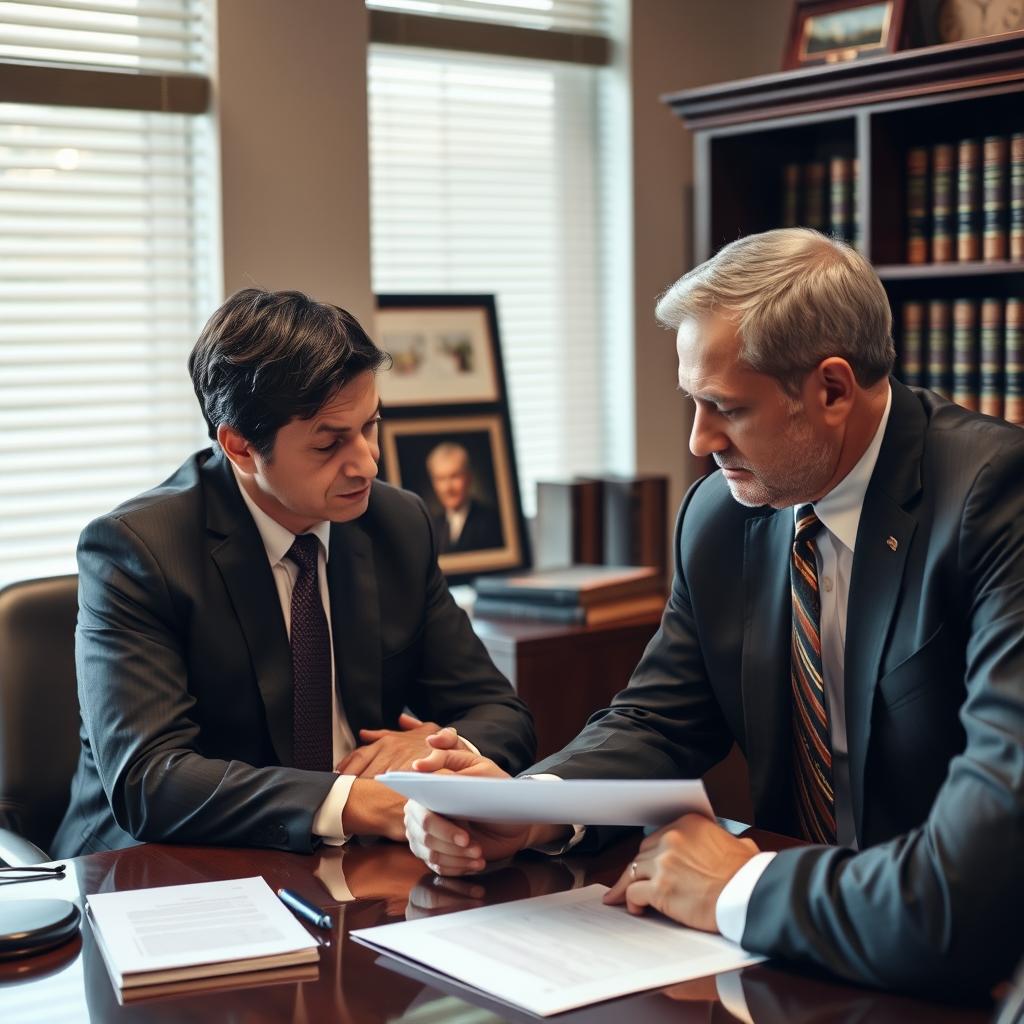
Perjury lawyer Charles County, MD
Federal perjury charges in Charles County are prosecuted by the U.S. Attorney’s Office for the District of Maryland, not by local prosecutors. Under 18 U.S.C. § 1621, it is a felony offense to knowingly make a material false statement under oath in a federal proceeding. A conviction can carry a sentence of up to five years in prison per count. The U.S. District Court for the District of Maryland—with courthouses in Baltimore and Greenbelt—has jurisdiction over these matters, and federal sentencing guidelines apply. Mr. Sris and his Of Counsel team at Law Offices Of SRIS, P.C. Concentrate part of their practice on federal criminal defense, representing individuals facing perjury allegations before the District Court of Maryland. For a consultation, reach the firm at (888) 437-7747. Law Offices Of SRIS, P.C. – Advocacy Without Borders.
What Federal Perjury Means in Charles County
Federal perjury is not a charge that originates in Charles County’s state district or circuit courts. It is a federal offense investigated by agencies such as the Federal Bureau of Investigation and prosecuted in the U.S. District Court for the District of Maryland, which serves the entire state including Charles County. The charge turns on two essential elements: first, that the defendant made a statement while under oath in a federal proceeding, and second, that the statement was both false and material to the proceeding. The materiality standard inquires whether the false statement had the capacity to influence the decision-making body, not whether it actually did. In the Maryland federal district, perjury cases often arise from grand jury testimony, deposition statements in civil litigation, or sworn representations to federal law enforcement officers. Because federal prosecutors have broad resources and the sentencing framework is driven by advisory guidelines rather than state penalty structures, a person accused of perjury in Charles County faces a substantially different legal landscape than in a state-court proceeding. The case will be assigned to a federal magistrate judge for initial appearance and may proceed to trial in Baltimore or Greenbelt. Charles County residents summoned to the federal courthouse must navigate a process that includes pretrial release determinations under the federal Bail Reform Act, discovery governed by the Federal Rules of Criminal Procedure, and, if the matter proceeds to sentencing, a presentence report prepared by the U.S. Probation Office. An experienced federal defense lawyer can explain how the Speedy Trial Act, the district’s local rules, and the practices of the Maryland U.S. Attorney’s Office affect the timeline and defense strategy for a perjury charge.
Another layer of complexity is that federal perjury charges often accompany broader investigations or other alleged offenses. A witness testifying before a federal grand jury about a fraud scheme, for example, could face a perjury count alongside mail-fraud or conspiracy charges. The interplay of multiple potential charges influences decisions about cooperation, plea negotiations, and trial theory. Mr. Sris and his Of Counsel understand how a perjury allegation fits within a larger federal prosecution and work to protect the client’s interests at each stage.
How Mr. Sris and His Of Counsel Handle Federal Perjury Cases
A defense against a federal perjury charge begins well before the trial date. The government bears the burden of proving each element beyond a reasonable doubt, including the materiality of the statement and the defendant’s knowledge of its falsity. Counsel examines the transcript of the contested testimony, the context of the proceeding, and any available recording to determine whether the statement was literally false or merely a matter of interpretation. Ambiguous questions, minor discrepancies, and lapses in memory are often insufficient to support a perjury conviction under the case law applied in the Fourth Circuit, which includes Maryland. Mr. Sris and his Of Counsel explore these factual nuances and, where appropriate, retain forensic linguists or other attorneys to analyze the record. If the evidence supports a defense at trial, the team prepares to challenge the government’s case through cross-examination and motion practice. At the same time, pretrial motions may seek to exclude statements or limit the scope of the prosecution’s evidence.
Engagement with federal prosecutors occurs throughout the process. In appropriate circumstances, defense counsel may present mitigating information or legal arguments that could lead to a reduction of charges or a resolution without trial. Because any conviction for perjury triggers collateral consequences—including potential immigration effects, professional licensing discipline, and sentencing enhancements for any future federal offense—the defense strategy weighs all downstream implications. The team at Law Offices Of SRIS, P.C. works to achieve a favorable outcome given the client’s particular situation. No outcome can be past results do not guarantee a similar outcome, and every case is unique.
About Mr. Sris and His Of Counsel Team
Mr. Sris, Owner and Founder of Law Offices Of SRIS, P.C., is a former prosecutor who has practiced federal criminal law since the firm was founded in 1997. He is admitted in Virginia, Maryland, the District of Columbia, New Jersey, and New York, and he has represented clients in federal courts throughout the region. Mr. Sris brings a prosecution-informed perspective to defense investigations, allowing him to anticipate the government’s approach to building a perjury case. He has testified before the Virginia House Courts of Justice Committee in support of 2019 HB 635 (chief patron Del. David Bulova). Mr. Sris works alongside a team of experienced Of Counsel who concentrate in federal criminal matters and contribute their own litigation experience to every defense. The team’s extensive combined legal experience assists clients in evaluating the strengths and weaknesses of a federal perjury allegation. Results may vary.
Frequently Asked Questions
What is the difference between state and federal perjury charges?
State perjury involves a false statement in a state proceeding while federal perjury involves a false material statement under oath in a federal proceeding, prosecuted in U.S. District Court with generally harsher sentencing guidelines and no parole. In Maryland, the U.S. Attorney’s Office prosecutes federal perjury, and cases are heard in the U.S. District Court for the District of Maryland. Federal resources, including the FBI, are often used to investigate the charge. An experienced federal defense attorney can explain the procedural differences and how they affect the defense.
How do federal sentencing guidelines apply to a perjury conviction in Charles County?
Federal sentencing at the U.S. District Court for the District of Maryland follows the U.S. Sentencing Guidelines, a points-based calculation using the offense level and criminal history category. While the guidelines are advisory after United States v. Booker, they strongly influence the sentence. Perjury carries a base offense level, and adjustments may apply depending on the nature of the proceeding and any obstruction-related conduct. Acceptance of responsibility can reduce the offense level. Mandatory minimums generally do not apply to a stand-alone perjury count, but a defendant with a prior federal record may face a higher guideline range. The court also considers statutory factors under 18 U.S.C. § 3553(a). For a consultation, reach Law Offices Of SRIS, P.C. at (888) 437-7747.
What should I do if I am contacted by federal agents about a possible perjury investigation?
Politely decline to answer questions and immediately ask to speak with an attorney. Anything you say to a federal agent can be used against you in a subsequent prosecution. Do not attempt to explain or clarify any statement before you have consulted a lawyer. Preserve all relevant documents and communications. Contact defense counsel experienced in federal criminal matters as soon as possible. Early involvement can affect whether charges are filed and, if they are, the conditions of pretrial release.
Can federal perjury charges be dropped or dismissed before trial?
Yes, federal perjury charges may be dismissed before trial if the government decides not to proceed or if a judge grants a pretrial motion. For example, if the alleged false statement is not material as a matter of law, the court may dismiss the indictment. Similarly, if evidence was obtained in violation of the Fifth Amendment or statements were not made under oath in a qualifying proceeding, dismissal may be warranted. In other situations, the government might agree to dismiss perjury counts as part of a broader plea resolution. A knowledgeable federal defense lawyer can assess the viability of a pretrial challenge.
What is the statute of limitations for federal perjury?
Under 18 U.S.C. § 3282, the statute of limitations for federal perjury is generally five years from the date the false statement was made. However, exceptions can apply, and the calculation may be affected by factors such as the defendant’s absence from the judicial district or other tolling events. The U.S. Attorney must file an indictment within the applicable limitations period. If you believe charges may be brought against you, consult an attorney without delay; early preparation can protect your rights even before an indictment is returned.
Do I need a lawyer if I am only a witness and have not been charged with perjury?
Yes, retaining a lawyer before testifying can help protect you from perjury exposure. A federal defender can review the context of your anticipated testimony, identify areas where a question may be unclear, and advise you on how to answer truthfully without inadvertently creating the appearance of a false statement. If you have already testified and are concerned about potential perjury allegations, counsel can evaluate the transcript and the legal risks. Early legal guidance is often the difference between a misunderstanding and a criminal investigation. For a consultation, reach Mr. Sris and his Of Counsel at (888) 437-7747.
Related federal criminal defense pages:
- Federal Criminal Lawyer Montgomery County
- Federal Criminal Lawyer Prince George’s County
- Federal Criminal Lawyer Howard County
Primary legal resources:
- 18 U.S.C. § 1621 (Perjury Statute)
- U.S. District Court for the District of Maryland
- U.S. Attorney’s Office — District of Maryland
Attorney advertising. Prior results do not guarantee a similar outcome.
Results may vary.
Case results depend on a variety of factors unique to each case.